mirror of
https://github.com/infiniflow/ragflow.git
synced 2026-01-04 03:25:30 +08:00
Compare commits
137 Commits
58836d84fe
...
v0.21.1
| Author | SHA1 | Date | |
|---|---|---|---|
| de24e74b4c | |||
| 83e80e3d7f | |||
| ea73f13ebf | |||
| af6eabad0e | |||
| 5fb5a51b2e | |||
| 37004ecfb3 | |||
| 6d333ec4bc | |||
| ac188b0486 | |||
| adeb9d87e2 | |||
| d121033208 | |||
| 494f84cd69 | |||
| f24d464a53 | |||
| 484c536f2e | |||
| f7112acd97 | |||
| de4f75dcd8 | |||
| 15fff5724e | |||
| d616354d66 | |||
| 1bad24e3ab | |||
| 4910146149 | |||
| 0e549e96ee | |||
| 318cb7d792 | |||
| 4d1255b231 | |||
| b30f0be858 | |||
| a82e9b3d91 | |||
| 02a452993e | |||
| 307cdc62ea | |||
| 2d491188b8 | |||
| acc0f7396e | |||
| 9a4cd81891 | |||
| 1694f32e8e | |||
| 41fade3fe6 | |||
| 8d333f3590 | |||
| cd77425b87 | |||
| 544c9990e3 | |||
| 41a647fe32 | |||
| 594bf485d4 | |||
| 863c3e3d9c | |||
| 1767039be3 | |||
| cd75fa02b1 | |||
| cfdd37820a | |||
| 9d12380806 | |||
| 866098634b | |||
| 8013505daf | |||
| deb81810e9 | |||
| 6ab96287c9 | |||
| aaa4776657 | |||
| 5b2e5dd334 | |||
| de46b0d46e | |||
| cc703da747 | |||
| d956a442ce | |||
| 5fc59a3132 | |||
| 1d955507e9 | |||
| cf09c2260a | |||
| c9b18cbe18 | |||
| 8123942ec1 | |||
| 685114d253 | |||
| c9e56d20cf | |||
| 8ee0b6ea54 | |||
| f50b2461cb | |||
| 617faee718 | |||
| b15643bd80 | |||
| f12290f04b | |||
| 15838a6673 | |||
| 39ad9490ac | |||
| 387baf858f | |||
| 2dba858c84 | |||
| 43ea312144 | |||
| ce05696d95 | |||
| 0f62bfda21 | |||
| 70ffe2b4e8 | |||
| e76db6e222 | |||
| 7b664b5a84 | |||
| 8a41057236 | |||
| 447041d265 | |||
| f0375c4acd | |||
| 8af769de41 | |||
| f808bc32ba | |||
| e8cb1d8fc4 | |||
| 4e86ee4ff9 | |||
| c99034f717 | |||
| 86b254d214 | |||
| 1c38f4cefb | |||
| 74c195cd36 | |||
| e48bec1cbf | |||
| 205a5eb9f5 | |||
| 8844826208 | |||
| 8fe4281d81 | |||
| fb1bedbd3c | |||
| 6e55b9146c | |||
| 071ea9c493 | |||
| 5037a28e4d | |||
| fdac4afd10 | |||
| 769d701f56 | |||
| 8b512cdadf | |||
| 3ae126836a | |||
| e8bfda6020 | |||
| 34c54cd459 | |||
| 3d873d98fb | |||
| fbe25b5add | |||
| 0c6c7c8fe7 | |||
| e266f9a66f | |||
| fde6e5ab39 | |||
| 67529825e2 | |||
| 738a7d5c24 | |||
| 83ec915d51 | |||
| e535099f36 | |||
| 16b5feadb7 | |||
| 960f47c4d4 | |||
| 51139de178 | |||
| 1f5167f1ca | |||
| 578ea34b3e | |||
| 5fb3d2f55c | |||
| d99d1e3518 | |||
| 5b387b68ba | |||
| f92a45dcc4 | |||
| c4b8e4845c | |||
| 87659dcd3a | |||
| 6fd9508017 | |||
| 113851a692 | |||
| 66c69d10fe | |||
| 781d49cd0e | |||
| aaae938f54 | |||
| 9e73f799b2 | |||
| 21a62130c8 | |||
| 68e47c81d4 | |||
| f11d8af936 | |||
| 74ec734d69 | |||
| 8c75803b70 | |||
| ff4239c7cf | |||
| cf5867b146 | |||
| 77481ab3ab | |||
| 9c53b3336a | |||
| 24481f0332 | |||
| 4e6b84bb41 | |||
| 65c3f0406c | |||
| 7fb8b30cc2 | |||
| acca3640f7 |

14
.github/workflows/release.yml
vendored
14
.github/workflows/release.yml
vendored
@ -120,3 +120,17 @@ jobs:
|
||||
packages-dir: sdk/python/dist/
|
||||
password: ${{ secrets.PYPI_API_TOKEN }}
|
||||
verbose: true
|
||||
|
||||
- name: Build ragflow-cli
|
||||
if: startsWith(github.ref, 'refs/tags/v')
|
||||
run: |
|
||||
cd admin/client && \
|
||||
uv build
|
||||
|
||||
- name: Publish client package distributions to PyPI
|
||||
if: startsWith(github.ref, 'refs/tags/v')
|
||||
uses: pypa/gh-action-pypi-publish@release/v1
|
||||
with:
|
||||
packages-dir: admin/client/dist/
|
||||
password: ${{ secrets.PYPI_API_TOKEN }}
|
||||
verbose: true
|
||||
|
||||
2
.gitignore
vendored
2
.gitignore
vendored
@ -149,7 +149,7 @@ out
|
||||
# Nuxt.js build / generate output
|
||||
.nuxt
|
||||
dist
|
||||
|
||||
ragflow_cli.egg-info
|
||||
# Gatsby files
|
||||
.cache/
|
||||
# Comment in the public line in if your project uses Gatsby and not Next.js
|
||||
|
||||
@ -191,6 +191,7 @@ ENV PATH="${VIRTUAL_ENV}/bin:${PATH}"
|
||||
ENV PYTHONPATH=/ragflow/
|
||||
|
||||
COPY web web
|
||||
COPY admin admin
|
||||
COPY api api
|
||||
COPY conf conf
|
||||
COPY deepdoc deepdoc
|
||||
|
||||
14
README.md
14
README.md
@ -1,6 +1,6 @@
|
||||
<div align="center">
|
||||
<a href="https://demo.ragflow.io/">
|
||||
<img src="web/src/assets/logo-with-text.png" width="520" alt="ragflow logo">
|
||||
<img src="web/src/assets/logo-with-text.svg" width="520" alt="ragflow logo">
|
||||
</a>
|
||||
</div>
|
||||
|
||||
@ -22,7 +22,7 @@
|
||||
<img alt="Static Badge" src="https://img.shields.io/badge/Online-Demo-4e6b99">
|
||||
</a>
|
||||
<a href="https://hub.docker.com/r/infiniflow/ragflow" target="_blank">
|
||||
<img src="https://img.shields.io/docker/pulls/infiniflow/ragflow?label=Docker%20Pulls&color=0db7ed&logo=docker&logoColor=white&style=flat-square" alt="docker pull infiniflow/ragflow:v0.20.5">
|
||||
<img src="https://img.shields.io/docker/pulls/infiniflow/ragflow?label=Docker%20Pulls&color=0db7ed&logo=docker&logoColor=white&style=flat-square" alt="docker pull infiniflow/ragflow:v0.21.1">
|
||||
</a>
|
||||
<a href="https://github.com/infiniflow/ragflow/releases/latest">
|
||||
<img src="https://img.shields.io/github/v/release/infiniflow/ragflow?color=blue&label=Latest%20Release" alt="Latest Release">
|
||||
@ -84,8 +84,8 @@ Try our demo at [https://demo.ragflow.io](https://demo.ragflow.io).
|
||||
|
||||
## 🔥 Latest Updates
|
||||
|
||||
- 2025-10-15 Supports orchestrable ingestion pipeline.
|
||||
- 2025-08-08 Supports OpenAI's latest GPT-5 series models.
|
||||
- 2025-08-04 Supports new models, including Kimi K2 and Grok 4.
|
||||
- 2025-08-01 Supports agentic workflow and MCP.
|
||||
- 2025-05-23 Adds a Python/JavaScript code executor component to Agent.
|
||||
- 2025-05-05 Supports cross-language query.
|
||||
@ -135,7 +135,7 @@ releases! 🌟
|
||||
## 🔎 System Architecture
|
||||
|
||||
<div align="center" style="margin-top:20px;margin-bottom:20px;">
|
||||
<img src="https://github.com/infiniflow/ragflow/assets/12318111/d6ac5664-c237-4200-a7c2-a4a00691b485" width="1000"/>
|
||||
<img src="https://github.com/user-attachments/assets/31b0dd6f-ca4f-445a-9457-70cb44a381b2" width="1000"/>
|
||||
</div>
|
||||
|
||||
## 🎬 Get Started
|
||||
@ -187,7 +187,7 @@ releases! 🌟
|
||||
> All Docker images are built for x86 platforms. We don't currently offer Docker images for ARM64.
|
||||
> If you are on an ARM64 platform, follow [this guide](https://ragflow.io/docs/dev/build_docker_image) to build a Docker image compatible with your system.
|
||||
|
||||
> The command below downloads the `v0.20.5-slim` edition of the RAGFlow Docker image. See the following table for descriptions of different RAGFlow editions. To download a RAGFlow edition different from `v0.20.5-slim`, update the `RAGFLOW_IMAGE` variable accordingly in **docker/.env** before using `docker compose` to start the server. For example: set `RAGFLOW_IMAGE=infiniflow/ragflow:v0.20.5` for the full edition `v0.20.5`.
|
||||
> The command below downloads the `v0.21.1-slim` edition of the RAGFlow Docker image. See the following table for descriptions of different RAGFlow editions. To download a RAGFlow edition different from `v0.21.1-slim`, update the `RAGFLOW_IMAGE` variable accordingly in **docker/.env** before using `docker compose` to start the server. For example: set `RAGFLOW_IMAGE=infiniflow/ragflow:v0.21.1` for the full edition `v0.21.1`.
|
||||
|
||||
```bash
|
||||
$ cd ragflow/docker
|
||||
@ -200,8 +200,8 @@ releases! 🌟
|
||||
|
||||
| RAGFlow image tag | Image size (GB) | Has embedding models? | Stable? |
|
||||
|-------------------|-----------------|-----------------------|--------------------------|
|
||||
| v0.20.5 | ≈9 | :heavy_check_mark: | Stable release |
|
||||
| v0.20.5-slim | ≈2 | ❌ | Stable release |
|
||||
| v0.21.1 | ≈9 | :heavy_check_mark: | Stable release |
|
||||
| v0.21.1-slim | ≈2 | ❌ | Stable release |
|
||||
| nightly | ≈9 | :heavy_check_mark: | _Unstable_ nightly build |
|
||||
| nightly-slim | ≈2 | ❌ | _Unstable_ nightly build |
|
||||
|
||||
|
||||
14
README_id.md
14
README_id.md
@ -1,6 +1,6 @@
|
||||
<div align="center">
|
||||
<a href="https://demo.ragflow.io/">
|
||||
<img src="web/src/assets/logo-with-text.png" width="520" alt="Logo ragflow">
|
||||
<img src="web/src/assets/logo-with-text.svg" width="520" alt="Logo ragflow">
|
||||
</a>
|
||||
</div>
|
||||
|
||||
@ -22,7 +22,7 @@
|
||||
<img alt="Lencana Daring" src="https://img.shields.io/badge/Online-Demo-4e6b99">
|
||||
</a>
|
||||
<a href="https://hub.docker.com/r/infiniflow/ragflow" target="_blank">
|
||||
<img src="https://img.shields.io/docker/pulls/infiniflow/ragflow?label=Docker%20Pulls&color=0db7ed&logo=docker&logoColor=white&style=flat-square" alt="docker pull infiniflow/ragflow:v0.20.5">
|
||||
<img src="https://img.shields.io/docker/pulls/infiniflow/ragflow?label=Docker%20Pulls&color=0db7ed&logo=docker&logoColor=white&style=flat-square" alt="docker pull infiniflow/ragflow:v0.21.1">
|
||||
</a>
|
||||
<a href="https://github.com/infiniflow/ragflow/releases/latest">
|
||||
<img src="https://img.shields.io/github/v/release/infiniflow/ragflow?color=blue&label=Rilis%20Terbaru" alt="Rilis Terbaru">
|
||||
@ -80,8 +80,8 @@ Coba demo kami di [https://demo.ragflow.io](https://demo.ragflow.io).
|
||||
|
||||
## 🔥 Pembaruan Terbaru
|
||||
|
||||
- 2025-10-15 Dukungan untuk jalur data yang terorkestrasi.
|
||||
- 2025-08-08 Mendukung model seri GPT-5 terbaru dari OpenAI.
|
||||
- 2025-08-04 Mendukung model baru, termasuk Kimi K2 dan Grok 4.
|
||||
- 2025-08-01 Mendukung alur kerja agen dan MCP.
|
||||
- 2025-05-23 Menambahkan komponen pelaksana kode Python/JS ke Agen.
|
||||
- 2025-05-05 Mendukung kueri lintas bahasa.
|
||||
@ -129,7 +129,7 @@ Coba demo kami di [https://demo.ragflow.io](https://demo.ragflow.io).
|
||||
## 🔎 Arsitektur Sistem
|
||||
|
||||
<div align="center" style="margin-top:20px;margin-bottom:20px;">
|
||||
<img src="https://github.com/infiniflow/ragflow/assets/12318111/d6ac5664-c237-4200-a7c2-a4a00691b485" width="1000"/>
|
||||
<img src="https://github.com/user-attachments/assets/31b0dd6f-ca4f-445a-9457-70cb44a381b2" width="1000"/>
|
||||
</div>
|
||||
|
||||
## 🎬 Mulai
|
||||
@ -181,7 +181,7 @@ Coba demo kami di [https://demo.ragflow.io](https://demo.ragflow.io).
|
||||
> Semua gambar Docker dibangun untuk platform x86. Saat ini, kami tidak menawarkan gambar Docker untuk ARM64.
|
||||
> Jika Anda menggunakan platform ARM64, [silakan gunakan panduan ini untuk membangun gambar Docker yang kompatibel dengan sistem Anda](https://ragflow.io/docs/dev/build_docker_image).
|
||||
|
||||
> Perintah di bawah ini mengunduh edisi v0.20.5-slim dari gambar Docker RAGFlow. Silakan merujuk ke tabel berikut untuk deskripsi berbagai edisi RAGFlow. Untuk mengunduh edisi RAGFlow yang berbeda dari v0.20.5-slim, perbarui variabel RAGFLOW_IMAGE di docker/.env sebelum menggunakan docker compose untuk memulai server. Misalnya, atur RAGFLOW_IMAGE=infiniflow/ragflow:v0.20.5 untuk edisi lengkap v0.20.5.
|
||||
> Perintah di bawah ini mengunduh edisi v0.21.1-slim dari gambar Docker RAGFlow. Silakan merujuk ke tabel berikut untuk deskripsi berbagai edisi RAGFlow. Untuk mengunduh edisi RAGFlow yang berbeda dari v0.21.1-slim, perbarui variabel RAGFLOW_IMAGE di docker/.env sebelum menggunakan docker compose untuk memulai server. Misalnya, atur RAGFLOW_IMAGE=infiniflow/ragflow:v0.21.1 untuk edisi lengkap v0.21.1.
|
||||
|
||||
```bash
|
||||
$ cd ragflow/docker
|
||||
@ -194,8 +194,8 @@ $ docker compose -f docker-compose.yml up -d
|
||||
|
||||
| RAGFlow image tag | Image size (GB) | Has embedding models? | Stable? |
|
||||
| ----------------- | --------------- | --------------------- | ------------------------ |
|
||||
| v0.20.5 | ≈9 | :heavy_check_mark: | Stable release |
|
||||
| v0.20.5-slim | ≈2 | ❌ | Stable release |
|
||||
| v0.21.1 | ≈9 | :heavy_check_mark: | Stable release |
|
||||
| v0.21.1-slim | ≈2 | ❌ | Stable release |
|
||||
| nightly | ≈9 | :heavy_check_mark: | _Unstable_ nightly build |
|
||||
| nightly-slim | ≈2 | ❌ | _Unstable_ nightly build |
|
||||
|
||||
|
||||
14
README_ja.md
14
README_ja.md
@ -1,6 +1,6 @@
|
||||
<div align="center">
|
||||
<a href="https://demo.ragflow.io/">
|
||||
<img src="web/src/assets/logo-with-text.png" width="350" alt="ragflow logo">
|
||||
<img src="web/src/assets/logo-with-text.svg" width="350" alt="ragflow logo">
|
||||
</a>
|
||||
</div>
|
||||
|
||||
@ -22,7 +22,7 @@
|
||||
<img alt="Static Badge" src="https://img.shields.io/badge/Online-Demo-4e6b99">
|
||||
</a>
|
||||
<a href="https://hub.docker.com/r/infiniflow/ragflow" target="_blank">
|
||||
<img src="https://img.shields.io/docker/pulls/infiniflow/ragflow?label=Docker%20Pulls&color=0db7ed&logo=docker&logoColor=white&style=flat-square" alt="docker pull infiniflow/ragflow:v0.20.5">
|
||||
<img src="https://img.shields.io/docker/pulls/infiniflow/ragflow?label=Docker%20Pulls&color=0db7ed&logo=docker&logoColor=white&style=flat-square" alt="docker pull infiniflow/ragflow:v0.21.1">
|
||||
</a>
|
||||
<a href="https://github.com/infiniflow/ragflow/releases/latest">
|
||||
<img src="https://img.shields.io/github/v/release/infiniflow/ragflow?color=blue&label=Latest%20Release" alt="Latest Release">
|
||||
@ -60,8 +60,8 @@
|
||||
|
||||
## 🔥 最新情報
|
||||
|
||||
- 2025-10-15 オーケストレーションされたデータパイプラインのサポート。
|
||||
- 2025-08-08 OpenAI の最新 GPT-5 シリーズモデルをサポートします。
|
||||
- 2025-08-04 新モデル、キミK2およびGrok 4をサポート。
|
||||
- 2025-08-01 エージェントワークフローとMCPをサポート。
|
||||
- 2025-05-23 エージェントに Python/JS コードエグゼキュータコンポーネントを追加しました。
|
||||
- 2025-05-05 言語間クエリをサポートしました。
|
||||
@ -109,7 +109,7 @@
|
||||
## 🔎 システム構成
|
||||
|
||||
<div align="center" style="margin-top:20px;margin-bottom:20px;">
|
||||
<img src="https://github.com/infiniflow/ragflow/assets/12318111/d6ac5664-c237-4200-a7c2-a4a00691b485" width="1000"/>
|
||||
<img src="https://github.com/user-attachments/assets/31b0dd6f-ca4f-445a-9457-70cb44a381b2" width="1000"/>
|
||||
</div>
|
||||
|
||||
## 🎬 初期設定
|
||||
@ -160,7 +160,7 @@
|
||||
> 現在、公式に提供されているすべての Docker イメージは x86 アーキテクチャ向けにビルドされており、ARM64 用の Docker イメージは提供されていません。
|
||||
> ARM64 アーキテクチャのオペレーティングシステムを使用している場合は、[このドキュメント](https://ragflow.io/docs/dev/build_docker_image)を参照して Docker イメージを自分でビルドしてください。
|
||||
|
||||
> 以下のコマンドは、RAGFlow Docker イメージの v0.20.5-slim エディションをダウンロードします。異なる RAGFlow エディションの説明については、以下の表を参照してください。v0.20.5-slim とは異なるエディションをダウンロードするには、docker/.env ファイルの RAGFLOW_IMAGE 変数を適宜更新し、docker compose を使用してサーバーを起動してください。例えば、完全版 v0.20.5 をダウンロードするには、RAGFLOW_IMAGE=infiniflow/ragflow:v0.20.5 と設定します。
|
||||
> 以下のコマンドは、RAGFlow Docker イメージの v0.21.1-slim エディションをダウンロードします。異なる RAGFlow エディションの説明については、以下の表を参照してください。v0.21.1-slim とは異なるエディションをダウンロードするには、docker/.env ファイルの RAGFLOW_IMAGE 変数を適宜更新し、docker compose を使用してサーバーを起動してください。例えば、完全版 v0.21.1 をダウンロードするには、RAGFLOW_IMAGE=infiniflow/ragflow:v0.21.1 と設定します。
|
||||
|
||||
```bash
|
||||
$ cd ragflow/docker
|
||||
@ -173,8 +173,8 @@
|
||||
|
||||
| RAGFlow image tag | Image size (GB) | Has embedding models? | Stable? |
|
||||
| ----------------- | --------------- | --------------------- | ------------------------ |
|
||||
| v0.20.5 | ≈9 | :heavy_check_mark: | Stable release |
|
||||
| v0.20.5-slim | ≈2 | ❌ | Stable release |
|
||||
| v0.21.1 | ≈9 | :heavy_check_mark: | Stable release |
|
||||
| v0.21.1-slim | ≈2 | ❌ | Stable release |
|
||||
| nightly | ≈9 | :heavy_check_mark: | _Unstable_ nightly build |
|
||||
| nightly-slim | ≈2 | ❌ | _Unstable_ nightly build |
|
||||
|
||||
|
||||
14
README_ko.md
14
README_ko.md
@ -1,6 +1,6 @@
|
||||
<div align="center">
|
||||
<a href="https://demo.ragflow.io/">
|
||||
<img src="web/src/assets/logo-with-text.png" width="520" alt="ragflow logo">
|
||||
<img src="web/src/assets/logo-with-text.svg" width="520" alt="ragflow logo">
|
||||
</a>
|
||||
</div>
|
||||
|
||||
@ -22,7 +22,7 @@
|
||||
<img alt="Static Badge" src="https://img.shields.io/badge/Online-Demo-4e6b99">
|
||||
</a>
|
||||
<a href="https://hub.docker.com/r/infiniflow/ragflow" target="_blank">
|
||||
<img src="https://img.shields.io/docker/pulls/infiniflow/ragflow?label=Docker%20Pulls&color=0db7ed&logo=docker&logoColor=white&style=flat-square" alt="docker pull infiniflow/ragflow:v0.20.5">
|
||||
<img src="https://img.shields.io/docker/pulls/infiniflow/ragflow?label=Docker%20Pulls&color=0db7ed&logo=docker&logoColor=white&style=flat-square" alt="docker pull infiniflow/ragflow:v0.21.1">
|
||||
</a>
|
||||
<a href="https://github.com/infiniflow/ragflow/releases/latest">
|
||||
<img src="https://img.shields.io/github/v/release/infiniflow/ragflow?color=blue&label=Latest%20Release" alt="Latest Release">
|
||||
@ -60,8 +60,8 @@
|
||||
|
||||
## 🔥 업데이트
|
||||
|
||||
- 2025-10-15 조정된 데이터 파이프라인 지원.
|
||||
- 2025-08-08 OpenAI의 최신 GPT-5 시리즈 모델을 지원합니다.
|
||||
- 2025-08-04 새로운 모델인 Kimi K2와 Grok 4를 포함하여 지원합니다.
|
||||
- 2025-08-01 에이전트 워크플로우와 MCP를 지원합니다.
|
||||
- 2025-05-23 Agent에 Python/JS 코드 실행기 구성 요소를 추가합니다.
|
||||
- 2025-05-05 언어 간 쿼리를 지원합니다.
|
||||
@ -109,7 +109,7 @@
|
||||
## 🔎 시스템 아키텍처
|
||||
|
||||
<div align="center" style="margin-top:20px;margin-bottom:20px;">
|
||||
<img src="https://github.com/infiniflow/ragflow/assets/12318111/d6ac5664-c237-4200-a7c2-a4a00691b485" width="1000"/>
|
||||
<img src="https://github.com/user-attachments/assets/31b0dd6f-ca4f-445a-9457-70cb44a381b2" width="1000"/>
|
||||
</div>
|
||||
|
||||
## 🎬 시작하기
|
||||
@ -160,7 +160,7 @@
|
||||
> 모든 Docker 이미지는 x86 플랫폼을 위해 빌드되었습니다. 우리는 현재 ARM64 플랫폼을 위한 Docker 이미지를 제공하지 않습니다.
|
||||
> ARM64 플랫폼을 사용 중이라면, [시스템과 호환되는 Docker 이미지를 빌드하려면 이 가이드를 사용해 주세요](https://ragflow.io/docs/dev/build_docker_image).
|
||||
|
||||
> 아래 명령어는 RAGFlow Docker 이미지의 v0.20.5-slim 버전을 다운로드합니다. 다양한 RAGFlow 버전에 대한 설명은 다음 표를 참조하십시오. v0.20.5-slim과 다른 RAGFlow 버전을 다운로드하려면, docker/.env 파일에서 RAGFLOW_IMAGE 변수를 적절히 업데이트한 후 docker compose를 사용하여 서버를 시작하십시오. 예를 들어, 전체 버전인 v0.20.5을 다운로드하려면 RAGFLOW_IMAGE=infiniflow/ragflow:v0.20.5로 설정합니다.
|
||||
> 아래 명령어는 RAGFlow Docker 이미지의 v0.21.1-slim 버전을 다운로드합니다. 다양한 RAGFlow 버전에 대한 설명은 다음 표를 참조하십시오. v0.21.1-slim과 다른 RAGFlow 버전을 다운로드하려면, docker/.env 파일에서 RAGFLOW_IMAGE 변수를 적절히 업데이트한 후 docker compose를 사용하여 서버를 시작하십시오. 예를 들어, 전체 버전인 v0.21.1을 다운로드하려면 RAGFLOW_IMAGE=infiniflow/ragflow:v0.21.1로 설정합니다.
|
||||
|
||||
```bash
|
||||
$ cd ragflow/docker
|
||||
@ -173,8 +173,8 @@
|
||||
|
||||
| RAGFlow image tag | Image size (GB) | Has embedding models? | Stable? |
|
||||
| ----------------- | --------------- | --------------------- | ------------------------ |
|
||||
| v0.20.5 | ≈9 | :heavy_check_mark: | Stable release |
|
||||
| v0.20.5-slim | ≈2 | ❌ | Stable release |
|
||||
| v0.21.1 | ≈9 | :heavy_check_mark: | Stable release |
|
||||
| v0.21.1-slim | ≈2 | ❌ | Stable release |
|
||||
| nightly | ≈9 | :heavy_check_mark: | _Unstable_ nightly build |
|
||||
| nightly-slim | ≈2 | ❌ | _Unstable_ nightly build |
|
||||
|
||||
|
||||
@ -1,6 +1,6 @@
|
||||
<div align="center">
|
||||
<a href="https://demo.ragflow.io/">
|
||||
<img src="web/src/assets/logo-with-text.png" width="520" alt="ragflow logo">
|
||||
<img src="web/src/assets/logo-with-text.svg" width="520" alt="ragflow logo">
|
||||
</a>
|
||||
</div>
|
||||
|
||||
@ -22,7 +22,7 @@
|
||||
<img alt="Badge Estático" src="https://img.shields.io/badge/Online-Demo-4e6b99">
|
||||
</a>
|
||||
<a href="https://hub.docker.com/r/infiniflow/ragflow" target="_blank">
|
||||
<img src="https://img.shields.io/docker/pulls/infiniflow/ragflow?label=Docker%20Pulls&color=0db7ed&logo=docker&logoColor=white&style=flat-square" alt="docker pull infiniflow/ragflow:v0.20.5">
|
||||
<img src="https://img.shields.io/docker/pulls/infiniflow/ragflow?label=Docker%20Pulls&color=0db7ed&logo=docker&logoColor=white&style=flat-square" alt="docker pull infiniflow/ragflow:v0.21.1">
|
||||
</a>
|
||||
<a href="https://github.com/infiniflow/ragflow/releases/latest">
|
||||
<img src="https://img.shields.io/github/v/release/infiniflow/ragflow?color=blue&label=Última%20Relese" alt="Última Versão">
|
||||
@ -80,8 +80,8 @@ Experimente nossa demo em [https://demo.ragflow.io](https://demo.ragflow.io).
|
||||
|
||||
## 🔥 Últimas Atualizações
|
||||
|
||||
- 10-15-2025 Suporte para pipelines de dados orquestrados.
|
||||
- 08-08-2025 Suporta a mais recente série GPT-5 da OpenAI.
|
||||
- 04-08-2025 Suporta novos modelos, incluindo Kimi K2 e Grok 4.
|
||||
- 01-08-2025 Suporta fluxo de trabalho agente e MCP.
|
||||
- 23-05-2025 Adicione o componente executor de código Python/JS ao Agente.
|
||||
- 05-05-2025 Suporte a consultas entre idiomas.
|
||||
@ -129,7 +129,7 @@ Experimente nossa demo em [https://demo.ragflow.io](https://demo.ragflow.io).
|
||||
## 🔎 Arquitetura do Sistema
|
||||
|
||||
<div align="center" style="margin-top:20px;margin-bottom:20px;">
|
||||
<img src="https://github.com/infiniflow/ragflow/assets/12318111/d6ac5664-c237-4200-a7c2-a4a00691b485" width="1000"/>
|
||||
<img src="https://github.com/user-attachments/assets/31b0dd6f-ca4f-445a-9457-70cb44a381b2" width="1000"/>
|
||||
</div>
|
||||
|
||||
## 🎬 Primeiros Passos
|
||||
@ -180,7 +180,7 @@ Experimente nossa demo em [https://demo.ragflow.io](https://demo.ragflow.io).
|
||||
> Todas as imagens Docker são construídas para plataformas x86. Atualmente, não oferecemos imagens Docker para ARM64.
|
||||
> Se você estiver usando uma plataforma ARM64, por favor, utilize [este guia](https://ragflow.io/docs/dev/build_docker_image) para construir uma imagem Docker compatível com o seu sistema.
|
||||
|
||||
> O comando abaixo baixa a edição `v0.20.5-slim` da imagem Docker do RAGFlow. Consulte a tabela a seguir para descrições de diferentes edições do RAGFlow. Para baixar uma edição do RAGFlow diferente da `v0.20.5-slim`, atualize a variável `RAGFLOW_IMAGE` conforme necessário no **docker/.env** antes de usar `docker compose` para iniciar o servidor. Por exemplo: defina `RAGFLOW_IMAGE=infiniflow/ragflow:v0.20.5` para a edição completa `v0.20.5`.
|
||||
> O comando abaixo baixa a edição `v0.21.1-slim` da imagem Docker do RAGFlow. Consulte a tabela a seguir para descrições de diferentes edições do RAGFlow. Para baixar uma edição do RAGFlow diferente da `v0.21.1-slim`, atualize a variável `RAGFLOW_IMAGE` conforme necessário no **docker/.env** antes de usar `docker compose` para iniciar o servidor. Por exemplo: defina `RAGFLOW_IMAGE=infiniflow/ragflow:v0.21.1` para a edição completa `v0.21.1`.
|
||||
|
||||
```bash
|
||||
$ cd ragflow/docker
|
||||
@ -193,8 +193,8 @@ Experimente nossa demo em [https://demo.ragflow.io](https://demo.ragflow.io).
|
||||
|
||||
| Tag da imagem RAGFlow | Tamanho da imagem (GB) | Possui modelos de incorporação? | Estável? |
|
||||
| --------------------- | ---------------------- | ------------------------------- | ------------------------ |
|
||||
| v0.20.5 | ~9 | :heavy_check_mark: | Lançamento estável |
|
||||
| v0.20.5-slim | ~2 | ❌ | Lançamento estável |
|
||||
| v0.21.1 | ~9 | :heavy_check_mark: | Lançamento estável |
|
||||
| v0.21.1-slim | ~2 | ❌ | Lançamento estável |
|
||||
| nightly | ~9 | :heavy_check_mark: | _Instável_ build noturno |
|
||||
| nightly-slim | ~2 | ❌ | _Instável_ build noturno |
|
||||
|
||||
|
||||
@ -1,6 +1,6 @@
|
||||
<div align="center">
|
||||
<a href="https://demo.ragflow.io/">
|
||||
<img src="web/src/assets/logo-with-text.png" width="350" alt="ragflow logo">
|
||||
<img src="web/src/assets/logo-with-text.svg" width="350" alt="ragflow logo">
|
||||
</a>
|
||||
</div>
|
||||
|
||||
@ -22,7 +22,7 @@
|
||||
<img alt="Static Badge" src="https://img.shields.io/badge/Online-Demo-4e6b99">
|
||||
</a>
|
||||
<a href="https://hub.docker.com/r/infiniflow/ragflow" target="_blank">
|
||||
<img src="https://img.shields.io/docker/pulls/infiniflow/ragflow?label=Docker%20Pulls&color=0db7ed&logo=docker&logoColor=white&style=flat-square" alt="docker pull infiniflow/ragflow:v0.20.5">
|
||||
<img src="https://img.shields.io/docker/pulls/infiniflow/ragflow?label=Docker%20Pulls&color=0db7ed&logo=docker&logoColor=white&style=flat-square" alt="docker pull infiniflow/ragflow:v0.21.1">
|
||||
</a>
|
||||
<a href="https://github.com/infiniflow/ragflow/releases/latest">
|
||||
<img src="https://img.shields.io/github/v/release/infiniflow/ragflow?color=blue&label=Latest%20Release" alt="Latest Release">
|
||||
@ -83,8 +83,8 @@
|
||||
|
||||
## 🔥 近期更新
|
||||
|
||||
- 2025-10-15 支援可編排的資料管道。
|
||||
- 2025-08-08 支援 OpenAI 最新的 GPT-5 系列模型。
|
||||
- 2025-08-04 支援 Kimi K2 和 Grok 4 等模型.
|
||||
- 2025-08-01 支援 agentic workflow 和 MCP
|
||||
- 2025-05-23 為 Agent 新增 Python/JS 程式碼執行器元件。
|
||||
- 2025-05-05 支援跨語言查詢。
|
||||
@ -132,7 +132,7 @@
|
||||
## 🔎 系統架構
|
||||
|
||||
<div align="center" style="margin-top:20px;margin-bottom:20px;">
|
||||
<img src="https://github.com/infiniflow/ragflow/assets/12318111/d6ac5664-c237-4200-a7c2-a4a00691b485" width="1000"/>
|
||||
<img src="https://github.com/user-attachments/assets/31b0dd6f-ca4f-445a-9457-70cb44a381b2" width="1000"/>
|
||||
</div>
|
||||
|
||||
## 🎬 快速開始
|
||||
@ -183,7 +183,7 @@
|
||||
> 所有 Docker 映像檔都是為 x86 平台建置的。目前,我們不提供 ARM64 平台的 Docker 映像檔。
|
||||
> 如果您使用的是 ARM64 平台,請使用 [這份指南](https://ragflow.io/docs/dev/build_docker_image) 來建置適合您系統的 Docker 映像檔。
|
||||
|
||||
> 執行以下指令會自動下載 RAGFlow slim Docker 映像 `v0.20.5-slim`。請參考下表查看不同 Docker 發行版的說明。如需下載不同於 `v0.20.5-slim` 的 Docker 映像,請在執行 `docker compose` 啟動服務之前先更新 **docker/.env** 檔案內的 `RAGFLOW_IMAGE` 變數。例如,你可以透過設定 `RAGFLOW_IMAGE=infiniflow/ragflow:v0.20.5` 來下載 RAGFlow 鏡像的 `v0.20.5` 完整發行版。
|
||||
> 執行以下指令會自動下載 RAGFlow slim Docker 映像 `v0.21.1-slim`。請參考下表查看不同 Docker 發行版的說明。如需下載不同於 `v0.21.1-slim` 的 Docker 映像,請在執行 `docker compose` 啟動服務之前先更新 **docker/.env** 檔案內的 `RAGFLOW_IMAGE` 變數。例如,你可以透過設定 `RAGFLOW_IMAGE=infiniflow/ragflow:v0.21.1` 來下載 RAGFlow 鏡像的 `v0.21.1` 完整發行版。
|
||||
|
||||
```bash
|
||||
$ cd ragflow/docker
|
||||
@ -196,8 +196,8 @@
|
||||
|
||||
| RAGFlow image tag | Image size (GB) | Has embedding models? | Stable? |
|
||||
| ----------------- | --------------- | --------------------- | ------------------------ |
|
||||
| v0.20.5 | ≈9 | :heavy_check_mark: | Stable release |
|
||||
| v0.20.5-slim | ≈2 | ❌ | Stable release |
|
||||
| v0.21.1 | ≈9 | :heavy_check_mark: | Stable release |
|
||||
| v0.21.1-slim | ≈2 | ❌ | Stable release |
|
||||
| nightly | ≈9 | :heavy_check_mark: | _Unstable_ nightly build |
|
||||
| nightly-slim | ≈2 | ❌ | _Unstable_ nightly build |
|
||||
|
||||
|
||||
16
README_zh.md
16
README_zh.md
@ -1,6 +1,6 @@
|
||||
<div align="center">
|
||||
<a href="https://demo.ragflow.io/">
|
||||
<img src="web/src/assets/logo-with-text.png" width="350" alt="ragflow logo">
|
||||
<img src="web/src/assets/logo-with-text.svg" width="350" alt="ragflow logo">
|
||||
</a>
|
||||
</div>
|
||||
|
||||
@ -22,7 +22,7 @@
|
||||
<img alt="Static Badge" src="https://img.shields.io/badge/Online-Demo-4e6b99">
|
||||
</a>
|
||||
<a href="https://hub.docker.com/r/infiniflow/ragflow" target="_blank">
|
||||
<img src="https://img.shields.io/docker/pulls/infiniflow/ragflow?label=Docker%20Pulls&color=0db7ed&logo=docker&logoColor=white&style=flat-square" alt="docker pull infiniflow/ragflow:v0.20.5">
|
||||
<img src="https://img.shields.io/docker/pulls/infiniflow/ragflow?label=Docker%20Pulls&color=0db7ed&logo=docker&logoColor=white&style=flat-square" alt="docker pull infiniflow/ragflow:v0.21.1">
|
||||
</a>
|
||||
<a href="https://github.com/infiniflow/ragflow/releases/latest">
|
||||
<img src="https://img.shields.io/github/v/release/infiniflow/ragflow?color=blue&label=Latest%20Release" alt="Latest Release">
|
||||
@ -83,8 +83,8 @@
|
||||
|
||||
## 🔥 近期更新
|
||||
|
||||
- 2025-08-08 支持 OpenAI 最新的 GPT-5 系列模型.
|
||||
- 2025-08-04 新增对 Kimi K2 和 Grok 4 等模型的支持.
|
||||
- 2025-10-15 支持可编排的数据管道。
|
||||
- 2025-08-08 支持 OpenAI 最新的 GPT-5 系列模型。
|
||||
- 2025-08-01 支持 agentic workflow 和 MCP。
|
||||
- 2025-05-23 Agent 新增 Python/JS 代码执行器组件。
|
||||
- 2025-05-05 支持跨语言查询。
|
||||
@ -132,7 +132,7 @@
|
||||
## 🔎 系统架构
|
||||
|
||||
<div align="center" style="margin-top:20px;margin-bottom:20px;">
|
||||
<img src="https://github.com/infiniflow/ragflow/assets/12318111/d6ac5664-c237-4200-a7c2-a4a00691b485" width="1000"/>
|
||||
<img src="https://github.com/user-attachments/assets/31b0dd6f-ca4f-445a-9457-70cb44a381b2" width="1000"/>
|
||||
</div>
|
||||
|
||||
## 🎬 快速开始
|
||||
@ -183,7 +183,7 @@
|
||||
> 请注意,目前官方提供的所有 Docker 镜像均基于 x86 架构构建,并不提供基于 ARM64 的 Docker 镜像。
|
||||
> 如果你的操作系统是 ARM64 架构,请参考[这篇文档](https://ragflow.io/docs/dev/build_docker_image)自行构建 Docker 镜像。
|
||||
|
||||
> 运行以下命令会自动下载 RAGFlow slim Docker 镜像 `v0.20.5-slim`。请参考下表查看不同 Docker 发行版的描述。如需下载不同于 `v0.20.5-slim` 的 Docker 镜像,请在运行 `docker compose` 启动服务之前先更新 **docker/.env** 文件内的 `RAGFLOW_IMAGE` 变量。比如,你可以通过设置 `RAGFLOW_IMAGE=infiniflow/ragflow:v0.20.5` 来下载 RAGFlow 镜像的 `v0.20.5` 完整发行版。
|
||||
> 运行以下命令会自动下载 RAGFlow slim Docker 镜像 `v0.21.1-slim`。请参考下表查看不同 Docker 发行版的描述。如需下载不同于 `v0.21.1-slim` 的 Docker 镜像,请在运行 `docker compose` 启动服务之前先更新 **docker/.env** 文件内的 `RAGFLOW_IMAGE` 变量。比如,你可以通过设置 `RAGFLOW_IMAGE=infiniflow/ragflow:v0.21.1` 来下载 RAGFlow 镜像的 `v0.21.1` 完整发行版。
|
||||
|
||||
```bash
|
||||
$ cd ragflow/docker
|
||||
@ -196,8 +196,8 @@
|
||||
|
||||
| RAGFlow image tag | Image size (GB) | Has embedding models? | Stable? |
|
||||
| ----------------- | --------------- | --------------------- | ------------------------ |
|
||||
| v0.20.5 | ≈9 | :heavy_check_mark: | Stable release |
|
||||
| v0.20.5-slim | ≈2 | ❌ | Stable release |
|
||||
| v0.21.1 | ≈9 | :heavy_check_mark: | Stable release |
|
||||
| v0.21.1-slim | ≈2 | ❌ | Stable release |
|
||||
| nightly | ≈9 | :heavy_check_mark: | _Unstable_ nightly build |
|
||||
| nightly-slim | ≈2 | ❌ | _Unstable_ nightly build |
|
||||
|
||||
|
||||
@ -1,606 +0,0 @@
|
||||
#
|
||||
# Copyright 2025 The InfiniFlow Authors. All Rights Reserved.
|
||||
#
|
||||
# Licensed under the Apache License, Version 2.0 (the "License");
|
||||
# you may not use this file except in compliance with the License.
|
||||
# You may obtain a copy of the License at
|
||||
#
|
||||
# http://www.apache.org/licenses/LICENSE-2.0
|
||||
#
|
||||
# Unless required by applicable law or agreed to in writing, software
|
||||
# distributed under the License is distributed on an "AS IS" BASIS,
|
||||
# WITHOUT WARRANTIES OR CONDITIONS OF ANY KIND, either express or implied.
|
||||
# See the License for the specific language governing permissions and
|
||||
# limitations under the License.
|
||||
#
|
||||
|
||||
import argparse
|
||||
import base64
|
||||
|
||||
from Cryptodome.PublicKey import RSA
|
||||
from Cryptodome.Cipher import PKCS1_v1_5 as Cipher_pkcs1_v1_5
|
||||
from typing import Dict, List, Any
|
||||
from lark import Lark, Transformer, Tree
|
||||
import requests
|
||||
from requests.auth import HTTPBasicAuth
|
||||
from api.common.base64 import encode_to_base64
|
||||
|
||||
GRAMMAR = r"""
|
||||
start: command
|
||||
|
||||
command: sql_command | meta_command
|
||||
|
||||
sql_command: list_services
|
||||
| show_service
|
||||
| startup_service
|
||||
| shutdown_service
|
||||
| restart_service
|
||||
| list_users
|
||||
| show_user
|
||||
| drop_user
|
||||
| alter_user
|
||||
| create_user
|
||||
| activate_user
|
||||
| list_datasets
|
||||
| list_agents
|
||||
|
||||
// meta command definition
|
||||
meta_command: "\\" meta_command_name [meta_args]
|
||||
|
||||
meta_command_name: /[a-zA-Z?]+/
|
||||
meta_args: (meta_arg)+
|
||||
|
||||
meta_arg: /[^\\s"']+/ | quoted_string
|
||||
|
||||
// command definition
|
||||
|
||||
LIST: "LIST"i
|
||||
SERVICES: "SERVICES"i
|
||||
SHOW: "SHOW"i
|
||||
CREATE: "CREATE"i
|
||||
SERVICE: "SERVICE"i
|
||||
SHUTDOWN: "SHUTDOWN"i
|
||||
STARTUP: "STARTUP"i
|
||||
RESTART: "RESTART"i
|
||||
USERS: "USERS"i
|
||||
DROP: "DROP"i
|
||||
USER: "USER"i
|
||||
ALTER: "ALTER"i
|
||||
ACTIVE: "ACTIVE"i
|
||||
PASSWORD: "PASSWORD"i
|
||||
DATASETS: "DATASETS"i
|
||||
OF: "OF"i
|
||||
AGENTS: "AGENTS"i
|
||||
|
||||
list_services: LIST SERVICES ";"
|
||||
show_service: SHOW SERVICE NUMBER ";"
|
||||
startup_service: STARTUP SERVICE NUMBER ";"
|
||||
shutdown_service: SHUTDOWN SERVICE NUMBER ";"
|
||||
restart_service: RESTART SERVICE NUMBER ";"
|
||||
|
||||
list_users: LIST USERS ";"
|
||||
drop_user: DROP USER quoted_string ";"
|
||||
alter_user: ALTER USER PASSWORD quoted_string quoted_string ";"
|
||||
show_user: SHOW USER quoted_string ";"
|
||||
create_user: CREATE USER quoted_string quoted_string ";"
|
||||
activate_user: ALTER USER ACTIVE quoted_string status ";"
|
||||
|
||||
list_datasets: LIST DATASETS OF quoted_string ";"
|
||||
list_agents: LIST AGENTS OF quoted_string ";"
|
||||
|
||||
identifier: WORD
|
||||
quoted_string: QUOTED_STRING
|
||||
status: WORD
|
||||
|
||||
QUOTED_STRING: /'[^']+'/ | /"[^"]+"/
|
||||
WORD: /[a-zA-Z0-9_\-\.]+/
|
||||
NUMBER: /[0-9]+/
|
||||
|
||||
%import common.WS
|
||||
%ignore WS
|
||||
"""
|
||||
|
||||
|
||||
class AdminTransformer(Transformer):
|
||||
|
||||
def start(self, items):
|
||||
return items[0]
|
||||
|
||||
def command(self, items):
|
||||
return items[0]
|
||||
|
||||
def list_services(self, items):
|
||||
result = {'type': 'list_services'}
|
||||
return result
|
||||
|
||||
def show_service(self, items):
|
||||
service_id = int(items[2])
|
||||
return {"type": "show_service", "number": service_id}
|
||||
|
||||
def startup_service(self, items):
|
||||
service_id = int(items[2])
|
||||
return {"type": "startup_service", "number": service_id}
|
||||
|
||||
def shutdown_service(self, items):
|
||||
service_id = int(items[2])
|
||||
return {"type": "shutdown_service", "number": service_id}
|
||||
|
||||
def restart_service(self, items):
|
||||
service_id = int(items[2])
|
||||
return {"type": "restart_service", "number": service_id}
|
||||
|
||||
def list_users(self, items):
|
||||
return {"type": "list_users"}
|
||||
|
||||
def show_user(self, items):
|
||||
user_name = items[2]
|
||||
return {"type": "show_user", "username": user_name}
|
||||
|
||||
def drop_user(self, items):
|
||||
user_name = items[2]
|
||||
return {"type": "drop_user", "username": user_name}
|
||||
|
||||
def alter_user(self, items):
|
||||
user_name = items[3]
|
||||
new_password = items[4]
|
||||
return {"type": "alter_user", "username": user_name, "password": new_password}
|
||||
|
||||
def create_user(self, items):
|
||||
user_name = items[2]
|
||||
password = items[3]
|
||||
return {"type": "create_user", "username": user_name, "password": password, "role": "user"}
|
||||
|
||||
def activate_user(self, items):
|
||||
user_name = items[3]
|
||||
activate_status = items[4]
|
||||
return {"type": "activate_user", "activate_status": activate_status, "username": user_name}
|
||||
|
||||
def list_datasets(self, items):
|
||||
user_name = items[3]
|
||||
return {"type": "list_datasets", "username": user_name}
|
||||
|
||||
def list_agents(self, items):
|
||||
user_name = items[3]
|
||||
return {"type": "list_agents", "username": user_name}
|
||||
|
||||
def meta_command(self, items):
|
||||
command_name = str(items[0]).lower()
|
||||
args = items[1:] if len(items) > 1 else []
|
||||
|
||||
# handle quoted parameter
|
||||
parsed_args = []
|
||||
for arg in args:
|
||||
if hasattr(arg, 'value'):
|
||||
parsed_args.append(arg.value)
|
||||
else:
|
||||
parsed_args.append(str(arg))
|
||||
|
||||
return {'type': 'meta', 'command': command_name, 'args': parsed_args}
|
||||
|
||||
def meta_command_name(self, items):
|
||||
return items[0]
|
||||
|
||||
def meta_args(self, items):
|
||||
return items
|
||||
|
||||
|
||||
def encrypt(input_string):
|
||||
pub = '-----BEGIN PUBLIC KEY-----\nMIIBIjANBgkqhkiG9w0BAQEFAAOCAQ8AMIIBCgKCAQEArq9XTUSeYr2+N1h3Afl/z8Dse/2yD0ZGrKwx+EEEcdsBLca9Ynmx3nIB5obmLlSfmskLpBo0UACBmB5rEjBp2Q2f3AG3Hjd4B+gNCG6BDaawuDlgANIhGnaTLrIqWrrcm4EMzJOnAOI1fgzJRsOOUEfaS318Eq9OVO3apEyCCt0lOQK6PuksduOjVxtltDav+guVAA068NrPYmRNabVKRNLJpL8w4D44sfth5RvZ3q9t+6RTArpEtc5sh5ChzvqPOzKGMXW83C95TxmXqpbK6olN4RevSfVjEAgCydH6HN6OhtOQEcnrU97r9H0iZOWwbw3pVrZiUkuRD1R56Wzs2wIDAQAB\n-----END PUBLIC KEY-----'
|
||||
pub_key = RSA.importKey(pub)
|
||||
cipher = Cipher_pkcs1_v1_5.new(pub_key)
|
||||
cipher_text = cipher.encrypt(base64.b64encode(input_string.encode('utf-8')))
|
||||
return base64.b64encode(cipher_text).decode("utf-8")
|
||||
|
||||
|
||||
class AdminCommandParser:
|
||||
def __init__(self):
|
||||
self.parser = Lark(GRAMMAR, start='start', parser='lalr', transformer=AdminTransformer())
|
||||
self.command_history = []
|
||||
|
||||
def parse_command(self, command_str: str) -> Dict[str, Any]:
|
||||
if not command_str.strip():
|
||||
return {'type': 'empty'}
|
||||
|
||||
self.command_history.append(command_str)
|
||||
|
||||
try:
|
||||
result = self.parser.parse(command_str)
|
||||
return result
|
||||
except Exception as e:
|
||||
return {'type': 'error', 'message': f'Parse error: {str(e)}'}
|
||||
|
||||
|
||||
class AdminCLI:
|
||||
def __init__(self):
|
||||
self.parser = AdminCommandParser()
|
||||
self.is_interactive = False
|
||||
self.admin_account = "admin@ragflow.io"
|
||||
self.admin_password: str = "admin"
|
||||
self.host: str = ""
|
||||
self.port: int = 0
|
||||
|
||||
def verify_admin(self, args):
|
||||
|
||||
conn_info = self._parse_connection_args(args)
|
||||
if 'error' in conn_info:
|
||||
print(f"Error: {conn_info['error']}")
|
||||
return
|
||||
|
||||
self.host = conn_info['host']
|
||||
self.port = conn_info['port']
|
||||
print(f"Attempt to access ip: {self.host}, port: {self.port}")
|
||||
url = f'http://{self.host}:{self.port}/api/v1/admin/auth'
|
||||
|
||||
try_count = 0
|
||||
while True:
|
||||
try_count += 1
|
||||
if try_count > 3:
|
||||
return False
|
||||
|
||||
admin_passwd = input(f"password for {self.admin_account}: ").strip()
|
||||
try:
|
||||
self.admin_password = encode_to_base64(admin_passwd)
|
||||
response = requests.get(url, auth=HTTPBasicAuth(self.admin_account, self.admin_password))
|
||||
if response.status_code == 200:
|
||||
res_json = response.json()
|
||||
error_code = res_json.get('code', -1)
|
||||
if error_code == 0:
|
||||
print("Authentication successful.")
|
||||
return True
|
||||
else:
|
||||
error_message = res_json.get('message', 'Unknown error')
|
||||
print(f"Authentication failed: {error_message}, try again")
|
||||
continue
|
||||
else:
|
||||
print(f"Bad response,status: {response.status_code}, try again")
|
||||
except Exception:
|
||||
print(f"Can't access {self.host}, port: {self.port}")
|
||||
|
||||
def _print_table_simple(self, data):
|
||||
if not data:
|
||||
print("No data to print")
|
||||
return
|
||||
if isinstance(data, dict):
|
||||
# handle single row data
|
||||
data = [data]
|
||||
|
||||
columns = list(data[0].keys())
|
||||
col_widths = {}
|
||||
|
||||
for col in columns:
|
||||
max_width = len(str(col))
|
||||
for item in data:
|
||||
value_len = len(str(item.get(col, '')))
|
||||
if value_len > max_width:
|
||||
max_width = value_len
|
||||
col_widths[col] = max(2, max_width)
|
||||
|
||||
# Generate delimiter
|
||||
separator = "+" + "+".join(["-" * (col_widths[col] + 2) for col in columns]) + "+"
|
||||
|
||||
# Print header
|
||||
print(separator)
|
||||
header = "|" + "|".join([f" {col:<{col_widths[col]}} " for col in columns]) + "|"
|
||||
print(header)
|
||||
print(separator)
|
||||
|
||||
# Print data
|
||||
for item in data:
|
||||
row = "|"
|
||||
for col in columns:
|
||||
value = str(item.get(col, ''))
|
||||
if len(value) > col_widths[col]:
|
||||
value = value[:col_widths[col] - 3] + "..."
|
||||
row += f" {value:<{col_widths[col]}} |"
|
||||
print(row)
|
||||
|
||||
print(separator)
|
||||
|
||||
def run_interactive(self):
|
||||
|
||||
self.is_interactive = True
|
||||
print("RAGFlow Admin command line interface - Type '\\?' for help, '\\q' to quit")
|
||||
|
||||
while True:
|
||||
try:
|
||||
command = input("admin> ").strip()
|
||||
if not command:
|
||||
continue
|
||||
|
||||
print(f"command: {command}")
|
||||
result = self.parser.parse_command(command)
|
||||
self.execute_command(result)
|
||||
|
||||
if isinstance(result, Tree):
|
||||
continue
|
||||
|
||||
if result.get('type') == 'meta' and result.get('command') in ['q', 'quit', 'exit']:
|
||||
break
|
||||
|
||||
except KeyboardInterrupt:
|
||||
print("\nUse '\\q' to quit")
|
||||
except EOFError:
|
||||
print("\nGoodbye!")
|
||||
break
|
||||
|
||||
def run_single_command(self, args):
|
||||
conn_info = self._parse_connection_args(args)
|
||||
if 'error' in conn_info:
|
||||
print(f"Error: {conn_info['error']}")
|
||||
return
|
||||
|
||||
def _parse_connection_args(self, args: List[str]) -> Dict[str, Any]:
|
||||
parser = argparse.ArgumentParser(description='Admin CLI Client', add_help=False)
|
||||
parser.add_argument('-h', '--host', default='localhost', help='Admin service host')
|
||||
parser.add_argument('-p', '--port', type=int, default=8080, help='Admin service port')
|
||||
|
||||
try:
|
||||
parsed_args, remaining_args = parser.parse_known_args(args)
|
||||
return {
|
||||
'host': parsed_args.host,
|
||||
'port': parsed_args.port,
|
||||
}
|
||||
except SystemExit:
|
||||
return {'error': 'Invalid connection arguments'}
|
||||
|
||||
def execute_command(self, parsed_command: Dict[str, Any]):
|
||||
|
||||
command_dict: dict
|
||||
if isinstance(parsed_command, Tree):
|
||||
command_dict = parsed_command.children[0]
|
||||
else:
|
||||
if parsed_command['type'] == 'error':
|
||||
print(f"Error: {parsed_command['message']}")
|
||||
return
|
||||
else:
|
||||
command_dict = parsed_command
|
||||
|
||||
# print(f"Parsed command: {command_dict}")
|
||||
|
||||
command_type = command_dict['type']
|
||||
|
||||
match command_type:
|
||||
case 'list_services':
|
||||
self._handle_list_services(command_dict)
|
||||
case 'show_service':
|
||||
self._handle_show_service(command_dict)
|
||||
case 'restart_service':
|
||||
self._handle_restart_service(command_dict)
|
||||
case 'shutdown_service':
|
||||
self._handle_shutdown_service(command_dict)
|
||||
case 'startup_service':
|
||||
self._handle_startup_service(command_dict)
|
||||
case 'list_users':
|
||||
self._handle_list_users(command_dict)
|
||||
case 'show_user':
|
||||
self._handle_show_user(command_dict)
|
||||
case 'drop_user':
|
||||
self._handle_drop_user(command_dict)
|
||||
case 'alter_user':
|
||||
self._handle_alter_user(command_dict)
|
||||
case 'create_user':
|
||||
self._handle_create_user(command_dict)
|
||||
case 'activate_user':
|
||||
self._handle_activate_user(command_dict)
|
||||
case 'list_datasets':
|
||||
self._handle_list_datasets(command_dict)
|
||||
case 'list_agents':
|
||||
self._handle_list_agents(command_dict)
|
||||
case 'meta':
|
||||
self._handle_meta_command(command_dict)
|
||||
case _:
|
||||
print(f"Command '{command_type}' would be executed with API")
|
||||
|
||||
def _handle_list_services(self, command):
|
||||
print("Listing all services")
|
||||
|
||||
url = f'http://{self.host}:{self.port}/api/v1/admin/services'
|
||||
response = requests.get(url, auth=HTTPBasicAuth(self.admin_account, self.admin_password))
|
||||
res_json = response.json()
|
||||
if response.status_code == 200:
|
||||
self._print_table_simple(res_json['data'])
|
||||
else:
|
||||
print(f"Fail to get all users, code: {res_json['code']}, message: {res_json['message']}")
|
||||
|
||||
def _handle_show_service(self, command):
|
||||
service_id: int = command['number']
|
||||
print(f"Showing service: {service_id}")
|
||||
|
||||
url = f'http://{self.host}:{self.port}/api/v1/admin/services/{service_id}'
|
||||
response = requests.get(url, auth=HTTPBasicAuth(self.admin_account, self.admin_password))
|
||||
res_json = response.json()
|
||||
if response.status_code == 200:
|
||||
res_data = res_json['data']
|
||||
if res_data['alive']:
|
||||
print(f"Service {res_data['service_name']} is alive. Detail:")
|
||||
if isinstance(res_data['message'], str):
|
||||
print(res_data['message'])
|
||||
else:
|
||||
self._print_table_simple(res_data['message'])
|
||||
else:
|
||||
print(f"Service {res_data['service_name']} is down. Detail: {res_data['message']}")
|
||||
else:
|
||||
print(f"Fail to show service, code: {res_json['code']}, message: {res_json['message']}")
|
||||
|
||||
def _handle_restart_service(self, command):
|
||||
service_id: int = command['number']
|
||||
print(f"Restart service {service_id}")
|
||||
|
||||
def _handle_shutdown_service(self, command):
|
||||
service_id: int = command['number']
|
||||
print(f"Shutdown service {service_id}")
|
||||
|
||||
def _handle_startup_service(self, command):
|
||||
service_id: int = command['number']
|
||||
print(f"Startup service {service_id}")
|
||||
|
||||
def _handle_list_users(self, command):
|
||||
print("Listing all users")
|
||||
|
||||
url = f'http://{self.host}:{self.port}/api/v1/admin/users'
|
||||
response = requests.get(url, auth=HTTPBasicAuth(self.admin_account, self.admin_password))
|
||||
res_json = response.json()
|
||||
if response.status_code == 200:
|
||||
self._print_table_simple(res_json['data'])
|
||||
else:
|
||||
print(f"Fail to get all users, code: {res_json['code']}, message: {res_json['message']}")
|
||||
|
||||
def _handle_show_user(self, command):
|
||||
username_tree: Tree = command['username']
|
||||
username: str = username_tree.children[0].strip("'\"")
|
||||
print(f"Showing user: {username}")
|
||||
url = f'http://{self.host}:{self.port}/api/v1/admin/users/{username}'
|
||||
response = requests.get(url, auth=HTTPBasicAuth(self.admin_account, self.admin_password))
|
||||
res_json = response.json()
|
||||
if response.status_code == 200:
|
||||
self._print_table_simple(res_json['data'])
|
||||
else:
|
||||
print(f"Fail to get user {username}, code: {res_json['code']}, message: {res_json['message']}")
|
||||
|
||||
def _handle_drop_user(self, command):
|
||||
username_tree: Tree = command['username']
|
||||
username: str = username_tree.children[0].strip("'\"")
|
||||
print(f"Drop user: {username}")
|
||||
url = f'http://{self.host}:{self.port}/api/v1/admin/users/{username}'
|
||||
response = requests.delete(url, auth=HTTPBasicAuth(self.admin_account, self.admin_password))
|
||||
res_json = response.json()
|
||||
if response.status_code == 200:
|
||||
print(res_json["message"])
|
||||
else:
|
||||
print(f"Fail to drop user, code: {res_json['code']}, message: {res_json['message']}")
|
||||
|
||||
def _handle_alter_user(self, command):
|
||||
username_tree: Tree = command['username']
|
||||
username: str = username_tree.children[0].strip("'\"")
|
||||
password_tree: Tree = command['password']
|
||||
password: str = password_tree.children[0].strip("'\"")
|
||||
print(f"Alter user: {username}, password: {password}")
|
||||
url = f'http://{self.host}:{self.port}/api/v1/admin/users/{username}/password'
|
||||
response = requests.put(url, auth=HTTPBasicAuth(self.admin_account, self.admin_password),
|
||||
json={'new_password': encrypt(password)})
|
||||
res_json = response.json()
|
||||
if response.status_code == 200:
|
||||
print(res_json["message"])
|
||||
else:
|
||||
print(f"Fail to alter password, code: {res_json['code']}, message: {res_json['message']}")
|
||||
|
||||
def _handle_create_user(self, command):
|
||||
username_tree: Tree = command['username']
|
||||
username: str = username_tree.children[0].strip("'\"")
|
||||
password_tree: Tree = command['password']
|
||||
password: str = password_tree.children[0].strip("'\"")
|
||||
role: str = command['role']
|
||||
print(f"Create user: {username}, password: {password}, role: {role}")
|
||||
url = f'http://{self.host}:{self.port}/api/v1/admin/users'
|
||||
response = requests.post(
|
||||
url,
|
||||
auth=HTTPBasicAuth(self.admin_account, self.admin_password),
|
||||
json={'username': username, 'password': encrypt(password), 'role': role}
|
||||
)
|
||||
res_json = response.json()
|
||||
if response.status_code == 200:
|
||||
self._print_table_simple(res_json['data'])
|
||||
else:
|
||||
print(f"Fail to create user {username}, code: {res_json['code']}, message: {res_json['message']}")
|
||||
|
||||
def _handle_activate_user(self, command):
|
||||
username_tree: Tree = command['username']
|
||||
username: str = username_tree.children[0].strip("'\"")
|
||||
activate_tree: Tree = command['activate_status']
|
||||
activate_status: str = activate_tree.children[0].strip("'\"")
|
||||
if activate_status.lower() in ['on', 'off']:
|
||||
print(f"Alter user {username} activate status, turn {activate_status.lower()}.")
|
||||
url = f'http://{self.host}:{self.port}/api/v1/admin/users/{username}/activate'
|
||||
response = requests.put(url, auth=HTTPBasicAuth(self.admin_account, self.admin_password),
|
||||
json={'activate_status': activate_status})
|
||||
res_json = response.json()
|
||||
if response.status_code == 200:
|
||||
print(res_json["message"])
|
||||
else:
|
||||
print(f"Fail to alter activate status, code: {res_json['code']}, message: {res_json['message']}")
|
||||
else:
|
||||
print(f"Unknown activate status: {activate_status}.")
|
||||
|
||||
def _handle_list_datasets(self, command):
|
||||
username_tree: Tree = command['username']
|
||||
username: str = username_tree.children[0].strip("'\"")
|
||||
print(f"Listing all datasets of user: {username}")
|
||||
url = f'http://{self.host}:{self.port}/api/v1/admin/users/{username}/datasets'
|
||||
response = requests.get(url, auth=HTTPBasicAuth(self.admin_account, self.admin_password))
|
||||
res_json = response.json()
|
||||
if response.status_code == 200:
|
||||
self._print_table_simple(res_json['data'])
|
||||
else:
|
||||
print(f"Fail to get all datasets of {username}, code: {res_json['code']}, message: {res_json['message']}")
|
||||
|
||||
def _handle_list_agents(self, command):
|
||||
username_tree: Tree = command['username']
|
||||
username: str = username_tree.children[0].strip("'\"")
|
||||
print(f"Listing all agents of user: {username}")
|
||||
url = f'http://{self.host}:{self.port}/api/v1/admin/users/{username}/agents'
|
||||
response = requests.get(url, auth=HTTPBasicAuth(self.admin_account, self.admin_password))
|
||||
res_json = response.json()
|
||||
if response.status_code == 200:
|
||||
self._print_table_simple(res_json['data'])
|
||||
else:
|
||||
print(f"Fail to get all agents of {username}, code: {res_json['code']}, message: {res_json['message']}")
|
||||
|
||||
def _handle_meta_command(self, command):
|
||||
meta_command = command['command']
|
||||
args = command.get('args', [])
|
||||
|
||||
if meta_command in ['?', 'h', 'help']:
|
||||
self.show_help()
|
||||
elif meta_command in ['q', 'quit', 'exit']:
|
||||
print("Goodbye!")
|
||||
else:
|
||||
print(f"Meta command '{meta_command}' with args {args}")
|
||||
|
||||
def show_help(self):
|
||||
"""Help info"""
|
||||
help_text = """
|
||||
Commands:
|
||||
LIST SERVICES
|
||||
SHOW SERVICE <service>
|
||||
STARTUP SERVICE <service>
|
||||
SHUTDOWN SERVICE <service>
|
||||
RESTART SERVICE <service>
|
||||
LIST USERS
|
||||
SHOW USER <user>
|
||||
DROP USER <user>
|
||||
CREATE USER <user> <password>
|
||||
ALTER USER PASSWORD <user> <new_password>
|
||||
ALTER USER ACTIVE <user> <on/off>
|
||||
LIST DATASETS OF <user>
|
||||
LIST AGENTS OF <user>
|
||||
|
||||
Meta Commands:
|
||||
\\?, \\h, \\help Show this help
|
||||
\\q, \\quit, \\exit Quit the CLI
|
||||
"""
|
||||
print(help_text)
|
||||
|
||||
|
||||
def main():
|
||||
import sys
|
||||
|
||||
cli = AdminCLI()
|
||||
|
||||
if len(sys.argv) == 1 or (len(sys.argv) > 1 and sys.argv[1] == '-'):
|
||||
print(r"""
|
||||
____ ___ ______________ ___ __ _
|
||||
/ __ \/ | / ____/ ____/ /___ _ __ / | ____/ /___ ___ (_)___
|
||||
/ /_/ / /| |/ / __/ /_ / / __ \ | /| / / / /| |/ __ / __ `__ \/ / __ \
|
||||
/ _, _/ ___ / /_/ / __/ / / /_/ / |/ |/ / / ___ / /_/ / / / / / / / / / /
|
||||
/_/ |_/_/ |_\____/_/ /_/\____/|__/|__/ /_/ |_\__,_/_/ /_/ /_/_/_/ /_/
|
||||
""")
|
||||
if cli.verify_admin(sys.argv):
|
||||
cli.run_interactive()
|
||||
else:
|
||||
if cli.verify_admin(sys.argv):
|
||||
cli.run_interactive()
|
||||
# cli.run_single_command(sys.argv[1:])
|
||||
|
||||
|
||||
if __name__ == '__main__':
|
||||
main()
|
||||
@ -1,74 +0,0 @@
|
||||
#
|
||||
# Copyright 2025 The InfiniFlow Authors. All Rights Reserved.
|
||||
#
|
||||
# Licensed under the Apache License, Version 2.0 (the "License");
|
||||
# you may not use this file except in compliance with the License.
|
||||
# You may obtain a copy of the License at
|
||||
#
|
||||
# http://www.apache.org/licenses/LICENSE-2.0
|
||||
#
|
||||
# Unless required by applicable law or agreed to in writing, software
|
||||
# distributed under the License is distributed on an "AS IS" BASIS,
|
||||
# WITHOUT WARRANTIES OR CONDITIONS OF ANY KIND, either express or implied.
|
||||
# See the License for the specific language governing permissions and
|
||||
# limitations under the License.
|
||||
#
|
||||
|
||||
|
||||
import logging
|
||||
import uuid
|
||||
from functools import wraps
|
||||
from flask import request, jsonify
|
||||
|
||||
from api.common.exceptions import AdminException
|
||||
from api.db.init_data import encode_to_base64
|
||||
from api.db.services import UserService
|
||||
|
||||
|
||||
def check_admin(username: str, password: str):
|
||||
users = UserService.query(email=username)
|
||||
if not users:
|
||||
logging.info(f"Username: {username} is not registered!")
|
||||
user_info = {
|
||||
"id": uuid.uuid1().hex,
|
||||
"password": encode_to_base64("admin"),
|
||||
"nickname": "admin",
|
||||
"is_superuser": True,
|
||||
"email": "admin@ragflow.io",
|
||||
"creator": "system",
|
||||
"status": "1",
|
||||
}
|
||||
if not UserService.save(**user_info):
|
||||
raise AdminException("Can't init admin.", 500)
|
||||
|
||||
user = UserService.query_user(username, password)
|
||||
if user:
|
||||
return True
|
||||
else:
|
||||
return False
|
||||
|
||||
|
||||
def login_verify(f):
|
||||
@wraps(f)
|
||||
def decorated(*args, **kwargs):
|
||||
auth = request.authorization
|
||||
if not auth or 'username' not in auth.parameters or 'password' not in auth.parameters:
|
||||
return jsonify({
|
||||
"code": 401,
|
||||
"message": "Authentication required",
|
||||
"data": None
|
||||
}), 200
|
||||
|
||||
username = auth.parameters['username']
|
||||
password = auth.parameters['password']
|
||||
# TODO: to check the username and password from DB
|
||||
if check_admin(username, password) is False:
|
||||
return jsonify({
|
||||
"code": 403,
|
||||
"message": "Access denied",
|
||||
"data": None
|
||||
}), 200
|
||||
|
||||
return f(*args, **kwargs)
|
||||
|
||||
return decorated
|
||||
47
admin/build_cli_release.sh
Executable file
47
admin/build_cli_release.sh
Executable file
@ -0,0 +1,47 @@
|
||||
#!/bin/bash
|
||||
|
||||
set -e
|
||||
|
||||
echo "🚀 Start building..."
|
||||
echo "================================"
|
||||
|
||||
PROJECT_NAME="ragflow-cli"
|
||||
|
||||
RELEASE_DIR="release"
|
||||
BUILD_DIR="dist"
|
||||
SOURCE_DIR="src"
|
||||
PACKAGE_DIR="ragflow_cli"
|
||||
|
||||
echo "🧹 Clean old build folder..."
|
||||
rm -rf release/
|
||||
|
||||
echo "📁 Prepare source code..."
|
||||
mkdir release/$PROJECT_NAME/$SOURCE_DIR -p
|
||||
cp pyproject.toml release/$PROJECT_NAME/pyproject.toml
|
||||
cp README.md release/$PROJECT_NAME/README.md
|
||||
|
||||
mkdir release/$PROJECT_NAME/$SOURCE_DIR/$PACKAGE_DIR -p
|
||||
cp admin_client.py release/$PROJECT_NAME/$SOURCE_DIR/$PACKAGE_DIR/admin_client.py
|
||||
|
||||
if [ -d "release/$PROJECT_NAME/$SOURCE_DIR" ]; then
|
||||
echo "✅ source dir: release/$PROJECT_NAME/$SOURCE_DIR"
|
||||
else
|
||||
echo "❌ source dir not exist: release/$PROJECT_NAME/$SOURCE_DIR"
|
||||
exit 1
|
||||
fi
|
||||
|
||||
echo "🔨 Make build file..."
|
||||
cd release/$PROJECT_NAME
|
||||
export PYTHONPATH=$(pwd)
|
||||
python -m build
|
||||
|
||||
echo "✅ check build result..."
|
||||
if [ -d "$BUILD_DIR" ]; then
|
||||
echo "📦 Package generated:"
|
||||
ls -la $BUILD_DIR/
|
||||
else
|
||||
echo "❌ Build Failed: $BUILD_DIR not exist."
|
||||
exit 1
|
||||
fi
|
||||
|
||||
echo "🎉 Build finished successfully!"
|
||||
@ -15,22 +15,55 @@ It consists of a server-side Service and a command-line client (CLI), both imple
|
||||
- **Admin Service**: A backend service that interfaces with the RAGFlow system to execute administrative operations and monitor its status.
|
||||
- **Admin CLI**: A command-line interface that allows users to connect to the Admin Service and issue commands for system management.
|
||||
|
||||
|
||||
|
||||
### Starting the Admin Service
|
||||
|
||||
1. Before start Admin Service, please make sure RAGFlow system is already started.
|
||||
#### Launching from source code
|
||||
|
||||
1. Before start Admin Service, please make sure RAGFlow system is already started.
|
||||
|
||||
2. Launch from source code:
|
||||
|
||||
```bash
|
||||
python admin/server/admin_server.py
|
||||
```
|
||||
The service will start and listen for incoming connections from the CLI on the configured port.
|
||||
|
||||
#### Using docker image
|
||||
|
||||
1. Before startup, please configure the `docker_compose.yml` file to enable admin server:
|
||||
|
||||
```bash
|
||||
command:
|
||||
- --enable-adminserver
|
||||
```
|
||||
|
||||
2. Start the containers, the service will start and listen for incoming connections from the CLI on the configured port.
|
||||
|
||||
|
||||
2. Run the service script:
|
||||
```bash
|
||||
python admin/admin_server.py
|
||||
```
|
||||
The service will start and listen for incoming connections from the CLI on the configured port.
|
||||
|
||||
### Using the Admin CLI
|
||||
|
||||
1. Ensure the Admin Service is running.
|
||||
2. Launch the CLI client:
|
||||
2. Install ragflow-cli.
|
||||
```bash
|
||||
python admin/admin_client.py -h 0.0.0.0 -p 9381
|
||||
pip install ragflow-cli==0.21.1
|
||||
```
|
||||
3. Launch the CLI client:
|
||||
```bash
|
||||
ragflow-cli -h 127.0.0.1 -p 9381
|
||||
```
|
||||
You will be prompted to enter the superuser's password to log in.
|
||||
The default password is admin.
|
||||
|
||||
**Parameters:**
|
||||
|
||||
- -h: RAGFlow admin server host address
|
||||
|
||||
- -p: RAGFlow admin server port
|
||||
|
||||
|
||||
|
||||
## Supported Commands
|
||||
|
||||
@ -42,12 +75,7 @@ Commands are case-insensitive and must be terminated with a semicolon (`;`).
|
||||
- Lists all available services within the RAGFlow system.
|
||||
- `SHOW SERVICE <id>;`
|
||||
- Shows detailed status information for the service identified by `<id>`.
|
||||
- `STARTUP SERVICE <id>;`
|
||||
- Attempts to start the service identified by `<id>`.
|
||||
- `SHUTDOWN SERVICE <id>;`
|
||||
- Attempts to gracefully shut down the service identified by `<id>`.
|
||||
- `RESTART SERVICE <id>;`
|
||||
- Attempts to restart the service identified by `<id>`.
|
||||
|
||||
|
||||
### User Management Commands
|
||||
|
||||
@ -55,10 +83,17 @@ Commands are case-insensitive and must be terminated with a semicolon (`;`).
|
||||
- Lists all users known to the system.
|
||||
- `SHOW USER '<username>';`
|
||||
- Shows details and permissions for the specified user. The username must be enclosed in single or double quotes.
|
||||
|
||||
- `CREATE USER <username> <password>;`
|
||||
- Create user by username and password. The username and password must be enclosed in single or double quotes.
|
||||
|
||||
- `DROP USER '<username>';`
|
||||
- Removes the specified user from the system. Use with caution.
|
||||
- `ALTER USER PASSWORD '<username>' '<new_password>';`
|
||||
- Changes the password for the specified user.
|
||||
- `ALTER USER ACTIVE <username> <on/off>;`
|
||||
- Changes the user to active or inactive.
|
||||
|
||||
|
||||
### Data and Agent Commands
|
||||
|
||||
931
admin/client/admin_client.py
Normal file
931
admin/client/admin_client.py
Normal file
@ -0,0 +1,931 @@
|
||||
#
|
||||
# Copyright 2025 The InfiniFlow Authors. All Rights Reserved.
|
||||
#
|
||||
# Licensed under the Apache License, Version 2.0 (the "License");
|
||||
# you may not use this file except in compliance with the License.
|
||||
# You may obtain a copy of the License at
|
||||
#
|
||||
# http://www.apache.org/licenses/LICENSE-2.0
|
||||
#
|
||||
# Unless required by applicable law or agreed to in writing, software
|
||||
# distributed under the License is distributed on an "AS IS" BASIS,
|
||||
# WITHOUT WARRANTIES OR CONDITIONS OF ANY KIND, either express or implied.
|
||||
# See the License for the specific language governing permissions and
|
||||
# limitations under the License.
|
||||
#
|
||||
|
||||
import argparse
|
||||
import base64
|
||||
from cmd import Cmd
|
||||
|
||||
from Cryptodome.PublicKey import RSA
|
||||
from Cryptodome.Cipher import PKCS1_v1_5 as Cipher_pkcs1_v1_5
|
||||
from typing import Dict, List, Any
|
||||
from lark import Lark, Transformer, Tree
|
||||
import requests
|
||||
|
||||
GRAMMAR = r"""
|
||||
start: command
|
||||
|
||||
command: sql_command | meta_command
|
||||
|
||||
sql_command: list_services
|
||||
| show_service
|
||||
| startup_service
|
||||
| shutdown_service
|
||||
| restart_service
|
||||
| list_users
|
||||
| show_user
|
||||
| drop_user
|
||||
| alter_user
|
||||
| create_user
|
||||
| activate_user
|
||||
| list_datasets
|
||||
| list_agents
|
||||
| create_role
|
||||
| drop_role
|
||||
| alter_role
|
||||
| list_roles
|
||||
| show_role
|
||||
| grant_permission
|
||||
| revoke_permission
|
||||
| alter_user_role
|
||||
| show_user_permission
|
||||
|
||||
// meta command definition
|
||||
meta_command: "\\" meta_command_name [meta_args]
|
||||
|
||||
meta_command_name: /[a-zA-Z?]+/
|
||||
meta_args: (meta_arg)+
|
||||
|
||||
meta_arg: /[^\\s"']+/ | quoted_string
|
||||
|
||||
// command definition
|
||||
|
||||
LIST: "LIST"i
|
||||
SERVICES: "SERVICES"i
|
||||
SHOW: "SHOW"i
|
||||
CREATE: "CREATE"i
|
||||
SERVICE: "SERVICE"i
|
||||
SHUTDOWN: "SHUTDOWN"i
|
||||
STARTUP: "STARTUP"i
|
||||
RESTART: "RESTART"i
|
||||
USERS: "USERS"i
|
||||
DROP: "DROP"i
|
||||
USER: "USER"i
|
||||
ALTER: "ALTER"i
|
||||
ACTIVE: "ACTIVE"i
|
||||
PASSWORD: "PASSWORD"i
|
||||
DATASETS: "DATASETS"i
|
||||
OF: "OF"i
|
||||
AGENTS: "AGENTS"i
|
||||
ROLE: "ROLE"i
|
||||
ROLES: "ROLES"i
|
||||
DESCRIPTION: "DESCRIPTION"i
|
||||
GRANT: "GRANT"i
|
||||
REVOKE: "REVOKE"i
|
||||
ALL: "ALL"i
|
||||
PERMISSION: "PERMISSION"i
|
||||
TO: "TO"i
|
||||
FROM: "FROM"i
|
||||
FOR: "FOR"i
|
||||
RESOURCES: "RESOURCES"i
|
||||
ON: "ON"i
|
||||
SET: "SET"i
|
||||
|
||||
list_services: LIST SERVICES ";"
|
||||
show_service: SHOW SERVICE NUMBER ";"
|
||||
startup_service: STARTUP SERVICE NUMBER ";"
|
||||
shutdown_service: SHUTDOWN SERVICE NUMBER ";"
|
||||
restart_service: RESTART SERVICE NUMBER ";"
|
||||
|
||||
list_users: LIST USERS ";"
|
||||
drop_user: DROP USER quoted_string ";"
|
||||
alter_user: ALTER USER PASSWORD quoted_string quoted_string ";"
|
||||
show_user: SHOW USER quoted_string ";"
|
||||
create_user: CREATE USER quoted_string quoted_string ";"
|
||||
activate_user: ALTER USER ACTIVE quoted_string status ";"
|
||||
|
||||
list_datasets: LIST DATASETS OF quoted_string ";"
|
||||
list_agents: LIST AGENTS OF quoted_string ";"
|
||||
|
||||
create_role: CREATE ROLE identifier [DESCRIPTION quoted_string] ";"
|
||||
drop_role: DROP ROLE identifier ";"
|
||||
alter_role: ALTER ROLE identifier SET DESCRIPTION quoted_string ";"
|
||||
list_roles: LIST ROLES ";"
|
||||
show_role: SHOW ROLE identifier ";"
|
||||
|
||||
grant_permission: GRANT action_list ON identifier TO ROLE identifier ";"
|
||||
revoke_permission: REVOKE action_list ON identifier FROM ROLE identifier ";"
|
||||
alter_user_role: ALTER USER quoted_string SET ROLE identifier ";"
|
||||
show_user_permission: SHOW USER PERMISSION quoted_string ";"
|
||||
|
||||
action_list: identifier ("," identifier)*
|
||||
|
||||
identifier: WORD
|
||||
quoted_string: QUOTED_STRING
|
||||
status: WORD
|
||||
|
||||
QUOTED_STRING: /'[^']+'/ | /"[^"]+"/
|
||||
WORD: /[a-zA-Z0-9_\-\.]+/
|
||||
NUMBER: /[0-9]+/
|
||||
|
||||
%import common.WS
|
||||
%ignore WS
|
||||
"""
|
||||
|
||||
|
||||
class AdminTransformer(Transformer):
|
||||
|
||||
def start(self, items):
|
||||
return items[0]
|
||||
|
||||
def command(self, items):
|
||||
return items[0]
|
||||
|
||||
def list_services(self, items):
|
||||
result = {'type': 'list_services'}
|
||||
return result
|
||||
|
||||
def show_service(self, items):
|
||||
service_id = int(items[2])
|
||||
return {"type": "show_service", "number": service_id}
|
||||
|
||||
def startup_service(self, items):
|
||||
service_id = int(items[2])
|
||||
return {"type": "startup_service", "number": service_id}
|
||||
|
||||
def shutdown_service(self, items):
|
||||
service_id = int(items[2])
|
||||
return {"type": "shutdown_service", "number": service_id}
|
||||
|
||||
def restart_service(self, items):
|
||||
service_id = int(items[2])
|
||||
return {"type": "restart_service", "number": service_id}
|
||||
|
||||
def list_users(self, items):
|
||||
return {"type": "list_users"}
|
||||
|
||||
def show_user(self, items):
|
||||
user_name = items[2]
|
||||
return {"type": "show_user", "user_name": user_name}
|
||||
|
||||
def drop_user(self, items):
|
||||
user_name = items[2]
|
||||
return {"type": "drop_user", "user_name": user_name}
|
||||
|
||||
def alter_user(self, items):
|
||||
user_name = items[3]
|
||||
new_password = items[4]
|
||||
return {"type": "alter_user", "user_name": user_name, "password": new_password}
|
||||
|
||||
def create_user(self, items):
|
||||
user_name = items[2]
|
||||
password = items[3]
|
||||
return {"type": "create_user", "user_name": user_name, "password": password, "role": "user"}
|
||||
|
||||
def activate_user(self, items):
|
||||
user_name = items[3]
|
||||
activate_status = items[4]
|
||||
return {"type": "activate_user", "activate_status": activate_status, "user_name": user_name}
|
||||
|
||||
def list_datasets(self, items):
|
||||
user_name = items[3]
|
||||
return {"type": "list_datasets", "user_name": user_name}
|
||||
|
||||
def list_agents(self, items):
|
||||
user_name = items[3]
|
||||
return {"type": "list_agents", "user_name": user_name}
|
||||
|
||||
def create_role(self, items):
|
||||
role_name = items[2]
|
||||
if len(items) > 4:
|
||||
description = items[4]
|
||||
return {"type": "create_role", "role_name": role_name, "description": description}
|
||||
else:
|
||||
return {"type": "create_role", "role_name": role_name}
|
||||
|
||||
def drop_role(self, items):
|
||||
role_name = items[2]
|
||||
return {"type": "drop_role", "role_name": role_name}
|
||||
|
||||
def alter_role(self, items):
|
||||
role_name = items[2]
|
||||
description = items[5]
|
||||
return {"type": "alter_role", "role_name": role_name, "description": description}
|
||||
|
||||
def list_roles(self, items):
|
||||
return {"type": "list_roles"}
|
||||
|
||||
def show_role(self, items):
|
||||
role_name = items[2]
|
||||
return {"type": "show_role", "role_name": role_name}
|
||||
|
||||
def grant_permission(self, items):
|
||||
action_list = items[1]
|
||||
resource = items[3]
|
||||
role_name = items[6]
|
||||
return {"type": "grant_permission", "role_name": role_name, "resource": resource, "actions": action_list}
|
||||
|
||||
def revoke_permission(self, items):
|
||||
action_list = items[1]
|
||||
resource = items[3]
|
||||
role_name = items[6]
|
||||
return {
|
||||
"type": "revoke_permission",
|
||||
"role_name": role_name,
|
||||
"resource": resource, "actions": action_list
|
||||
}
|
||||
|
||||
def alter_user_role(self, items):
|
||||
user_name = items[2]
|
||||
role_name = items[5]
|
||||
return {"type": "alter_user_role", "user_name": user_name, "role_name": role_name}
|
||||
|
||||
def show_user_permission(self, items):
|
||||
user_name = items[3]
|
||||
return {"type": "show_user_permission", "user_name": user_name}
|
||||
|
||||
def action_list(self, items):
|
||||
return items
|
||||
|
||||
def meta_command(self, items):
|
||||
command_name = str(items[0]).lower()
|
||||
args = items[1:] if len(items) > 1 else []
|
||||
|
||||
# handle quoted parameter
|
||||
parsed_args = []
|
||||
for arg in args:
|
||||
if hasattr(arg, 'value'):
|
||||
parsed_args.append(arg.value)
|
||||
else:
|
||||
parsed_args.append(str(arg))
|
||||
|
||||
return {'type': 'meta', 'command': command_name, 'args': parsed_args}
|
||||
|
||||
def meta_command_name(self, items):
|
||||
return items[0]
|
||||
|
||||
def meta_args(self, items):
|
||||
return items
|
||||
|
||||
|
||||
def encrypt(input_string):
|
||||
pub = '-----BEGIN PUBLIC KEY-----\nMIIBIjANBgkqhkiG9w0BAQEFAAOCAQ8AMIIBCgKCAQEArq9XTUSeYr2+N1h3Afl/z8Dse/2yD0ZGrKwx+EEEcdsBLca9Ynmx3nIB5obmLlSfmskLpBo0UACBmB5rEjBp2Q2f3AG3Hjd4B+gNCG6BDaawuDlgANIhGnaTLrIqWrrcm4EMzJOnAOI1fgzJRsOOUEfaS318Eq9OVO3apEyCCt0lOQK6PuksduOjVxtltDav+guVAA068NrPYmRNabVKRNLJpL8w4D44sfth5RvZ3q9t+6RTArpEtc5sh5ChzvqPOzKGMXW83C95TxmXqpbK6olN4RevSfVjEAgCydH6HN6OhtOQEcnrU97r9H0iZOWwbw3pVrZiUkuRD1R56Wzs2wIDAQAB\n-----END PUBLIC KEY-----'
|
||||
pub_key = RSA.importKey(pub)
|
||||
cipher = Cipher_pkcs1_v1_5.new(pub_key)
|
||||
cipher_text = cipher.encrypt(base64.b64encode(input_string.encode('utf-8')))
|
||||
return base64.b64encode(cipher_text).decode("utf-8")
|
||||
|
||||
|
||||
def encode_to_base64(input_string):
|
||||
base64_encoded = base64.b64encode(input_string.encode('utf-8'))
|
||||
return base64_encoded.decode('utf-8')
|
||||
|
||||
|
||||
class AdminCLI(Cmd):
|
||||
def __init__(self):
|
||||
super().__init__()
|
||||
self.parser = Lark(GRAMMAR, start='start', parser='lalr', transformer=AdminTransformer())
|
||||
self.command_history = []
|
||||
self.is_interactive = False
|
||||
self.admin_account = "admin@ragflow.io"
|
||||
self.admin_password: str = "admin"
|
||||
self.session = requests.Session()
|
||||
self.access_token: str = ""
|
||||
self.host: str = ""
|
||||
self.port: int = 0
|
||||
|
||||
intro = r"""Type "\h" for help."""
|
||||
prompt = "admin> "
|
||||
|
||||
def onecmd(self, command: str) -> bool:
|
||||
try:
|
||||
result = self.parse_command(command)
|
||||
|
||||
if isinstance(result, dict):
|
||||
if 'type' in result and result.get('type') == 'empty':
|
||||
return False
|
||||
|
||||
self.execute_command(result)
|
||||
|
||||
if isinstance(result, Tree):
|
||||
return False
|
||||
|
||||
if result.get('type') == 'meta' and result.get('command') in ['q', 'quit', 'exit']:
|
||||
return True
|
||||
|
||||
except KeyboardInterrupt:
|
||||
print("\nUse '\\q' to quit")
|
||||
except EOFError:
|
||||
print("\nGoodbye!")
|
||||
return True
|
||||
return False
|
||||
|
||||
def emptyline(self) -> bool:
|
||||
return False
|
||||
|
||||
def default(self, line: str) -> bool:
|
||||
return self.onecmd(line)
|
||||
|
||||
def parse_command(self, command_str: str) -> dict[str, str]:
|
||||
if not command_str.strip():
|
||||
return {'type': 'empty'}
|
||||
|
||||
self.command_history.append(command_str)
|
||||
|
||||
try:
|
||||
result = self.parser.parse(command_str)
|
||||
return result
|
||||
except Exception as e:
|
||||
return {'type': 'error', 'message': f'Parse error: {str(e)}'}
|
||||
|
||||
def verify_admin(self, arguments: dict, single_command: bool):
|
||||
self.host = arguments['host']
|
||||
self.port = arguments['port']
|
||||
print(f"Attempt to access ip: {self.host}, port: {self.port}")
|
||||
url = f"http://{self.host}:{self.port}/api/v1/admin/login"
|
||||
|
||||
attempt_count = 3
|
||||
if single_command:
|
||||
attempt_count = 1
|
||||
|
||||
try_count = 0
|
||||
while True:
|
||||
try_count += 1
|
||||
if try_count > attempt_count:
|
||||
return False
|
||||
|
||||
if single_command:
|
||||
admin_passwd = arguments['password']
|
||||
else:
|
||||
admin_passwd = input(f"password for {self.admin_account}: ").strip()
|
||||
try:
|
||||
self.admin_password = encrypt(admin_passwd)
|
||||
response = self.session.post(url, json={'email': self.admin_account, 'password': self.admin_password})
|
||||
if response.status_code == 200:
|
||||
res_json = response.json()
|
||||
error_code = res_json.get('code', -1)
|
||||
if error_code == 0:
|
||||
self.session.headers.update({
|
||||
'Content-Type': 'application/json',
|
||||
'Authorization': response.headers['Authorization'],
|
||||
'User-Agent': 'RAGFlow-CLI/0.21.1'
|
||||
})
|
||||
print("Authentication successful.")
|
||||
return True
|
||||
else:
|
||||
error_message = res_json.get('message', 'Unknown error')
|
||||
print(f"Authentication failed: {error_message}, try again")
|
||||
continue
|
||||
else:
|
||||
print(f"Bad response,status: {response.status_code}, password is wrong")
|
||||
except Exception as e:
|
||||
print(str(e))
|
||||
print(f"Can't access {self.host}, port: {self.port}")
|
||||
|
||||
def _print_table_simple(self, data):
|
||||
if not data:
|
||||
print("No data to print")
|
||||
return
|
||||
if isinstance(data, dict):
|
||||
# handle single row data
|
||||
data = [data]
|
||||
|
||||
columns = list(data[0].keys())
|
||||
col_widths = {}
|
||||
|
||||
def get_string_width(text):
|
||||
half_width_chars = (
|
||||
" !\"#$%&'()*+,-./0123456789:;<=>?@"
|
||||
"ABCDEFGHIJKLMNOPQRSTUVWXYZ[\\]^_`"
|
||||
"abcdefghijklmnopqrstuvwxyz{|}~"
|
||||
"\t\n\r"
|
||||
)
|
||||
width = 0
|
||||
for char in text:
|
||||
if char in half_width_chars:
|
||||
width += 1
|
||||
else:
|
||||
width += 2
|
||||
return width
|
||||
|
||||
for col in columns:
|
||||
max_width = get_string_width(str(col))
|
||||
for item in data:
|
||||
value_len = get_string_width(str(item.get(col, '')))
|
||||
if value_len > max_width:
|
||||
max_width = value_len
|
||||
col_widths[col] = max(2, max_width)
|
||||
|
||||
# Generate delimiter
|
||||
separator = "+" + "+".join(["-" * (col_widths[col] + 2) for col in columns]) + "+"
|
||||
|
||||
# Print header
|
||||
print(separator)
|
||||
header = "|" + "|".join([f" {col:<{col_widths[col]}} " for col in columns]) + "|"
|
||||
print(header)
|
||||
print(separator)
|
||||
|
||||
# Print data
|
||||
for item in data:
|
||||
row = "|"
|
||||
for col in columns:
|
||||
value = str(item.get(col, ''))
|
||||
if get_string_width(value) > col_widths[col]:
|
||||
value = value[:col_widths[col] - 3] + "..."
|
||||
row += f" {value:<{col_widths[col] - (get_string_width(value) - len(value))}} |"
|
||||
print(row)
|
||||
|
||||
print(separator)
|
||||
|
||||
def run_interactive(self):
|
||||
|
||||
self.is_interactive = True
|
||||
print("RAGFlow Admin command line interface - Type '\\?' for help, '\\q' to quit")
|
||||
|
||||
while True:
|
||||
try:
|
||||
command = input("admin> ").strip()
|
||||
if not command:
|
||||
continue
|
||||
|
||||
print(f"command: {command}")
|
||||
result = self.parse_command(command)
|
||||
self.execute_command(result)
|
||||
|
||||
if isinstance(result, Tree):
|
||||
continue
|
||||
|
||||
if result.get('type') == 'meta' and result.get('command') in ['q', 'quit', 'exit']:
|
||||
break
|
||||
|
||||
except KeyboardInterrupt:
|
||||
print("\nUse '\\q' to quit")
|
||||
except EOFError:
|
||||
print("\nGoodbye!")
|
||||
break
|
||||
|
||||
def run_single_command(self, command: str):
|
||||
result = self.parse_command(command)
|
||||
self.execute_command(result)
|
||||
|
||||
def parse_connection_args(self, args: List[str]) -> Dict[str, Any]:
|
||||
parser = argparse.ArgumentParser(description='Admin CLI Client', add_help=False)
|
||||
parser.add_argument('-h', '--host', default='localhost', help='Admin service host')
|
||||
parser.add_argument('-p', '--port', type=int, default=8080, help='Admin service port')
|
||||
parser.add_argument('-w', '--password', default='admin', type=str, help='Superuser password')
|
||||
parser.add_argument('command', nargs='?', help='Single command')
|
||||
try:
|
||||
parsed_args, remaining_args = parser.parse_known_args(args)
|
||||
if remaining_args:
|
||||
command = remaining_args[0]
|
||||
return {
|
||||
'host': parsed_args.host,
|
||||
'port': parsed_args.port,
|
||||
'password': parsed_args.password,
|
||||
'command': command
|
||||
}
|
||||
else:
|
||||
return {
|
||||
'host': parsed_args.host,
|
||||
'port': parsed_args.port,
|
||||
}
|
||||
except SystemExit:
|
||||
return {'error': 'Invalid connection arguments'}
|
||||
|
||||
def execute_command(self, parsed_command: Dict[str, Any]):
|
||||
|
||||
command_dict: dict
|
||||
if isinstance(parsed_command, Tree):
|
||||
command_dict = parsed_command.children[0]
|
||||
else:
|
||||
if parsed_command['type'] == 'error':
|
||||
print(f"Error: {parsed_command['message']}")
|
||||
return
|
||||
else:
|
||||
command_dict = parsed_command
|
||||
|
||||
# print(f"Parsed command: {command_dict}")
|
||||
|
||||
command_type = command_dict['type']
|
||||
|
||||
match command_type:
|
||||
case 'list_services':
|
||||
self._handle_list_services(command_dict)
|
||||
case 'show_service':
|
||||
self._handle_show_service(command_dict)
|
||||
case 'restart_service':
|
||||
self._handle_restart_service(command_dict)
|
||||
case 'shutdown_service':
|
||||
self._handle_shutdown_service(command_dict)
|
||||
case 'startup_service':
|
||||
self._handle_startup_service(command_dict)
|
||||
case 'list_users':
|
||||
self._handle_list_users(command_dict)
|
||||
case 'show_user':
|
||||
self._handle_show_user(command_dict)
|
||||
case 'drop_user':
|
||||
self._handle_drop_user(command_dict)
|
||||
case 'alter_user':
|
||||
self._handle_alter_user(command_dict)
|
||||
case 'create_user':
|
||||
self._handle_create_user(command_dict)
|
||||
case 'activate_user':
|
||||
self._handle_activate_user(command_dict)
|
||||
case 'list_datasets':
|
||||
self._handle_list_datasets(command_dict)
|
||||
case 'list_agents':
|
||||
self._handle_list_agents(command_dict)
|
||||
case 'create_role':
|
||||
self._create_role(command_dict)
|
||||
case 'drop_role':
|
||||
self._drop_role(command_dict)
|
||||
case 'alter_role':
|
||||
self._alter_role(command_dict)
|
||||
case 'list_roles':
|
||||
self._list_roles(command_dict)
|
||||
case 'show_role':
|
||||
self._show_role(command_dict)
|
||||
case 'grant_permission':
|
||||
self._grant_permission(command_dict)
|
||||
case 'revoke_permission':
|
||||
self._revoke_permission(command_dict)
|
||||
case 'alter_user_role':
|
||||
self._alter_user_role(command_dict)
|
||||
case 'show_user_permission':
|
||||
self._show_user_permission(command_dict)
|
||||
case 'meta':
|
||||
self._handle_meta_command(command_dict)
|
||||
case _:
|
||||
print(f"Command '{command_type}' would be executed with API")
|
||||
|
||||
def _handle_list_services(self, command):
|
||||
print("Listing all services")
|
||||
|
||||
url = f'http://{self.host}:{self.port}/api/v1/admin/services'
|
||||
response = self.session.get(url)
|
||||
res_json = response.json()
|
||||
if response.status_code == 200:
|
||||
self._print_table_simple(res_json['data'])
|
||||
else:
|
||||
print(f"Fail to get all services, code: {res_json['code']}, message: {res_json['message']}")
|
||||
|
||||
def _handle_show_service(self, command):
|
||||
service_id: int = command['number']
|
||||
print(f"Showing service: {service_id}")
|
||||
|
||||
url = f'http://{self.host}:{self.port}/api/v1/admin/services/{service_id}'
|
||||
response = self.session.get(url)
|
||||
res_json = response.json()
|
||||
if response.status_code == 200:
|
||||
res_data = res_json['data']
|
||||
if 'status' in res_data and res_data['status'] == 'alive':
|
||||
print(f"Service {res_data['service_name']} is alive, ")
|
||||
if isinstance(res_data['message'], str):
|
||||
print(res_data['message'])
|
||||
else:
|
||||
self._print_table_simple(res_data['message'])
|
||||
else:
|
||||
print(f"Service {res_data['service_name']} is down, {res_data['message']}")
|
||||
else:
|
||||
print(f"Fail to show service, code: {res_json['code']}, message: {res_json['message']}")
|
||||
|
||||
def _handle_restart_service(self, command):
|
||||
service_id: int = command['number']
|
||||
print(f"Restart service {service_id}")
|
||||
|
||||
def _handle_shutdown_service(self, command):
|
||||
service_id: int = command['number']
|
||||
print(f"Shutdown service {service_id}")
|
||||
|
||||
def _handle_startup_service(self, command):
|
||||
service_id: int = command['number']
|
||||
print(f"Startup service {service_id}")
|
||||
|
||||
def _handle_list_users(self, command):
|
||||
print("Listing all users")
|
||||
|
||||
url = f'http://{self.host}:{self.port}/api/v1/admin/users'
|
||||
response = self.session.get(url)
|
||||
res_json = response.json()
|
||||
if response.status_code == 200:
|
||||
self._print_table_simple(res_json['data'])
|
||||
else:
|
||||
print(f"Fail to get all users, code: {res_json['code']}, message: {res_json['message']}")
|
||||
|
||||
def _handle_show_user(self, command):
|
||||
username_tree: Tree = command['user_name']
|
||||
user_name: str = username_tree.children[0].strip("'\"")
|
||||
print(f"Showing user: {user_name}")
|
||||
url = f'http://{self.host}:{self.port}/api/v1/admin/users/{user_name}'
|
||||
response = self.session.get(url)
|
||||
res_json = response.json()
|
||||
if response.status_code == 200:
|
||||
self._print_table_simple(res_json['data'])
|
||||
else:
|
||||
print(f"Fail to get user {user_name}, code: {res_json['code']}, message: {res_json['message']}")
|
||||
|
||||
def _handle_drop_user(self, command):
|
||||
username_tree: Tree = command['user_name']
|
||||
user_name: str = username_tree.children[0].strip("'\"")
|
||||
print(f"Drop user: {user_name}")
|
||||
url = f'http://{self.host}:{self.port}/api/v1/admin/users/{user_name}'
|
||||
response = self.session.delete(url)
|
||||
res_json = response.json()
|
||||
if response.status_code == 200:
|
||||
print(res_json["message"])
|
||||
else:
|
||||
print(f"Fail to drop user, code: {res_json['code']}, message: {res_json['message']}")
|
||||
|
||||
def _handle_alter_user(self, command):
|
||||
user_name_tree: Tree = command['user_name']
|
||||
user_name: str = user_name_tree.children[0].strip("'\"")
|
||||
password_tree: Tree = command['password']
|
||||
password: str = password_tree.children[0].strip("'\"")
|
||||
print(f"Alter user: {user_name}, password: {password}")
|
||||
url = f'http://{self.host}:{self.port}/api/v1/admin/users/{user_name}/password'
|
||||
response = self.session.put(url, json={'new_password': encrypt(password)})
|
||||
res_json = response.json()
|
||||
if response.status_code == 200:
|
||||
print(res_json["message"])
|
||||
else:
|
||||
print(f"Fail to alter password, code: {res_json['code']}, message: {res_json['message']}")
|
||||
|
||||
def _handle_create_user(self, command):
|
||||
user_name_tree: Tree = command['user_name']
|
||||
user_name: str = user_name_tree.children[0].strip("'\"")
|
||||
password_tree: Tree = command['password']
|
||||
password: str = password_tree.children[0].strip("'\"")
|
||||
role: str = command['role']
|
||||
print(f"Create user: {user_name}, password: {password}, role: {role}")
|
||||
url = f'http://{self.host}:{self.port}/api/v1/admin/users'
|
||||
response = self.session.post(
|
||||
url,
|
||||
json={'user_name': user_name, 'password': encrypt(password), 'role': role}
|
||||
)
|
||||
res_json = response.json()
|
||||
if response.status_code == 200:
|
||||
self._print_table_simple(res_json['data'])
|
||||
else:
|
||||
print(f"Fail to create user {user_name}, code: {res_json['code']}, message: {res_json['message']}")
|
||||
|
||||
def _handle_activate_user(self, command):
|
||||
user_name_tree: Tree = command['user_name']
|
||||
user_name: str = user_name_tree.children[0].strip("'\"")
|
||||
activate_tree: Tree = command['activate_status']
|
||||
activate_status: str = activate_tree.children[0].strip("'\"")
|
||||
if activate_status.lower() in ['on', 'off']:
|
||||
print(f"Alter user {user_name} activate status, turn {activate_status.lower()}.")
|
||||
url = f'http://{self.host}:{self.port}/api/v1/admin/users/{user_name}/activate'
|
||||
response = self.session.put(url, json={'activate_status': activate_status})
|
||||
res_json = response.json()
|
||||
if response.status_code == 200:
|
||||
print(res_json["message"])
|
||||
else:
|
||||
print(f"Fail to alter activate status, code: {res_json['code']}, message: {res_json['message']}")
|
||||
else:
|
||||
print(f"Unknown activate status: {activate_status}.")
|
||||
|
||||
def _handle_list_datasets(self, command):
|
||||
username_tree: Tree = command['user_name']
|
||||
user_name: str = username_tree.children[0].strip("'\"")
|
||||
print(f"Listing all datasets of user: {user_name}")
|
||||
url = f'http://{self.host}:{self.port}/api/v1/admin/users/{user_name}/datasets'
|
||||
response = self.session.get(url)
|
||||
res_json = response.json()
|
||||
if response.status_code == 200:
|
||||
self._print_table_simple(res_json['data'])
|
||||
else:
|
||||
print(f"Fail to get all datasets of {user_name}, code: {res_json['code']}, message: {res_json['message']}")
|
||||
|
||||
def _handle_list_agents(self, command):
|
||||
username_tree: Tree = command['user_name']
|
||||
user_name: str = username_tree.children[0].strip("'\"")
|
||||
print(f"Listing all agents of user: {user_name}")
|
||||
url = f'http://{self.host}:{self.port}/api/v1/admin/users/{user_name}/agents'
|
||||
response = self.session.get(url)
|
||||
res_json = response.json()
|
||||
if response.status_code == 200:
|
||||
self._print_table_simple(res_json['data'])
|
||||
else:
|
||||
print(f"Fail to get all agents of {user_name}, code: {res_json['code']}, message: {res_json['message']}")
|
||||
|
||||
def _create_role(self, command):
|
||||
role_name_tree: Tree = command['role_name']
|
||||
role_name: str = role_name_tree.children[0].strip("'\"")
|
||||
desc_str: str = ''
|
||||
if 'description' in command:
|
||||
desc_tree: Tree = command['description']
|
||||
desc_str = desc_tree.children[0].strip("'\"")
|
||||
|
||||
print(f"create role name: {role_name}, description: {desc_str}")
|
||||
url = f'http://{self.host}:{self.port}/api/v1/admin/roles'
|
||||
response = self.session.post(
|
||||
url,
|
||||
json={'role_name': role_name, 'description': desc_str}
|
||||
)
|
||||
res_json = response.json()
|
||||
if response.status_code == 200:
|
||||
self._print_table_simple(res_json['data'])
|
||||
else:
|
||||
print(f"Fail to create role {role_name}, code: {res_json['code']}, message: {res_json['message']}")
|
||||
|
||||
def _drop_role(self, command):
|
||||
role_name_tree: Tree = command['role_name']
|
||||
role_name: str = role_name_tree.children[0].strip("'\"")
|
||||
print(f"drop role name: {role_name}")
|
||||
url = f'http://{self.host}:{self.port}/api/v1/admin/roles/{role_name}'
|
||||
response = self.session.delete(url)
|
||||
res_json = response.json()
|
||||
if response.status_code == 200:
|
||||
self._print_table_simple(res_json['data'])
|
||||
else:
|
||||
print(f"Fail to drop role {role_name}, code: {res_json['code']}, message: {res_json['message']}")
|
||||
|
||||
def _alter_role(self, command):
|
||||
role_name_tree: Tree = command['role_name']
|
||||
role_name: str = role_name_tree.children[0].strip("'\"")
|
||||
desc_tree: Tree = command['description']
|
||||
desc_str: str = desc_tree.children[0].strip("'\"")
|
||||
|
||||
print(f"alter role name: {role_name}, description: {desc_str}")
|
||||
url = f'http://{self.host}:{self.port}/api/v1/admin/roles/{role_name}'
|
||||
response = self.session.put(
|
||||
url,
|
||||
json={'description': desc_str}
|
||||
)
|
||||
res_json = response.json()
|
||||
if response.status_code == 200:
|
||||
self._print_table_simple(res_json['data'])
|
||||
else:
|
||||
print(
|
||||
f"Fail to update role {role_name} with description: {desc_str}, code: {res_json['code']}, message: {res_json['message']}")
|
||||
|
||||
def _list_roles(self, command):
|
||||
print("Listing all roles")
|
||||
url = f'http://{self.host}:{self.port}/api/v1/admin/roles'
|
||||
response = self.session.get(url)
|
||||
res_json = response.json()
|
||||
if response.status_code == 200:
|
||||
self._print_table_simple(res_json['data'])
|
||||
else:
|
||||
print(f"Fail to list roles, code: {res_json['code']}, message: {res_json['message']}")
|
||||
|
||||
def _show_role(self, command):
|
||||
role_name_tree: Tree = command['role_name']
|
||||
role_name: str = role_name_tree.children[0].strip("'\"")
|
||||
print(f"show role: {role_name}")
|
||||
url = f'http://{self.host}:{self.port}/api/v1/admin/roles/{role_name}/permission'
|
||||
response = self.session.get(url)
|
||||
res_json = response.json()
|
||||
if response.status_code == 200:
|
||||
self._print_table_simple(res_json['data'])
|
||||
else:
|
||||
print(f"Fail to list roles, code: {res_json['code']}, message: {res_json['message']}")
|
||||
|
||||
def _grant_permission(self, command):
|
||||
role_name_tree: Tree = command['role_name']
|
||||
role_name_str: str = role_name_tree.children[0].strip("'\"")
|
||||
resource_tree: Tree = command['resource']
|
||||
resource_str: str = resource_tree.children[0].strip("'\"")
|
||||
action_tree_list: list = command['actions']
|
||||
actions: list = []
|
||||
for action_tree in action_tree_list:
|
||||
action_str: str = action_tree.children[0].strip("'\"")
|
||||
actions.append(action_str)
|
||||
print(f"grant role_name: {role_name_str}, resource: {resource_str}, actions: {actions}")
|
||||
url = f'http://{self.host}:{self.port}/api/v1/admin/roles/{role_name_str}/permission'
|
||||
response = self.session.post(
|
||||
url,
|
||||
json={'actions': actions, 'resource': resource_str}
|
||||
)
|
||||
res_json = response.json()
|
||||
if response.status_code == 200:
|
||||
self._print_table_simple(res_json['data'])
|
||||
else:
|
||||
print(
|
||||
f"Fail to grant role {role_name_str} with {actions} on {resource_str}, code: {res_json['code']}, message: {res_json['message']}")
|
||||
|
||||
def _revoke_permission(self, command):
|
||||
role_name_tree: Tree = command['role_name']
|
||||
role_name_str: str = role_name_tree.children[0].strip("'\"")
|
||||
resource_tree: Tree = command['resource']
|
||||
resource_str: str = resource_tree.children[0].strip("'\"")
|
||||
action_tree_list: list = command['actions']
|
||||
actions: list = []
|
||||
for action_tree in action_tree_list:
|
||||
action_str: str = action_tree.children[0].strip("'\"")
|
||||
actions.append(action_str)
|
||||
print(f"revoke role_name: {role_name_str}, resource: {resource_str}, actions: {actions}")
|
||||
url = f'http://{self.host}:{self.port}/api/v1/admin/roles/{role_name_str}/permission'
|
||||
response = self.session.delete(
|
||||
url,
|
||||
json={'actions': actions, 'resource': resource_str}
|
||||
)
|
||||
res_json = response.json()
|
||||
if response.status_code == 200:
|
||||
self._print_table_simple(res_json['data'])
|
||||
else:
|
||||
print(
|
||||
f"Fail to revoke role {role_name_str} with {actions} on {resource_str}, code: {res_json['code']}, message: {res_json['message']}")
|
||||
|
||||
def _alter_user_role(self, command):
|
||||
role_name_tree: Tree = command['role_name']
|
||||
role_name_str: str = role_name_tree.children[0].strip("'\"")
|
||||
user_name_tree: Tree = command['user_name']
|
||||
user_name_str: str = user_name_tree.children[0].strip("'\"")
|
||||
print(f"alter_user_role user_name: {user_name_str}, role_name: {role_name_str}")
|
||||
url = f'http://{self.host}:{self.port}/api/v1/admin/users/{user_name_str}/role'
|
||||
response = self.session.put(
|
||||
url,
|
||||
json={'role_name': role_name_str}
|
||||
)
|
||||
res_json = response.json()
|
||||
if response.status_code == 200:
|
||||
self._print_table_simple(res_json['data'])
|
||||
else:
|
||||
print(
|
||||
f"Fail to alter user: {user_name_str} to role {role_name_str}, code: {res_json['code']}, message: {res_json['message']}")
|
||||
|
||||
def _show_user_permission(self, command):
|
||||
user_name_tree: Tree = command['user_name']
|
||||
user_name_str: str = user_name_tree.children[0].strip("'\"")
|
||||
print(f"show_user_permission user_name: {user_name_str}")
|
||||
url = f'http://{self.host}:{self.port}/api/v1/admin/users/{user_name_str}/permission'
|
||||
response = self.session.get(url)
|
||||
res_json = response.json()
|
||||
if response.status_code == 200:
|
||||
self._print_table_simple(res_json['data'])
|
||||
else:
|
||||
print(
|
||||
f"Fail to show user: {user_name_str} permission, code: {res_json['code']}, message: {res_json['message']}")
|
||||
|
||||
def _handle_meta_command(self, command):
|
||||
meta_command = command['command']
|
||||
args = command.get('args', [])
|
||||
|
||||
if meta_command in ['?', 'h', 'help']:
|
||||
self.show_help()
|
||||
elif meta_command in ['q', 'quit', 'exit']:
|
||||
print("Goodbye!")
|
||||
else:
|
||||
print(f"Meta command '{meta_command}' with args {args}")
|
||||
|
||||
def show_help(self):
|
||||
"""Help info"""
|
||||
help_text = """
|
||||
Commands:
|
||||
LIST SERVICES
|
||||
SHOW SERVICE <service>
|
||||
STARTUP SERVICE <service>
|
||||
SHUTDOWN SERVICE <service>
|
||||
RESTART SERVICE <service>
|
||||
LIST USERS
|
||||
SHOW USER <user>
|
||||
DROP USER <user>
|
||||
CREATE USER <user> <password>
|
||||
ALTER USER PASSWORD <user> <new_password>
|
||||
ALTER USER ACTIVE <user> <on/off>
|
||||
LIST DATASETS OF <user>
|
||||
LIST AGENTS OF <user>
|
||||
|
||||
Meta Commands:
|
||||
\\?, \\h, \\help Show this help
|
||||
\\q, \\quit, \\exit Quit the CLI
|
||||
"""
|
||||
print(help_text)
|
||||
|
||||
|
||||
def main():
|
||||
import sys
|
||||
|
||||
cli = AdminCLI()
|
||||
|
||||
args = cli.parse_connection_args(sys.argv)
|
||||
if 'error' in args:
|
||||
print(f"Error: {args['error']}")
|
||||
return
|
||||
|
||||
if 'command' in args:
|
||||
if 'password' not in args:
|
||||
print("Error: password is missing")
|
||||
return
|
||||
if cli.verify_admin(args, single_command=True):
|
||||
command: str = args['command']
|
||||
print(f"Run single command: {command}")
|
||||
cli.run_single_command(command)
|
||||
else:
|
||||
if cli.verify_admin(args, single_command=False):
|
||||
print(r"""
|
||||
____ ___ ______________ ___ __ _
|
||||
/ __ \/ | / ____/ ____/ /___ _ __ / | ____/ /___ ___ (_)___
|
||||
/ /_/ / /| |/ / __/ /_ / / __ \ | /| / / / /| |/ __ / __ `__ \/ / __ \
|
||||
/ _, _/ ___ / /_/ / __/ / / /_/ / |/ |/ / / ___ / /_/ / / / / / / / / / /
|
||||
/_/ |_/_/ |_\____/_/ /_/\____/|__/|__/ /_/ |_\__,_/_/ /_/ /_/_/_/ /_/
|
||||
""")
|
||||
cli.cmdloop()
|
||||
|
||||
|
||||
if __name__ == '__main__':
|
||||
main()
|
||||
24
admin/client/pyproject.toml
Normal file
24
admin/client/pyproject.toml
Normal file
@ -0,0 +1,24 @@
|
||||
[project]
|
||||
name = "ragflow-cli"
|
||||
version = "0.21.1"
|
||||
description = "Admin Service's client of [RAGFlow](https://github.com/infiniflow/ragflow). The Admin Service provides user management and system monitoring. "
|
||||
authors = [{ name = "Lynn", email = "lynn_inf@hotmail.com" }]
|
||||
license = { text = "Apache License, Version 2.0" }
|
||||
readme = "README.md"
|
||||
requires-python = ">=3.10,<3.13"
|
||||
dependencies = [
|
||||
"requests>=2.30.0,<3.0.0",
|
||||
"beartype>=0.18.5,<0.19.0",
|
||||
"pycryptodomex>=3.10.0",
|
||||
"lark>=1.1.0",
|
||||
]
|
||||
|
||||
[dependency-groups]
|
||||
test = [
|
||||
"pytest>=8.3.5",
|
||||
"requests>=2.32.3",
|
||||
"requests-toolbelt>=1.0.0",
|
||||
]
|
||||
|
||||
[project.scripts]
|
||||
ragflow-cli = "admin_client:main"
|
||||
@ -27,6 +27,9 @@ from api.utils.log_utils import init_root_logger
|
||||
from api.constants import SERVICE_CONF
|
||||
from api import settings
|
||||
from config import load_configurations, SERVICE_CONFIGS
|
||||
from auth import init_default_admin, setup_auth
|
||||
from flask_session import Session
|
||||
from flask_login import LoginManager
|
||||
|
||||
stop_event = threading.Event()
|
||||
|
||||
@ -42,7 +45,17 @@ if __name__ == '__main__':
|
||||
|
||||
app = Flask(__name__)
|
||||
app.register_blueprint(admin_bp)
|
||||
app.config["SESSION_PERMANENT"] = False
|
||||
app.config["SESSION_TYPE"] = "filesystem"
|
||||
app.config["MAX_CONTENT_LENGTH"] = int(
|
||||
os.environ.get("MAX_CONTENT_LENGTH", 1024 * 1024 * 1024)
|
||||
)
|
||||
Session(app)
|
||||
login_manager = LoginManager()
|
||||
login_manager.init_app(app)
|
||||
settings.init_settings()
|
||||
setup_auth(login_manager)
|
||||
init_default_admin()
|
||||
SERVICE_CONFIGS.configs = load_configurations(SERVICE_CONF)
|
||||
|
||||
try:
|
||||
193
admin/server/auth.py
Normal file
193
admin/server/auth.py
Normal file
@ -0,0 +1,193 @@
|
||||
#
|
||||
# Copyright 2025 The InfiniFlow Authors. All Rights Reserved.
|
||||
#
|
||||
# Licensed under the Apache License, Version 2.0 (the "License");
|
||||
# you may not use this file except in compliance with the License.
|
||||
# You may obtain a copy of the License at
|
||||
#
|
||||
# http://www.apache.org/licenses/LICENSE-2.0
|
||||
#
|
||||
# Unless required by applicable law or agreed to in writing, software
|
||||
# distributed under the License is distributed on an "AS IS" BASIS,
|
||||
# WITHOUT WARRANTIES OR CONDITIONS OF ANY KIND, either express or implied.
|
||||
# See the License for the specific language governing permissions and
|
||||
# limitations under the License.
|
||||
#
|
||||
|
||||
|
||||
import logging
|
||||
import uuid
|
||||
from functools import wraps
|
||||
from datetime import datetime
|
||||
from flask import request, jsonify
|
||||
from flask_login import current_user, login_user
|
||||
from itsdangerous.url_safe import URLSafeTimedSerializer as Serializer
|
||||
|
||||
from api import settings
|
||||
from api.common.exceptions import AdminException, UserNotFoundError
|
||||
from api.db.init_data import encode_to_base64
|
||||
from api.db.services import UserService
|
||||
from api.db import ActiveEnum, StatusEnum
|
||||
from api.utils.crypt import decrypt
|
||||
from api.utils import (
|
||||
current_timestamp,
|
||||
datetime_format,
|
||||
get_format_time,
|
||||
get_uuid,
|
||||
)
|
||||
from api.utils.api_utils import (
|
||||
construct_response,
|
||||
)
|
||||
|
||||
|
||||
def setup_auth(login_manager):
|
||||
@login_manager.request_loader
|
||||
def load_user(web_request):
|
||||
jwt = Serializer(secret_key=settings.SECRET_KEY)
|
||||
authorization = web_request.headers.get("Authorization")
|
||||
if authorization:
|
||||
try:
|
||||
access_token = str(jwt.loads(authorization))
|
||||
|
||||
if not access_token or not access_token.strip():
|
||||
logging.warning("Authentication attempt with empty access token")
|
||||
return None
|
||||
|
||||
# Access tokens should be UUIDs (32 hex characters)
|
||||
if len(access_token.strip()) < 32:
|
||||
logging.warning(f"Authentication attempt with invalid token format: {len(access_token)} chars")
|
||||
return None
|
||||
|
||||
user = UserService.query(
|
||||
access_token=access_token, status=StatusEnum.VALID.value
|
||||
)
|
||||
if user:
|
||||
if not user[0].access_token or not user[0].access_token.strip():
|
||||
logging.warning(f"User {user[0].email} has empty access_token in database")
|
||||
return None
|
||||
return user[0]
|
||||
else:
|
||||
return None
|
||||
except Exception as e:
|
||||
logging.warning(f"load_user got exception {e}")
|
||||
return None
|
||||
else:
|
||||
return None
|
||||
|
||||
|
||||
def init_default_admin():
|
||||
# Verify that at least one active admin user exists. If not, create a default one.
|
||||
users = UserService.query(is_superuser=True)
|
||||
if not users:
|
||||
default_admin = {
|
||||
"id": uuid.uuid1().hex,
|
||||
"password": encode_to_base64("admin"),
|
||||
"nickname": "admin",
|
||||
"is_superuser": True,
|
||||
"email": "admin@ragflow.io",
|
||||
"creator": "system",
|
||||
"status": "1",
|
||||
}
|
||||
if not UserService.save(**default_admin):
|
||||
raise AdminException("Can't init admin.", 500)
|
||||
elif not any([u.is_active == ActiveEnum.ACTIVE.value for u in users]):
|
||||
raise AdminException("No active admin. Please update 'is_active' in db manually.", 500)
|
||||
|
||||
|
||||
def check_admin_auth(func):
|
||||
@wraps(func)
|
||||
def wrapper(*args, **kwargs):
|
||||
user = UserService.filter_by_id(current_user.id)
|
||||
if not user:
|
||||
raise UserNotFoundError(current_user.email)
|
||||
if not user.is_superuser:
|
||||
raise AdminException("Not admin", 403)
|
||||
if user.is_active == ActiveEnum.INACTIVE.value:
|
||||
raise AdminException(f"User {current_user.email} inactive", 403)
|
||||
|
||||
return func(*args, **kwargs)
|
||||
|
||||
return wrapper
|
||||
|
||||
|
||||
def login_admin(email: str, password: str):
|
||||
"""
|
||||
:param email: admin email
|
||||
:param password: string before decrypt
|
||||
"""
|
||||
users = UserService.query(email=email)
|
||||
if not users:
|
||||
raise UserNotFoundError(email)
|
||||
psw = decrypt(password)
|
||||
user = UserService.query_user(email, psw)
|
||||
if not user:
|
||||
raise AdminException("Email and password do not match!")
|
||||
if not user.is_superuser:
|
||||
raise AdminException("Not admin", 403)
|
||||
if user.is_active == ActiveEnum.INACTIVE.value:
|
||||
raise AdminException(f"User {email} inactive", 403)
|
||||
|
||||
resp = user.to_json()
|
||||
user.access_token = get_uuid()
|
||||
login_user(user)
|
||||
user.update_time = (current_timestamp(),)
|
||||
user.update_date = (datetime_format(datetime.now()),)
|
||||
user.last_login_time = get_format_time()
|
||||
user.save()
|
||||
msg = "Welcome back!"
|
||||
return construct_response(data=resp, auth=user.get_id(), message=msg)
|
||||
|
||||
|
||||
def check_admin(username: str, password: str):
|
||||
users = UserService.query(email=username)
|
||||
if not users:
|
||||
logging.info(f"Username: {username} is not registered!")
|
||||
user_info = {
|
||||
"id": uuid.uuid1().hex,
|
||||
"password": encode_to_base64("admin"),
|
||||
"nickname": "admin",
|
||||
"is_superuser": True,
|
||||
"email": "admin@ragflow.io",
|
||||
"creator": "system",
|
||||
"status": "1",
|
||||
}
|
||||
if not UserService.save(**user_info):
|
||||
raise AdminException("Can't init admin.", 500)
|
||||
|
||||
user = UserService.query_user(username, password)
|
||||
if user:
|
||||
return True
|
||||
else:
|
||||
return False
|
||||
|
||||
|
||||
def login_verify(f):
|
||||
@wraps(f)
|
||||
def decorated(*args, **kwargs):
|
||||
auth = request.authorization
|
||||
if not auth or 'username' not in auth.parameters or 'password' not in auth.parameters:
|
||||
return jsonify({
|
||||
"code": 401,
|
||||
"message": "Authentication required",
|
||||
"data": None
|
||||
}), 200
|
||||
|
||||
username = auth.parameters['username']
|
||||
password = auth.parameters['password']
|
||||
try:
|
||||
if check_admin(username, password) is False:
|
||||
return jsonify({
|
||||
"code": 500,
|
||||
"message": "Access denied",
|
||||
"data": None
|
||||
}), 200
|
||||
except Exception as e:
|
||||
error_msg = str(e)
|
||||
return jsonify({
|
||||
"code": 500,
|
||||
"message": error_msg
|
||||
}), 200
|
||||
|
||||
return f(*args, **kwargs)
|
||||
|
||||
return decorated
|
||||
@ -26,6 +26,8 @@ from urllib.parse import urlparse
|
||||
|
||||
|
||||
class ServiceConfigs:
|
||||
configs = dict
|
||||
|
||||
def __init__(self):
|
||||
self.configs = []
|
||||
self.lock = threading.Lock()
|
||||
@ -229,7 +231,8 @@ def load_configurations(config_path: str) -> list[BaseConfig]:
|
||||
host: str = v['host']
|
||||
http_port: int = v['http_port']
|
||||
config = RAGFlowServerConfig(id=id_count, name=name, host=host, port=http_port,
|
||||
service_type="ragflow_server", detail_func_name="check_ragflow_server_alive")
|
||||
service_type="ragflow_server",
|
||||
detail_func_name="check_ragflow_server_alive")
|
||||
configurations.append(config)
|
||||
id_count += 1
|
||||
case "es":
|
||||
@ -254,7 +257,8 @@ def load_configurations(config_path: str) -> list[BaseConfig]:
|
||||
host = parts[0]
|
||||
port = int(parts[1])
|
||||
database: str = v.get('db_name', 'default_db')
|
||||
config = InfinityConfig(id=id_count, name=name, host=host, port=port, service_type="retrieval", retrieval_type="infinity",
|
||||
config = InfinityConfig(id=id_count, name=name, host=host, port=port, service_type="retrieval",
|
||||
retrieval_type="infinity",
|
||||
db_name=database, detail_func_name="get_infinity_status")
|
||||
configurations.append(config)
|
||||
id_count += 1
|
||||
@ -266,7 +270,8 @@ def load_configurations(config_path: str) -> list[BaseConfig]:
|
||||
port = int(parts[1])
|
||||
user = v.get('user')
|
||||
password = v.get('password')
|
||||
config = MinioConfig(id=id_count, name=name, host=host, port=port, user=user, password=password, service_type="file_store",
|
||||
config = MinioConfig(id=id_count, name=name, host=host, port=port, user=user, password=password,
|
||||
service_type="file_store",
|
||||
store_type="minio", detail_func_name="check_minio_alive")
|
||||
configurations.append(config)
|
||||
id_count += 1
|
||||
76
admin/server/roles.py
Normal file
76
admin/server/roles.py
Normal file
@ -0,0 +1,76 @@
|
||||
#
|
||||
# Copyright 2025 The InfiniFlow Authors. All Rights Reserved.
|
||||
#
|
||||
# Licensed under the Apache License, Version 2.0 (the "License");
|
||||
# you may not use this file except in compliance with the License.
|
||||
# You may obtain a copy of the License at
|
||||
#
|
||||
# http://www.apache.org/licenses/LICENSE-2.0
|
||||
#
|
||||
# Unless required by applicable law or agreed to in writing, software
|
||||
# distributed under the License is distributed on an "AS IS" BASIS,
|
||||
# WITHOUT WARRANTIES OR CONDITIONS OF ANY KIND, either express or implied.
|
||||
# See the License for the specific language governing permissions and
|
||||
# limitations under the License.
|
||||
#
|
||||
import logging
|
||||
|
||||
from typing import Dict, Any
|
||||
|
||||
from api.common.exceptions import AdminException
|
||||
|
||||
|
||||
class RoleMgr:
|
||||
@staticmethod
|
||||
def create_role(role_name: str, description: str):
|
||||
error_msg = f"not implement: create role: {role_name}, description: {description}"
|
||||
logging.error(error_msg)
|
||||
raise AdminException(error_msg)
|
||||
|
||||
@staticmethod
|
||||
def update_role_description(role_name: str, description: str) -> Dict[str, Any]:
|
||||
error_msg = f"not implement: update role: {role_name} with description: {description}"
|
||||
logging.error(error_msg)
|
||||
raise AdminException(error_msg)
|
||||
|
||||
@staticmethod
|
||||
def delete_role(role_name: str) -> Dict[str, Any]:
|
||||
error_msg = f"not implement: drop role: {role_name}"
|
||||
logging.error(error_msg)
|
||||
raise AdminException(error_msg)
|
||||
|
||||
@staticmethod
|
||||
def list_roles() -> Dict[str, Any]:
|
||||
error_msg = "not implement: list roles"
|
||||
logging.error(error_msg)
|
||||
raise AdminException(error_msg)
|
||||
|
||||
@staticmethod
|
||||
def get_role_permission(role_name: str) -> Dict[str, Any]:
|
||||
error_msg = f"not implement: show role {role_name}"
|
||||
logging.error(error_msg)
|
||||
raise AdminException(error_msg)
|
||||
|
||||
@staticmethod
|
||||
def grant_role_permission(role_name: str, actions: list, resource: str) -> Dict[str, Any]:
|
||||
error_msg = f"not implement: grant role {role_name} actions: {actions} on {resource}"
|
||||
logging.error(error_msg)
|
||||
raise AdminException(error_msg)
|
||||
|
||||
@staticmethod
|
||||
def revoke_role_permission(role_name: str, actions: list, resource: str) -> Dict[str, Any]:
|
||||
error_msg = f"not implement: revoke role {role_name} actions: {actions} on {resource}"
|
||||
logging.error(error_msg)
|
||||
raise AdminException(error_msg)
|
||||
|
||||
@staticmethod
|
||||
def update_user_role(user_name: str, role_name: str) -> Dict[str, Any]:
|
||||
error_msg = f"not implement: update user role: {user_name} to role {role_name}"
|
||||
logging.error(error_msg)
|
||||
raise AdminException(error_msg)
|
||||
|
||||
@staticmethod
|
||||
def get_user_permission(user_name: str) -> Dict[str, Any]:
|
||||
error_msg = f"not implement: get user permission: {user_name}"
|
||||
logging.error(error_msg)
|
||||
raise AdminException(error_msg)
|
||||
@ -14,17 +14,44 @@
|
||||
# limitations under the License.
|
||||
#
|
||||
|
||||
import secrets
|
||||
|
||||
from flask import Blueprint, request
|
||||
from flask_login import current_user, logout_user, login_required
|
||||
|
||||
from auth import login_verify
|
||||
from auth import login_verify, login_admin, check_admin_auth
|
||||
from responses import success_response, error_response
|
||||
from services import UserMgr, ServiceMgr, UserServiceMgr
|
||||
from roles import RoleMgr
|
||||
from api.common.exceptions import AdminException
|
||||
|
||||
admin_bp = Blueprint('admin', __name__, url_prefix='/api/v1/admin')
|
||||
|
||||
|
||||
@admin_bp.route('/login', methods=['POST'])
|
||||
def login():
|
||||
if not request.json:
|
||||
return error_response('Authorize admin failed.' ,400)
|
||||
try:
|
||||
email = request.json.get("email", "")
|
||||
password = request.json.get("password", "")
|
||||
return login_admin(email, password)
|
||||
except Exception as e:
|
||||
return error_response(str(e), 500)
|
||||
|
||||
|
||||
@admin_bp.route('/logout', methods=['GET'])
|
||||
@login_required
|
||||
def logout():
|
||||
try:
|
||||
current_user.access_token = f"INVALID_{secrets.token_hex(16)}"
|
||||
current_user.save()
|
||||
logout_user()
|
||||
return success_response(True)
|
||||
except Exception as e:
|
||||
return error_response(str(e), 500)
|
||||
|
||||
|
||||
@admin_bp.route('/auth', methods=['GET'])
|
||||
@login_verify
|
||||
def auth_admin():
|
||||
@ -35,7 +62,8 @@ def auth_admin():
|
||||
|
||||
|
||||
@admin_bp.route('/users', methods=['GET'])
|
||||
@login_verify
|
||||
@login_required
|
||||
@check_admin_auth
|
||||
def list_users():
|
||||
try:
|
||||
users = UserMgr.get_all_users()
|
||||
@ -45,7 +73,8 @@ def list_users():
|
||||
|
||||
|
||||
@admin_bp.route('/users', methods=['POST'])
|
||||
@login_verify
|
||||
@login_required
|
||||
@check_admin_auth
|
||||
def create_user():
|
||||
try:
|
||||
data = request.get_json()
|
||||
@ -71,7 +100,8 @@ def create_user():
|
||||
|
||||
|
||||
@admin_bp.route('/users/<username>', methods=['DELETE'])
|
||||
@login_verify
|
||||
@login_required
|
||||
@check_admin_auth
|
||||
def delete_user(username):
|
||||
try:
|
||||
res = UserMgr.delete_user(username)
|
||||
@ -87,7 +117,8 @@ def delete_user(username):
|
||||
|
||||
|
||||
@admin_bp.route('/users/<username>/password', methods=['PUT'])
|
||||
@login_verify
|
||||
@login_required
|
||||
@check_admin_auth
|
||||
def change_password(username):
|
||||
try:
|
||||
data = request.get_json()
|
||||
@ -105,7 +136,8 @@ def change_password(username):
|
||||
|
||||
|
||||
@admin_bp.route('/users/<username>/activate', methods=['PUT'])
|
||||
@login_verify
|
||||
@login_required
|
||||
@check_admin_auth
|
||||
def alter_user_activate_status(username):
|
||||
try:
|
||||
data = request.get_json()
|
||||
@ -121,7 +153,8 @@ def alter_user_activate_status(username):
|
||||
|
||||
|
||||
@admin_bp.route('/users/<username>', methods=['GET'])
|
||||
@login_verify
|
||||
@login_required
|
||||
@check_admin_auth
|
||||
def get_user_details(username):
|
||||
try:
|
||||
user_details = UserMgr.get_user_details(username)
|
||||
@ -134,7 +167,8 @@ def get_user_details(username):
|
||||
|
||||
|
||||
@admin_bp.route('/users/<username>/datasets', methods=['GET'])
|
||||
@login_verify
|
||||
@login_required
|
||||
@check_admin_auth
|
||||
def get_user_datasets(username):
|
||||
try:
|
||||
datasets_list = UserServiceMgr.get_user_datasets(username)
|
||||
@ -147,7 +181,8 @@ def get_user_datasets(username):
|
||||
|
||||
|
||||
@admin_bp.route('/users/<username>/agents', methods=['GET'])
|
||||
@login_verify
|
||||
@login_required
|
||||
@check_admin_auth
|
||||
def get_user_agents(username):
|
||||
try:
|
||||
agents_list = UserServiceMgr.get_user_agents(username)
|
||||
@ -160,7 +195,8 @@ def get_user_agents(username):
|
||||
|
||||
|
||||
@admin_bp.route('/services', methods=['GET'])
|
||||
@login_verify
|
||||
@login_required
|
||||
@check_admin_auth
|
||||
def get_services():
|
||||
try:
|
||||
services = ServiceMgr.get_all_services()
|
||||
@ -170,7 +206,8 @@ def get_services():
|
||||
|
||||
|
||||
@admin_bp.route('/service_types/<service_type>', methods=['GET'])
|
||||
@login_verify
|
||||
@login_required
|
||||
@check_admin_auth
|
||||
def get_services_by_type(service_type_str):
|
||||
try:
|
||||
services = ServiceMgr.get_services_by_type(service_type_str)
|
||||
@ -180,7 +217,8 @@ def get_services_by_type(service_type_str):
|
||||
|
||||
|
||||
@admin_bp.route('/services/<service_id>', methods=['GET'])
|
||||
@login_verify
|
||||
@login_required
|
||||
@check_admin_auth
|
||||
def get_service(service_id):
|
||||
try:
|
||||
services = ServiceMgr.get_service_details(service_id)
|
||||
@ -190,7 +228,8 @@ def get_service(service_id):
|
||||
|
||||
|
||||
@admin_bp.route('/services/<service_id>', methods=['DELETE'])
|
||||
@login_verify
|
||||
@login_required
|
||||
@check_admin_auth
|
||||
def shutdown_service(service_id):
|
||||
try:
|
||||
services = ServiceMgr.shutdown_service(service_id)
|
||||
@ -200,10 +239,133 @@ def shutdown_service(service_id):
|
||||
|
||||
|
||||
@admin_bp.route('/services/<service_id>', methods=['PUT'])
|
||||
@login_verify
|
||||
@login_required
|
||||
@check_admin_auth
|
||||
def restart_service(service_id):
|
||||
try:
|
||||
services = ServiceMgr.restart_service(service_id)
|
||||
return success_response(services)
|
||||
except Exception as e:
|
||||
return error_response(str(e), 500)
|
||||
|
||||
|
||||
@admin_bp.route('/roles', methods=['POST'])
|
||||
@login_required
|
||||
@check_admin_auth
|
||||
def create_role():
|
||||
try:
|
||||
data = request.get_json()
|
||||
if not data or 'role_name' not in data:
|
||||
return error_response("Role name is required", 400)
|
||||
role_name: str = data['role_name']
|
||||
description: str = data['description']
|
||||
res = RoleMgr.create_role(role_name, description)
|
||||
return success_response(res)
|
||||
except Exception as e:
|
||||
return error_response(str(e), 500)
|
||||
|
||||
|
||||
@admin_bp.route('/roles/<role_name>', methods=['PUT'])
|
||||
@login_required
|
||||
@check_admin_auth
|
||||
def update_role(role_name: str):
|
||||
try:
|
||||
data = request.get_json()
|
||||
if not data or 'description' not in data:
|
||||
return error_response("Role description is required", 400)
|
||||
description: str = data['description']
|
||||
res = RoleMgr.update_role_description(role_name, description)
|
||||
return success_response(res)
|
||||
except Exception as e:
|
||||
return error_response(str(e), 500)
|
||||
|
||||
|
||||
@admin_bp.route('/roles/<role_name>', methods=['DELETE'])
|
||||
@login_required
|
||||
@check_admin_auth
|
||||
def delete_role(role_name: str):
|
||||
try:
|
||||
res = RoleMgr.delete_role(role_name)
|
||||
return success_response(res)
|
||||
except Exception as e:
|
||||
return error_response(str(e), 500)
|
||||
|
||||
|
||||
@admin_bp.route('/roles', methods=['GET'])
|
||||
@login_required
|
||||
@check_admin_auth
|
||||
def list_roles():
|
||||
try:
|
||||
res = RoleMgr.list_roles()
|
||||
return success_response(res)
|
||||
except Exception as e:
|
||||
return error_response(str(e), 500)
|
||||
|
||||
|
||||
@admin_bp.route('/roles/<role_name>/permission', methods=['GET'])
|
||||
@login_required
|
||||
@check_admin_auth
|
||||
def get_role_permission(role_name: str):
|
||||
try:
|
||||
res = RoleMgr.get_role_permission(role_name)
|
||||
return success_response(res)
|
||||
except Exception as e:
|
||||
return error_response(str(e), 500)
|
||||
|
||||
|
||||
@admin_bp.route('/roles/<role_name>/permission', methods=['POST'])
|
||||
@login_required
|
||||
@check_admin_auth
|
||||
def grant_role_permission(role_name: str):
|
||||
try:
|
||||
data = request.get_json()
|
||||
if not data or 'actions' not in data or 'resource' not in data:
|
||||
return error_response("Permission is required", 400)
|
||||
actions: list = data['actions']
|
||||
resource: str = data['resource']
|
||||
res = RoleMgr.grant_role_permission(role_name, actions, resource)
|
||||
return success_response(res)
|
||||
except Exception as e:
|
||||
return error_response(str(e), 500)
|
||||
|
||||
|
||||
@admin_bp.route('/roles/<role_name>/permission', methods=['DELETE'])
|
||||
@login_required
|
||||
@check_admin_auth
|
||||
def revoke_role_permission(role_name: str):
|
||||
try:
|
||||
data = request.get_json()
|
||||
if not data or 'actions' not in data or 'resource' not in data:
|
||||
return error_response("Permission is required", 400)
|
||||
actions: list = data['actions']
|
||||
resource: str = data['resource']
|
||||
res = RoleMgr.revoke_role_permission(role_name, actions, resource)
|
||||
return success_response(res)
|
||||
except Exception as e:
|
||||
return error_response(str(e), 500)
|
||||
|
||||
|
||||
@admin_bp.route('/users/<user_name>/role', methods=['PUT'])
|
||||
@login_required
|
||||
@check_admin_auth
|
||||
def update_user_role(user_name: str):
|
||||
try:
|
||||
data = request.get_json()
|
||||
if not data or 'role_name' not in data:
|
||||
return error_response("Role name is required", 400)
|
||||
role_name: str = data['role_name']
|
||||
res = RoleMgr.update_user_role(user_name, role_name)
|
||||
return success_response(res)
|
||||
except Exception as e:
|
||||
return error_response(str(e), 500)
|
||||
|
||||
|
||||
@admin_bp.route('/users/<user_name>/permission', methods=['GET'])
|
||||
@login_required
|
||||
@check_admin_auth
|
||||
def get_user_permission(user_name: str):
|
||||
try:
|
||||
res = RoleMgr.get_user_permission(user_name)
|
||||
return success_response(res)
|
||||
except Exception as e:
|
||||
return error_response(str(e), 500)
|
||||
@ -36,8 +36,13 @@ class UserMgr:
|
||||
users = UserService.get_all_users()
|
||||
result = []
|
||||
for user in users:
|
||||
result.append({'email': user.email, 'nickname': user.nickname, 'create_date': user.create_date,
|
||||
'is_active': user.is_active})
|
||||
result.append({
|
||||
'email': user.email,
|
||||
'nickname': user.nickname,
|
||||
'create_date': user.create_date,
|
||||
'is_active': user.is_active,
|
||||
'is_superuser': user.is_superuser,
|
||||
})
|
||||
return result
|
||||
|
||||
@staticmethod
|
||||
@ -50,7 +55,6 @@ class UserMgr:
|
||||
'email': user.email,
|
||||
'language': user.language,
|
||||
'last_login_time': user.last_login_time,
|
||||
'is_authenticated': user.is_authenticated,
|
||||
'is_active': user.is_active,
|
||||
'is_anonymous': user.is_anonymous,
|
||||
'login_channel': user.login_channel,
|
||||
@ -166,8 +170,7 @@ class UserServiceMgr:
|
||||
return [{
|
||||
'title': r['title'],
|
||||
'permission': r['permission'],
|
||||
'canvas_type': r['canvas_type'],
|
||||
'canvas_category': r['canvas_category']
|
||||
'canvas_category': r['canvas_category'].split('_')[0]
|
||||
} for r in res]
|
||||
|
||||
|
||||
@ -177,8 +180,17 @@ class ServiceMgr:
|
||||
def get_all_services():
|
||||
result = []
|
||||
configs = SERVICE_CONFIGS.configs
|
||||
for config in configs:
|
||||
result.append(config.to_dict())
|
||||
for service_id, config in enumerate(configs):
|
||||
config_dict = config.to_dict()
|
||||
try:
|
||||
service_detail = ServiceMgr.get_service_details(service_id)
|
||||
if "status" in service_detail:
|
||||
config_dict['status'] = service_detail['status']
|
||||
else:
|
||||
config_dict['status'] = 'timeout'
|
||||
except Exception:
|
||||
config_dict['status'] = 'timeout'
|
||||
result.append(config_dict)
|
||||
return result
|
||||
|
||||
@staticmethod
|
||||
@ -197,7 +209,7 @@ class ServiceMgr:
|
||||
}
|
||||
service_info = service_config_mapping.get(service_id, {})
|
||||
if not service_info:
|
||||
raise AdminException(f"Invalid service_id: {service_id}")
|
||||
raise AdminException(f"invalid service_id: {service_id}")
|
||||
|
||||
detail_func = getattr(health_utils, service_info.get('detail_func_name'))
|
||||
res = detail_func()
|
||||
726
agent/templates/advanced_ingestion_pipeline.json
Normal file
726
agent/templates/advanced_ingestion_pipeline.json
Normal file
File diff suppressed because one or more lines are too long
493
agent/templates/chunk_summary.json
Normal file
493
agent/templates/chunk_summary.json
Normal file
File diff suppressed because one or more lines are too long
1172
agent/templates/stock_research_report.json
Normal file
1172
agent/templates/stock_research_report.json
Normal file
File diff suppressed because one or more lines are too long
369
agent/templates/title_chunker.json
Normal file
369
agent/templates/title_chunker.json
Normal file
File diff suppressed because one or more lines are too long
@ -53,12 +53,13 @@ class ExeSQLParam(ToolParamBase):
|
||||
self.max_records = 1024
|
||||
|
||||
def check(self):
|
||||
self.check_valid_value(self.db_type, "Choose DB type", ['mysql', 'postgres', 'mariadb', 'mssql', 'IBM DB2'])
|
||||
self.check_valid_value(self.db_type, "Choose DB type", ['mysql', 'postgres', 'mariadb', 'mssql', 'IBM DB2', 'trino'])
|
||||
self.check_empty(self.database, "Database name")
|
||||
self.check_empty(self.username, "database username")
|
||||
self.check_empty(self.host, "IP Address")
|
||||
self.check_positive_integer(self.port, "IP Port")
|
||||
self.check_empty(self.password, "Database password")
|
||||
if self.db_type != "trino":
|
||||
self.check_empty(self.password, "Database password")
|
||||
self.check_positive_integer(self.max_records, "Maximum number of records")
|
||||
if self.database == "rag_flow":
|
||||
if self.host == "ragflow-mysql":
|
||||
@ -123,6 +124,45 @@ class ExeSQL(ToolBase, ABC):
|
||||
r'PWD=' + self._param.password
|
||||
)
|
||||
db = pyodbc.connect(conn_str)
|
||||
elif self._param.db_type == 'trino':
|
||||
try:
|
||||
import trino
|
||||
from trino.auth import BasicAuthentication
|
||||
except Exception:
|
||||
raise Exception("Missing dependency 'trino'. Please install: pip install trino")
|
||||
|
||||
def _parse_catalog_schema(db: str):
|
||||
if not db:
|
||||
return None, None
|
||||
if "." in db:
|
||||
c, s = db.split(".", 1)
|
||||
elif "/" in db:
|
||||
c, s = db.split("/", 1)
|
||||
else:
|
||||
c, s = db, "default"
|
||||
return c, s
|
||||
|
||||
catalog, schema = _parse_catalog_schema(self._param.database)
|
||||
if not catalog:
|
||||
raise Exception("For Trino, `database` must be 'catalog.schema' or at least 'catalog'.")
|
||||
|
||||
http_scheme = "https" if os.environ.get("TRINO_USE_TLS", "0") == "1" else "http"
|
||||
auth = None
|
||||
if http_scheme == "https" and self._param.password:
|
||||
auth = BasicAuthentication(self._param.username, self._param.password)
|
||||
|
||||
try:
|
||||
db = trino.dbapi.connect(
|
||||
host=self._param.host,
|
||||
port=int(self._param.port or 8080),
|
||||
user=self._param.username or "ragflow",
|
||||
catalog=catalog,
|
||||
schema=schema or "default",
|
||||
http_scheme=http_scheme,
|
||||
auth=auth
|
||||
)
|
||||
except Exception as e:
|
||||
raise Exception("Database Connection Failed! \n" + str(e))
|
||||
elif self._param.db_type == 'IBM DB2':
|
||||
import ibm_db
|
||||
conn_str = (
|
||||
|
||||
@ -18,12 +18,14 @@ import re
|
||||
from abc import ABC
|
||||
from agent.tools.base import ToolParamBase, ToolBase, ToolMeta
|
||||
from api.db import LLMType
|
||||
from api.db.services.document_service import DocumentService
|
||||
from api.db.services.dialog_service import meta_filter
|
||||
from api.db.services.knowledgebase_service import KnowledgebaseService
|
||||
from api.db.services.llm_service import LLMBundle
|
||||
from api import settings
|
||||
from api.utils.api_utils import timeout
|
||||
from rag.app.tag import label_question
|
||||
from rag.prompts.generator import cross_languages, kb_prompt
|
||||
from rag.prompts.generator import cross_languages, kb_prompt, gen_meta_filter
|
||||
|
||||
|
||||
class RetrievalParam(ToolParamBase):
|
||||
@ -58,6 +60,7 @@ class RetrievalParam(ToolParamBase):
|
||||
self.use_kg = False
|
||||
self.cross_languages = []
|
||||
self.toc_enhance = False
|
||||
self.meta_data_filter={}
|
||||
|
||||
def check(self):
|
||||
self.check_decimal_float(self.similarity_threshold, "[Retrieval] Similarity threshold")
|
||||
@ -117,6 +120,21 @@ class Retrieval(ToolBase, ABC):
|
||||
vars = self.get_input_elements_from_text(kwargs["query"])
|
||||
vars = {k:o["value"] for k,o in vars.items()}
|
||||
query = self.string_format(kwargs["query"], vars)
|
||||
|
||||
doc_ids=[]
|
||||
if self._param.meta_data_filter!={}:
|
||||
metas = DocumentService.get_meta_by_kbs(kb_ids)
|
||||
if self._param.meta_data_filter.get("method") == "auto":
|
||||
chat_mdl = LLMBundle(self._canvas.get_tenant_id(), LLMType.CHAT)
|
||||
filters = gen_meta_filter(chat_mdl, metas, query)
|
||||
doc_ids.extend(meta_filter(metas, filters))
|
||||
if not doc_ids:
|
||||
doc_ids = None
|
||||
elif self._param.meta_data_filter.get("method") == "manual":
|
||||
doc_ids.extend(meta_filter(metas, self._param.meta_data_filter["manual"]))
|
||||
if not doc_ids:
|
||||
doc_ids = None
|
||||
|
||||
if self._param.cross_languages:
|
||||
query = cross_languages(kbs[0].tenant_id, None, query, self._param.cross_languages)
|
||||
|
||||
@ -131,6 +149,7 @@ class Retrieval(ToolBase, ABC):
|
||||
self._param.top_n,
|
||||
self._param.similarity_threshold,
|
||||
1 - self._param.keywords_similarity_weight,
|
||||
doc_ids=doc_ids,
|
||||
aggs=False,
|
||||
rerank_mdl=rerank_mdl,
|
||||
rank_feature=label_question(query, kbs),
|
||||
|
||||
@ -51,7 +51,7 @@ from rag.utils.redis_conn import REDIS_CONN
|
||||
@manager.route('/templates', methods=['GET']) # noqa: F821
|
||||
@login_required
|
||||
def templates():
|
||||
return get_json_result(data=[c.to_dict() for c in CanvasTemplateService.query(canvas_category=CanvasCategory.Agent)])
|
||||
return get_json_result(data=[c.to_dict() for c in CanvasTemplateService.get_all()])
|
||||
|
||||
|
||||
@manager.route('/rm', methods=['POST']) # noqa: F821
|
||||
@ -409,6 +409,49 @@ def test_db_connect():
|
||||
ibm_db.fetch_assoc(stmt)
|
||||
ibm_db.close(conn)
|
||||
return get_json_result(data="Database Connection Successful!")
|
||||
elif req["db_type"] == 'trino':
|
||||
def _parse_catalog_schema(db: str):
|
||||
if not db:
|
||||
return None, None
|
||||
if "." in db:
|
||||
c, s = db.split(".", 1)
|
||||
elif "/" in db:
|
||||
c, s = db.split("/", 1)
|
||||
else:
|
||||
c, s = db, "default"
|
||||
return c, s
|
||||
try:
|
||||
import trino
|
||||
import os
|
||||
from trino.auth import BasicAuthentication
|
||||
except Exception:
|
||||
return server_error_response("Missing dependency 'trino'. Please install: pip install trino")
|
||||
|
||||
catalog, schema = _parse_catalog_schema(req["database"])
|
||||
if not catalog:
|
||||
return server_error_response("For Trino, 'database' must be 'catalog.schema' or at least 'catalog'.")
|
||||
|
||||
http_scheme = "https" if os.environ.get("TRINO_USE_TLS", "0") == "1" else "http"
|
||||
|
||||
auth = None
|
||||
if http_scheme == "https" and req.get("password"):
|
||||
auth = BasicAuthentication(req.get("username") or "ragflow", req["password"])
|
||||
|
||||
conn = trino.dbapi.connect(
|
||||
host=req["host"],
|
||||
port=int(req["port"] or 8080),
|
||||
user=req["username"] or "ragflow",
|
||||
catalog=catalog,
|
||||
schema=schema or "default",
|
||||
http_scheme=http_scheme,
|
||||
auth=auth
|
||||
)
|
||||
cur = conn.cursor()
|
||||
cur.execute("SELECT 1")
|
||||
cur.fetchall()
|
||||
cur.close()
|
||||
conn.close()
|
||||
return get_json_result(data="Database Connection Successful!")
|
||||
else:
|
||||
return server_error_response("Unsupported database type.")
|
||||
if req["db_type"] != 'mssql':
|
||||
|
||||
@ -60,7 +60,7 @@ def list_chunk():
|
||||
}
|
||||
if "available_int" in req:
|
||||
query["available_int"] = int(req["available_int"])
|
||||
sres = settings.retriever.search(query, search.index_name(tenant_id), kb_ids, highlight=True)
|
||||
sres = settings.retriever.search(query, search.index_name(tenant_id), kb_ids, highlight=["content_ltks"])
|
||||
res = {"total": sres.total, "chunks": [], "doc": doc.to_dict()}
|
||||
for id in sres.ids:
|
||||
d = {
|
||||
@ -350,7 +350,8 @@ def retrieval_test():
|
||||
float(req.get("similarity_threshold", 0.0)),
|
||||
float(req.get("vector_similarity_weight", 0.3)),
|
||||
top,
|
||||
doc_ids, rerank_mdl=rerank_mdl, highlight=req.get("highlight"),
|
||||
doc_ids, rerank_mdl=rerank_mdl,
|
||||
highlight=req.get("highlight", False),
|
||||
rank_feature=labels
|
||||
)
|
||||
if use_kg:
|
||||
|
||||
@ -45,7 +45,7 @@ from api.utils.api_utils import (
|
||||
from api.utils.file_utils import filename_type, get_project_base_directory, thumbnail
|
||||
from api.utils.web_utils import CONTENT_TYPE_MAP, html2pdf, is_valid_url
|
||||
from deepdoc.parser.html_parser import RAGFlowHtmlParser
|
||||
from rag.nlp import search
|
||||
from rag.nlp import search, rag_tokenizer
|
||||
from rag.utils.storage_factory import STORAGE_IMPL
|
||||
|
||||
|
||||
@ -524,6 +524,21 @@ def rename():
|
||||
e, file = FileService.get_by_id(informs[0].file_id)
|
||||
FileService.update_by_id(file.id, {"name": req["name"]})
|
||||
|
||||
tenant_id = DocumentService.get_tenant_id(req["doc_id"])
|
||||
title_tks = rag_tokenizer.tokenize(req["name"])
|
||||
es_body = {
|
||||
"docnm_kwd": req["name"],
|
||||
"title_tks": title_tks,
|
||||
"title_sm_tks": rag_tokenizer.fine_grained_tokenize(title_tks),
|
||||
}
|
||||
if settings.docStoreConn.indexExist(search.index_name(tenant_id), doc.kb_id):
|
||||
settings.docStoreConn.update(
|
||||
{"doc_id": req["doc_id"]},
|
||||
es_body,
|
||||
search.index_name(tenant_id),
|
||||
doc.kb_id,
|
||||
)
|
||||
|
||||
return get_json_result(data=True)
|
||||
except Exception as e:
|
||||
return server_error_response(e)
|
||||
@ -568,7 +583,7 @@ def change_parser():
|
||||
|
||||
def reset_doc():
|
||||
nonlocal doc
|
||||
e = DocumentService.update_by_id(doc.id, {"parser_id": req["parser_id"], "progress": 0, "progress_msg": "", "run": TaskStatus.UNSTART.value})
|
||||
e = DocumentService.update_by_id(doc.id, {"pipeline_id": req["pipeline_id"], "parser_id": req["parser_id"], "progress": 0, "progress_msg": "", "run": TaskStatus.UNSTART.value})
|
||||
if not e:
|
||||
return get_data_error_result(message="Document not found!")
|
||||
if doc.token_num > 0:
|
||||
|
||||
@ -13,6 +13,7 @@
|
||||
# See the License for the specific language governing permissions and
|
||||
# limitations under the License
|
||||
#
|
||||
import logging
|
||||
import os
|
||||
import pathlib
|
||||
import re
|
||||
@ -234,54 +235,63 @@ def get_all_parent_folders():
|
||||
return server_error_response(e)
|
||||
|
||||
|
||||
@manager.route('/rm', methods=['POST']) # noqa: F821
|
||||
@manager.route("/rm", methods=["POST"]) # noqa: F821
|
||||
@login_required
|
||||
@validate_request("file_ids")
|
||||
def rm():
|
||||
req = request.json
|
||||
file_ids = req["file_ids"]
|
||||
|
||||
def _delete_single_file(file):
|
||||
try:
|
||||
if file.location:
|
||||
STORAGE_IMPL.rm(file.parent_id, file.location)
|
||||
except Exception:
|
||||
logging.exception(f"Fail to remove object: {file.parent_id}/{file.location}")
|
||||
|
||||
informs = File2DocumentService.get_by_file_id(file.id)
|
||||
for inform in informs:
|
||||
doc_id = inform.document_id
|
||||
e, doc = DocumentService.get_by_id(doc_id)
|
||||
if e and doc:
|
||||
tenant_id = DocumentService.get_tenant_id(doc_id)
|
||||
if tenant_id:
|
||||
DocumentService.remove_document(doc, tenant_id)
|
||||
File2DocumentService.delete_by_file_id(file.id)
|
||||
|
||||
FileService.delete(file)
|
||||
|
||||
def _delete_folder_recursive(folder, tenant_id):
|
||||
sub_files = FileService.list_all_files_by_parent_id(folder.id)
|
||||
for sub_file in sub_files:
|
||||
if sub_file.type == FileType.FOLDER.value:
|
||||
_delete_folder_recursive(sub_file, tenant_id)
|
||||
else:
|
||||
_delete_single_file(sub_file)
|
||||
|
||||
FileService.delete(folder)
|
||||
|
||||
try:
|
||||
for file_id in file_ids:
|
||||
e, file = FileService.get_by_id(file_id)
|
||||
if not e:
|
||||
if not e or not file:
|
||||
return get_data_error_result(message="File or Folder not found!")
|
||||
if not file.tenant_id:
|
||||
return get_data_error_result(message="Tenant not found!")
|
||||
if not check_file_team_permission(file, current_user.id):
|
||||
return get_json_result(data=False, message='No authorization.', code=settings.RetCode.AUTHENTICATION_ERROR)
|
||||
return get_json_result(data=False, message="No authorization.", code=settings.RetCode.AUTHENTICATION_ERROR)
|
||||
|
||||
if file.source_type == FileSource.KNOWLEDGEBASE:
|
||||
continue
|
||||
|
||||
if file.type == FileType.FOLDER.value:
|
||||
file_id_list = FileService.get_all_innermost_file_ids(file_id, [])
|
||||
for inner_file_id in file_id_list:
|
||||
e, file = FileService.get_by_id(inner_file_id)
|
||||
if not e:
|
||||
return get_data_error_result(message="File not found!")
|
||||
STORAGE_IMPL.rm(file.parent_id, file.location)
|
||||
FileService.delete_folder_by_pf_id(current_user.id, file_id)
|
||||
else:
|
||||
STORAGE_IMPL.rm(file.parent_id, file.location)
|
||||
if not FileService.delete(file):
|
||||
return get_data_error_result(
|
||||
message="Database error (File removal)!")
|
||||
_delete_folder_recursive(file, current_user.id)
|
||||
continue
|
||||
|
||||
# delete file2document
|
||||
informs = File2DocumentService.get_by_file_id(file_id)
|
||||
for inform in informs:
|
||||
doc_id = inform.document_id
|
||||
e, doc = DocumentService.get_by_id(doc_id)
|
||||
if not e:
|
||||
return get_data_error_result(message="Document not found!")
|
||||
tenant_id = DocumentService.get_tenant_id(doc_id)
|
||||
if not tenant_id:
|
||||
return get_data_error_result(message="Tenant not found!")
|
||||
if not DocumentService.remove_document(doc, tenant_id):
|
||||
return get_data_error_result(
|
||||
message="Database error (Document removal)!")
|
||||
File2DocumentService.delete_by_file_id(file_id)
|
||||
_delete_single_file(file)
|
||||
|
||||
return get_json_result(data=True)
|
||||
|
||||
except Exception as e:
|
||||
return server_error_response(e)
|
||||
|
||||
@ -355,31 +365,89 @@ def get(file_id):
|
||||
return server_error_response(e)
|
||||
|
||||
|
||||
@manager.route('/mv', methods=['POST']) # noqa: F821
|
||||
@manager.route("/mv", methods=["POST"]) # noqa: F821
|
||||
@login_required
|
||||
@validate_request("src_file_ids", "dest_file_id")
|
||||
def move():
|
||||
req = request.json
|
||||
try:
|
||||
file_ids = req["src_file_ids"]
|
||||
parent_id = req["dest_file_id"]
|
||||
dest_parent_id = req["dest_file_id"]
|
||||
|
||||
ok, dest_folder = FileService.get_by_id(dest_parent_id)
|
||||
if not ok or not dest_folder:
|
||||
return get_data_error_result(message="Parent Folder not found!")
|
||||
|
||||
files = FileService.get_by_ids(file_ids)
|
||||
files_dict = {}
|
||||
for file in files:
|
||||
files_dict[file.id] = file
|
||||
if not files:
|
||||
return get_data_error_result(message="Source files not found!")
|
||||
|
||||
files_dict = {f.id: f for f in files}
|
||||
|
||||
for file_id in file_ids:
|
||||
file = files_dict[file_id]
|
||||
file = files_dict.get(file_id)
|
||||
if not file:
|
||||
return get_data_error_result(message="File or Folder not found!")
|
||||
if not file.tenant_id:
|
||||
return get_data_error_result(message="Tenant not found!")
|
||||
if not check_file_team_permission(file, current_user.id):
|
||||
return get_json_result(data=False, message='No authorization.', code=settings.RetCode.AUTHENTICATION_ERROR)
|
||||
fe, _ = FileService.get_by_id(parent_id)
|
||||
if not fe:
|
||||
return get_data_error_result(message="Parent Folder not found!")
|
||||
FileService.move_file(file_ids, parent_id)
|
||||
return get_json_result(
|
||||
data=False,
|
||||
message="No authorization.",
|
||||
code=settings.RetCode.AUTHENTICATION_ERROR,
|
||||
)
|
||||
|
||||
def _move_entry_recursive(source_file_entry, dest_folder):
|
||||
if source_file_entry.type == FileType.FOLDER.value:
|
||||
existing_folder = FileService.query(name=source_file_entry.name, parent_id=dest_folder.id)
|
||||
if existing_folder:
|
||||
new_folder = existing_folder[0]
|
||||
else:
|
||||
new_folder = FileService.insert(
|
||||
{
|
||||
"id": get_uuid(),
|
||||
"parent_id": dest_folder.id,
|
||||
"tenant_id": source_file_entry.tenant_id,
|
||||
"created_by": current_user.id,
|
||||
"name": source_file_entry.name,
|
||||
"location": "",
|
||||
"size": 0,
|
||||
"type": FileType.FOLDER.value,
|
||||
}
|
||||
)
|
||||
|
||||
sub_files = FileService.list_all_files_by_parent_id(source_file_entry.id)
|
||||
for sub_file in sub_files:
|
||||
_move_entry_recursive(sub_file, new_folder)
|
||||
|
||||
FileService.delete_by_id(source_file_entry.id)
|
||||
return
|
||||
|
||||
old_parent_id = source_file_entry.parent_id
|
||||
old_location = source_file_entry.location
|
||||
filename = source_file_entry.name
|
||||
|
||||
new_location = filename
|
||||
while STORAGE_IMPL.obj_exist(dest_folder.id, new_location):
|
||||
new_location += "_"
|
||||
|
||||
try:
|
||||
STORAGE_IMPL.move(old_parent_id, old_location, dest_folder.id, new_location)
|
||||
except Exception as storage_err:
|
||||
raise RuntimeError(f"Move file failed at storage layer: {str(storage_err)}")
|
||||
|
||||
FileService.update_by_id(
|
||||
source_file_entry.id,
|
||||
{
|
||||
"parent_id": dest_folder.id,
|
||||
"location": new_location,
|
||||
},
|
||||
)
|
||||
|
||||
for file in files:
|
||||
_move_entry_recursive(file, dest_folder)
|
||||
|
||||
return get_json_result(data=True)
|
||||
|
||||
except Exception as e:
|
||||
return server_error_response(e)
|
||||
|
||||
@ -36,6 +36,7 @@ from api import settings
|
||||
from rag.nlp import search
|
||||
from api.constants import DATASET_NAME_LIMIT
|
||||
from rag.settings import PAGERANK_FLD
|
||||
from rag.utils.redis_conn import REDIS_CONN
|
||||
from rag.utils.storage_factory import STORAGE_IMPL
|
||||
|
||||
|
||||
@ -69,6 +70,7 @@ def create():
|
||||
e, t = TenantService.get_by_id(current_user.id)
|
||||
if not e:
|
||||
return get_data_error_result(message="Tenant not found.")
|
||||
|
||||
req["parser_config"] = {
|
||||
"layout_recognize": "DeepDOC",
|
||||
"chunk_token_num": 512,
|
||||
@ -187,6 +189,9 @@ def detail():
|
||||
return get_data_error_result(
|
||||
message="Can't find this knowledgebase!")
|
||||
kb["size"] = DocumentService.get_total_size_by_kb_id(kb_id=kb["id"],keywords="", run_status=[], types=[])
|
||||
for key in ["graphrag_task_finish_at", "raptor_task_finish_at", "mindmap_task_finish_at"]:
|
||||
if finish_at := kb.get(key):
|
||||
kb[key] = finish_at.strftime("%Y-%m-%d %H:%M:%S")
|
||||
return get_json_result(data=kb)
|
||||
except Exception as e:
|
||||
return server_error_response(e)
|
||||
@ -575,7 +580,7 @@ def run_graphrag():
|
||||
sample_document = documents[0]
|
||||
document_ids = [document["id"] for document in documents]
|
||||
|
||||
task_id = queue_raptor_o_graphrag_tasks(doc=sample_document, ty="graphrag", priority=0, fake_doc_id=GRAPH_RAPTOR_FAKE_DOC_ID, doc_ids=list(document_ids))
|
||||
task_id = queue_raptor_o_graphrag_tasks(sample_doc_id=sample_document, ty="graphrag", priority=0, fake_doc_id=GRAPH_RAPTOR_FAKE_DOC_ID, doc_ids=list(document_ids))
|
||||
|
||||
if not KnowledgebaseService.update_by_id(kb.id, {"graphrag_task_id": task_id}):
|
||||
logging.warning(f"Cannot save graphrag_task_id for kb {kb_id}")
|
||||
@ -644,7 +649,7 @@ def run_raptor():
|
||||
sample_document = documents[0]
|
||||
document_ids = [document["id"] for document in documents]
|
||||
|
||||
task_id = queue_raptor_o_graphrag_tasks(doc=sample_document, ty="raptor", priority=0, fake_doc_id=GRAPH_RAPTOR_FAKE_DOC_ID, doc_ids=list(document_ids))
|
||||
task_id = queue_raptor_o_graphrag_tasks(sample_doc_id=sample_document, ty="raptor", priority=0, fake_doc_id=GRAPH_RAPTOR_FAKE_DOC_ID, doc_ids=list(document_ids))
|
||||
|
||||
if not KnowledgebaseService.update_by_id(kb.id, {"raptor_task_id": task_id}):
|
||||
logging.warning(f"Cannot save raptor_task_id for kb {kb_id}")
|
||||
@ -713,7 +718,7 @@ def run_mindmap():
|
||||
sample_document = documents[0]
|
||||
document_ids = [document["id"] for document in documents]
|
||||
|
||||
task_id = queue_raptor_o_graphrag_tasks(doc=sample_document, ty="mindmap", priority=0, fake_doc_id=GRAPH_RAPTOR_FAKE_DOC_ID, doc_ids=list(document_ids))
|
||||
task_id = queue_raptor_o_graphrag_tasks(sample_doc_id=sample_document, ty="mindmap", priority=0, fake_doc_id=GRAPH_RAPTOR_FAKE_DOC_ID, doc_ids=list(document_ids))
|
||||
|
||||
if not KnowledgebaseService.update_by_id(kb.id, {"mindmap_task_id": task_id}):
|
||||
logging.warning(f"Cannot save mindmap_task_id for kb {kb_id}")
|
||||
@ -760,18 +765,25 @@ def delete_kb_task():
|
||||
match pipeline_task_type:
|
||||
case PipelineTaskType.GRAPH_RAG:
|
||||
settings.docStoreConn.delete({"knowledge_graph_kwd": ["graph", "subgraph", "entity", "relation"]}, search.index_name(kb.tenant_id), kb_id)
|
||||
kb_task_id = "graphrag_task_id"
|
||||
kb_task_id_field = "graphrag_task_id"
|
||||
task_id = kb.graphrag_task_id
|
||||
kb_task_finish_at = "graphrag_task_finish_at"
|
||||
case PipelineTaskType.RAPTOR:
|
||||
kb_task_id = "raptor_task_id"
|
||||
kb_task_id_field = "raptor_task_id"
|
||||
task_id = kb.raptor_task_id
|
||||
kb_task_finish_at = "raptor_task_finish_at"
|
||||
case PipelineTaskType.MINDMAP:
|
||||
kb_task_id = "mindmap_task_id"
|
||||
kb_task_id_field = "mindmap_task_id"
|
||||
task_id = kb.mindmap_task_id
|
||||
kb_task_finish_at = "mindmap_task_finish_at"
|
||||
case _:
|
||||
return get_error_data_result(message="Internal Error: Invalid task type")
|
||||
|
||||
ok = KnowledgebaseService.update_by_id(kb_id, {kb_task_id: "", kb_task_finish_at: None})
|
||||
def cancel_task(task_id):
|
||||
REDIS_CONN.set(f"{task_id}-cancel", "x")
|
||||
cancel_task(task_id)
|
||||
|
||||
ok = KnowledgebaseService.update_by_id(kb_id, {kb_task_id_field: "", kb_task_finish_at: None})
|
||||
if not ok:
|
||||
return server_error_response(f"Internal error: cannot delete task {pipeline_task_type}")
|
||||
|
||||
|
||||
@ -194,6 +194,9 @@ def add_llm():
|
||||
elif factory == "Azure-OpenAI":
|
||||
api_key = apikey_json(["api_key", "api_version"])
|
||||
|
||||
elif factory == "OpenRouter":
|
||||
api_key = apikey_json(["api_key", "provider_order"])
|
||||
|
||||
llm = {
|
||||
"tenant_id": current_user.id,
|
||||
"llm_factory": factory,
|
||||
|
||||
@ -470,6 +470,20 @@ def list_docs(dataset_id, tenant_id):
|
||||
required: false
|
||||
default: 0
|
||||
description: Unix timestamp for filtering documents created before this time. 0 means no filter.
|
||||
- in: query
|
||||
name: suffix
|
||||
type: array
|
||||
items:
|
||||
type: string
|
||||
required: false
|
||||
description: Filter by file suffix (e.g., ["pdf", "txt", "docx"]).
|
||||
- in: query
|
||||
name: run
|
||||
type: array
|
||||
items:
|
||||
type: string
|
||||
required: false
|
||||
description: Filter by document run status. Supports both numeric ("0", "1", "2", "3", "4") and text formats ("UNSTART", "RUNNING", "CANCEL", "DONE", "FAIL").
|
||||
- in: header
|
||||
name: Authorization
|
||||
type: string
|
||||
@ -512,63 +526,62 @@ def list_docs(dataset_id, tenant_id):
|
||||
description: Processing status.
|
||||
"""
|
||||
if not KnowledgebaseService.accessible(kb_id=dataset_id, user_id=tenant_id):
|
||||
return get_error_data_result(message=f"You don't own the dataset {dataset_id}. ")
|
||||
id = request.args.get("id")
|
||||
name = request.args.get("name")
|
||||
return get_error_data_result(message=f"You don't own the dataset {dataset_id}. ")
|
||||
|
||||
if id and not DocumentService.query(id=id, kb_id=dataset_id):
|
||||
return get_error_data_result(message=f"You don't own the document {id}.")
|
||||
q = request.args
|
||||
document_id = q.get("id")
|
||||
name = q.get("name")
|
||||
|
||||
if document_id and not DocumentService.query(id=document_id, kb_id=dataset_id):
|
||||
return get_error_data_result(message=f"You don't own the document {document_id}.")
|
||||
if name and not DocumentService.query(name=name, kb_id=dataset_id):
|
||||
return get_error_data_result(message=f"You don't own the document {name}.")
|
||||
|
||||
page = int(request.args.get("page", 1))
|
||||
keywords = request.args.get("keywords", "")
|
||||
page_size = int(request.args.get("page_size", 30))
|
||||
orderby = request.args.get("orderby", "create_time")
|
||||
if request.args.get("desc") == "False":
|
||||
desc = False
|
||||
else:
|
||||
desc = True
|
||||
docs, tol = DocumentService.get_list(dataset_id, page, page_size, orderby, desc, keywords, id, name)
|
||||
page = int(q.get("page", 1))
|
||||
page_size = int(q.get("page_size", 30))
|
||||
orderby = q.get("orderby", "create_time")
|
||||
desc = str(q.get("desc", "true")).strip().lower() != "false"
|
||||
keywords = q.get("keywords", "")
|
||||
|
||||
create_time_from = int(request.args.get("create_time_from", 0))
|
||||
create_time_to = int(request.args.get("create_time_to", 0))
|
||||
# filters - align with OpenAPI parameter names
|
||||
suffix = q.getlist("suffix")
|
||||
run_status = q.getlist("run")
|
||||
create_time_from = int(q.get("create_time_from", 0))
|
||||
create_time_to = int(q.get("create_time_to", 0))
|
||||
|
||||
# map run status (accept text or numeric) - align with API parameter
|
||||
run_status_text_to_numeric = {"UNSTART": "0", "RUNNING": "1", "CANCEL": "2", "DONE": "3", "FAIL": "4"}
|
||||
run_status_converted = [run_status_text_to_numeric.get(v, v) for v in run_status]
|
||||
|
||||
docs, total = DocumentService.get_list(
|
||||
dataset_id, page, page_size, orderby, desc, keywords, document_id, name, suffix, run_status_converted
|
||||
)
|
||||
|
||||
# time range filter (0 means no bound)
|
||||
if create_time_from or create_time_to:
|
||||
filtered_docs = []
|
||||
for doc in docs:
|
||||
doc_create_time = doc.get("create_time", 0)
|
||||
if (create_time_from == 0 or doc_create_time >= create_time_from) and (create_time_to == 0 or doc_create_time <= create_time_to):
|
||||
filtered_docs.append(doc)
|
||||
docs = filtered_docs
|
||||
docs = [
|
||||
d for d in docs
|
||||
if (create_time_from == 0 or d.get("create_time", 0) >= create_time_from)
|
||||
and (create_time_to == 0 or d.get("create_time", 0) <= create_time_to)
|
||||
]
|
||||
|
||||
# rename key's name
|
||||
renamed_doc_list = []
|
||||
# rename keys + map run status back to text for output
|
||||
key_mapping = {
|
||||
"chunk_num": "chunk_count",
|
||||
"kb_id": "dataset_id",
|
||||
"kb_id": "dataset_id",
|
||||
"token_num": "token_count",
|
||||
"parser_id": "chunk_method",
|
||||
}
|
||||
run_mapping = {
|
||||
"0": "UNSTART",
|
||||
"1": "RUNNING",
|
||||
"2": "CANCEL",
|
||||
"3": "DONE",
|
||||
"4": "FAIL",
|
||||
}
|
||||
for doc in docs:
|
||||
renamed_doc = {}
|
||||
for key, value in doc.items():
|
||||
if key == "run":
|
||||
renamed_doc["run"] = run_mapping.get(str(value))
|
||||
new_key = key_mapping.get(key, key)
|
||||
renamed_doc[new_key] = value
|
||||
if key == "run":
|
||||
renamed_doc["run"] = run_mapping.get(value)
|
||||
renamed_doc_list.append(renamed_doc)
|
||||
return get_result(data={"total": tol, "docs": renamed_doc_list})
|
||||
run_status_numeric_to_text = {"0": "UNSTART", "1": "RUNNING", "2": "CANCEL", "3": "DONE", "4": "FAIL"}
|
||||
|
||||
output_docs = []
|
||||
for d in docs:
|
||||
renamed_doc = {key_mapping.get(k, k): v for k, v in d.items()}
|
||||
if "run" in d:
|
||||
renamed_doc["run"] = run_status_numeric_to_text.get(str(d["run"]), d["run"])
|
||||
output_docs.append(renamed_doc)
|
||||
|
||||
return get_result(data={"total": total, "docs": output_docs})
|
||||
|
||||
@manager.route("/datasets/<dataset_id>/documents", methods=["DELETE"]) # noqa: F821
|
||||
@token_required
|
||||
|
||||
@ -15,11 +15,14 @@
|
||||
#
|
||||
import json
|
||||
import logging
|
||||
import string
|
||||
import os
|
||||
import re
|
||||
import secrets
|
||||
import time
|
||||
from datetime import datetime
|
||||
|
||||
from flask import redirect, request, session
|
||||
from flask import redirect, request, session, make_response
|
||||
from flask_login import current_user, login_required, login_user, logout_user
|
||||
from werkzeug.security import check_password_hash, generate_password_hash
|
||||
|
||||
@ -46,6 +49,19 @@ from api.utils.api_utils import (
|
||||
validate_request,
|
||||
)
|
||||
from api.utils.crypt import decrypt
|
||||
from rag.utils.redis_conn import REDIS_CONN
|
||||
from api.apps import smtp_mail_server
|
||||
from api.utils.web_utils import (
|
||||
send_email_html,
|
||||
OTP_LENGTH,
|
||||
OTP_TTL_SECONDS,
|
||||
ATTEMPT_LIMIT,
|
||||
ATTEMPT_LOCK_SECONDS,
|
||||
RESEND_COOLDOWN_SECONDS,
|
||||
otp_keys,
|
||||
hash_code,
|
||||
captcha_key,
|
||||
)
|
||||
|
||||
|
||||
@manager.route("/login", methods=["POST", "GET"]) # noqa: F821
|
||||
@ -825,3 +841,172 @@ def set_tenant_info():
|
||||
return get_json_result(data=True)
|
||||
except Exception as e:
|
||||
return server_error_response(e)
|
||||
|
||||
|
||||
@manager.route("/forget/captcha", methods=["GET"]) # noqa: F821
|
||||
def forget_get_captcha():
|
||||
"""
|
||||
GET /forget/captcha?email=<email>
|
||||
- Generate an image captcha and cache it in Redis under key captcha:{email} with TTL = OTP_TTL_SECONDS.
|
||||
- Returns the captcha as a PNG image.
|
||||
"""
|
||||
email = (request.args.get("email") or "")
|
||||
if not email:
|
||||
return get_json_result(data=False, code=settings.RetCode.ARGUMENT_ERROR, message="email is required")
|
||||
|
||||
users = UserService.query(email=email)
|
||||
if not users:
|
||||
return get_json_result(data=False, code=settings.RetCode.DATA_ERROR, message="invalid email")
|
||||
|
||||
# Generate captcha text
|
||||
allowed = string.ascii_uppercase + string.digits
|
||||
captcha_text = "".join(secrets.choice(allowed) for _ in range(OTP_LENGTH))
|
||||
REDIS_CONN.set(captcha_key(email), captcha_text, 60) # Valid for 60 seconds
|
||||
|
||||
from captcha.image import ImageCaptcha
|
||||
image = ImageCaptcha(width=300, height=120, font_sizes=[50, 60, 70])
|
||||
img_bytes = image.generate(captcha_text).read()
|
||||
response = make_response(img_bytes)
|
||||
response.headers.set("Content-Type", "image/JPEG")
|
||||
return response
|
||||
|
||||
|
||||
@manager.route("/forget/otp", methods=["POST"]) # noqa: F821
|
||||
def forget_send_otp():
|
||||
"""
|
||||
POST /forget/otp
|
||||
- Verify the image captcha stored at captcha:{email} (case-insensitive).
|
||||
- On success, generate an email OTP (A–Z with length = OTP_LENGTH), store hash + salt (and timestamp) in Redis with TTL, reset attempts and cooldown, and send the OTP via email.
|
||||
"""
|
||||
req = request.get_json()
|
||||
email = req.get("email") or ""
|
||||
captcha = (req.get("captcha") or "").strip()
|
||||
|
||||
if not email or not captcha:
|
||||
return get_json_result(data=False, code=settings.RetCode.ARGUMENT_ERROR, message="email and captcha required")
|
||||
|
||||
users = UserService.query(email=email)
|
||||
if not users:
|
||||
return get_json_result(data=False, code=settings.RetCode.DATA_ERROR, message="invalid email")
|
||||
|
||||
stored_captcha = REDIS_CONN.get(captcha_key(email))
|
||||
if not stored_captcha:
|
||||
return get_json_result(data=False, code=settings.RetCode.NOT_EFFECTIVE, message="invalid or expired captcha")
|
||||
if (stored_captcha or "").strip().lower() != captcha.lower():
|
||||
return get_json_result(data=False, code=settings.RetCode.AUTHENTICATION_ERROR, message="invalid or expired captcha")
|
||||
|
||||
# Delete captcha to prevent reuse
|
||||
REDIS_CONN.delete(captcha_key(email))
|
||||
|
||||
k_code, k_attempts, k_last, k_lock = otp_keys(email)
|
||||
now = int(time.time())
|
||||
last_ts = REDIS_CONN.get(k_last)
|
||||
if last_ts:
|
||||
try:
|
||||
elapsed = now - int(last_ts)
|
||||
except Exception:
|
||||
elapsed = RESEND_COOLDOWN_SECONDS
|
||||
remaining = RESEND_COOLDOWN_SECONDS - elapsed
|
||||
if remaining > 0:
|
||||
return get_json_result(data=False, code=settings.RetCode.NOT_EFFECTIVE, message=f"you still have to wait {remaining} seconds")
|
||||
|
||||
# Generate OTP (uppercase letters only) and store hashed
|
||||
otp = "".join(secrets.choice(string.ascii_uppercase) for _ in range(OTP_LENGTH))
|
||||
salt = os.urandom(16)
|
||||
code_hash = hash_code(otp, salt)
|
||||
REDIS_CONN.set(k_code, f"{code_hash}:{salt.hex()}", OTP_TTL_SECONDS)
|
||||
REDIS_CONN.set(k_attempts, 0, OTP_TTL_SECONDS)
|
||||
REDIS_CONN.set(k_last, now, OTP_TTL_SECONDS)
|
||||
REDIS_CONN.delete(k_lock)
|
||||
|
||||
ttl_min = OTP_TTL_SECONDS // 60
|
||||
|
||||
if not smtp_mail_server:
|
||||
logging.warning("SMTP mail server not initialized; skip sending email.")
|
||||
else:
|
||||
try:
|
||||
send_email_html(
|
||||
subject="Your Password Reset Code",
|
||||
to_email=email,
|
||||
template_key="reset_code",
|
||||
code=otp,
|
||||
ttl_min=ttl_min,
|
||||
)
|
||||
except Exception:
|
||||
return get_json_result(data=False, code=settings.RetCode.SERVER_ERROR, message="failed to send email")
|
||||
|
||||
return get_json_result(data=True, code=settings.RetCode.SUCCESS, message="verification passed, email sent")
|
||||
|
||||
|
||||
@manager.route("/forget", methods=["POST"]) # noqa: F821
|
||||
def forget():
|
||||
"""
|
||||
POST: Verify email + OTP and reset password, then log the user in.
|
||||
Request JSON: { email, otp, new_password, confirm_new_password }
|
||||
"""
|
||||
req = request.get_json()
|
||||
email = req.get("email") or ""
|
||||
otp = (req.get("otp") or "").strip()
|
||||
new_pwd = req.get("new_password")
|
||||
new_pwd2 = req.get("confirm_new_password")
|
||||
|
||||
if not all([email, otp, new_pwd, new_pwd2]):
|
||||
return get_json_result(data=False, code=settings.RetCode.ARGUMENT_ERROR, message="email, otp and passwords are required")
|
||||
|
||||
# For reset, passwords are provided as-is (no decrypt needed)
|
||||
if new_pwd != new_pwd2:
|
||||
return get_json_result(data=False, code=settings.RetCode.ARGUMENT_ERROR, message="passwords do not match")
|
||||
|
||||
users = UserService.query(email=email)
|
||||
if not users:
|
||||
return get_json_result(data=False, code=settings.RetCode.DATA_ERROR, message="invalid email")
|
||||
|
||||
user = users[0]
|
||||
# Verify OTP from Redis
|
||||
k_code, k_attempts, k_last, k_lock = otp_keys(email)
|
||||
if REDIS_CONN.get(k_lock):
|
||||
return get_json_result(data=False, code=settings.RetCode.NOT_EFFECTIVE, message="too many attempts, try later")
|
||||
|
||||
stored = REDIS_CONN.get(k_code)
|
||||
if not stored:
|
||||
return get_json_result(data=False, code=settings.RetCode.NOT_EFFECTIVE, message="expired otp")
|
||||
|
||||
try:
|
||||
stored_hash, salt_hex = str(stored).split(":", 1)
|
||||
salt = bytes.fromhex(salt_hex)
|
||||
except Exception:
|
||||
return get_json_result(data=False, code=settings.RetCode.EXCEPTION_ERROR, message="otp storage corrupted")
|
||||
|
||||
# Case-insensitive verification: OTP generated uppercase
|
||||
calc = hash_code(otp.upper(), salt)
|
||||
if calc != stored_hash:
|
||||
# bump attempts
|
||||
try:
|
||||
attempts = int(REDIS_CONN.get(k_attempts) or 0) + 1
|
||||
except Exception:
|
||||
attempts = 1
|
||||
REDIS_CONN.set(k_attempts, attempts, OTP_TTL_SECONDS)
|
||||
if attempts >= ATTEMPT_LIMIT:
|
||||
REDIS_CONN.set(k_lock, int(time.time()), ATTEMPT_LOCK_SECONDS)
|
||||
return get_json_result(data=False, code=settings.RetCode.AUTHENTICATION_ERROR, message="expired otp")
|
||||
|
||||
# Success: consume OTP and reset password
|
||||
REDIS_CONN.delete(k_code)
|
||||
REDIS_CONN.delete(k_attempts)
|
||||
REDIS_CONN.delete(k_last)
|
||||
REDIS_CONN.delete(k_lock)
|
||||
|
||||
try:
|
||||
UserService.update_user_password(user.id, new_pwd)
|
||||
except Exception as e:
|
||||
logging.exception(e)
|
||||
return get_json_result(data=False, code=settings.RetCode.EXCEPTION_ERROR, message="failed to reset password")
|
||||
|
||||
# Auto login (reuse login flow)
|
||||
user.access_token = get_uuid()
|
||||
login_user(user)
|
||||
user.update_time = (current_timestamp(),)
|
||||
user.update_date = (datetime_format(datetime.now()),)
|
||||
user.save()
|
||||
msg = "Password reset successful. Logged in."
|
||||
return construct_response(data=user.to_json(), auth=user.get_id(), message=msg)
|
||||
|
||||
@ -36,3 +36,8 @@ class UserAlreadyExistsError(AdminException):
|
||||
class CannotDeleteAdminError(AdminException):
|
||||
def __init__(self):
|
||||
super().__init__("Cannot delete admin account", 403)
|
||||
|
||||
|
||||
class NotAdminError(AdminException):
|
||||
def __init__(self, username):
|
||||
super().__init__(f"User '{username}' is not admin", 403)
|
||||
|
||||
@ -313,9 +313,75 @@ class RetryingPooledMySQLDatabase(PooledMySQLDatabase):
|
||||
raise
|
||||
|
||||
|
||||
class RetryingPooledPostgresqlDatabase(PooledPostgresqlDatabase):
|
||||
def __init__(self, *args, **kwargs):
|
||||
self.max_retries = kwargs.pop("max_retries", 5)
|
||||
self.retry_delay = kwargs.pop("retry_delay", 1)
|
||||
super().__init__(*args, **kwargs)
|
||||
|
||||
def execute_sql(self, sql, params=None, commit=True):
|
||||
for attempt in range(self.max_retries + 1):
|
||||
try:
|
||||
return super().execute_sql(sql, params, commit)
|
||||
except (OperationalError, InterfaceError) as e:
|
||||
# PostgreSQL specific error codes
|
||||
# 57P01: admin_shutdown
|
||||
# 57P02: crash_shutdown
|
||||
# 57P03: cannot_connect_now
|
||||
# 08006: connection_failure
|
||||
# 08003: connection_does_not_exist
|
||||
# 08000: connection_exception
|
||||
error_messages = ['connection', 'server closed', 'connection refused',
|
||||
'no connection to the server', 'terminating connection']
|
||||
|
||||
should_retry = any(msg in str(e).lower() for msg in error_messages)
|
||||
|
||||
if should_retry and attempt < self.max_retries:
|
||||
logging.warning(
|
||||
f"PostgreSQL connection issue (attempt {attempt+1}/{self.max_retries}): {e}"
|
||||
)
|
||||
self._handle_connection_loss()
|
||||
time.sleep(self.retry_delay * (2 ** attempt))
|
||||
else:
|
||||
logging.error(f"PostgreSQL execution failure: {e}")
|
||||
raise
|
||||
return None
|
||||
|
||||
def _handle_connection_loss(self):
|
||||
try:
|
||||
self.close()
|
||||
except Exception:
|
||||
pass
|
||||
try:
|
||||
self.connect()
|
||||
except Exception as e:
|
||||
logging.error(f"Failed to reconnect to PostgreSQL: {e}")
|
||||
time.sleep(0.1)
|
||||
self.connect()
|
||||
|
||||
def begin(self):
|
||||
for attempt in range(self.max_retries + 1):
|
||||
try:
|
||||
return super().begin()
|
||||
except (OperationalError, InterfaceError) as e:
|
||||
error_messages = ['connection', 'server closed', 'connection refused',
|
||||
'no connection to the server', 'terminating connection']
|
||||
|
||||
should_retry = any(msg in str(e).lower() for msg in error_messages)
|
||||
|
||||
if should_retry and attempt < self.max_retries:
|
||||
logging.warning(
|
||||
f"PostgreSQL connection lost during transaction (attempt {attempt+1}/{self.max_retries})"
|
||||
)
|
||||
self._handle_connection_loss()
|
||||
time.sleep(self.retry_delay * (2 ** attempt))
|
||||
else:
|
||||
raise
|
||||
|
||||
|
||||
class PooledDatabase(Enum):
|
||||
MYSQL = RetryingPooledMySQLDatabase
|
||||
POSTGRES = PooledPostgresqlDatabase
|
||||
POSTGRES = RetryingPooledPostgresqlDatabase
|
||||
|
||||
|
||||
class DatabaseMigrator(Enum):
|
||||
|
||||
@ -143,15 +143,12 @@ class UserCanvasService(CommonService):
|
||||
]
|
||||
if keywords:
|
||||
agents = cls.model.select(*fields).join(User, on=(cls.model.user_id == User.id)).where(
|
||||
cls.model.user_id.in_(joined_tenant_ids),
|
||||
fn.LOWER(cls.model.title).contains(keywords.lower())
|
||||
#(((cls.model.user_id.in_(joined_tenant_ids)) & (cls.model.permission == TenantPermission.TEAM.value)) | (cls.model.user_id == user_id)),
|
||||
#(fn.LOWER(cls.model.title).contains(keywords.lower()))
|
||||
(((cls.model.user_id.in_(joined_tenant_ids)) & (cls.model.permission == TenantPermission.TEAM.value)) | (cls.model.user_id == user_id)),
|
||||
(fn.LOWER(cls.model.title).contains(keywords.lower()))
|
||||
)
|
||||
else:
|
||||
agents = cls.model.select(*fields).join(User, on=(cls.model.user_id == User.id)).where(
|
||||
cls.model.user_id.in_(joined_tenant_ids)
|
||||
#(((cls.model.user_id.in_(joined_tenant_ids)) & (cls.model.permission == TenantPermission.TEAM.value)) | (cls.model.user_id == user_id))
|
||||
(((cls.model.user_id.in_(joined_tenant_ids)) & (cls.model.permission == TenantPermission.TEAM.value)) | (cls.model.user_id == user_id))
|
||||
)
|
||||
if canvas_category:
|
||||
agents = agents.where(cls.model.canvas_category == canvas_category)
|
||||
|
||||
@ -79,7 +79,7 @@ class DocumentService(CommonService):
|
||||
@classmethod
|
||||
@DB.connection_context()
|
||||
def get_list(cls, kb_id, page_number, items_per_page,
|
||||
orderby, desc, keywords, id, name):
|
||||
orderby, desc, keywords, id, name, suffix=None, run = None):
|
||||
fields = cls.get_cls_model_fields()
|
||||
docs = cls.model.select(*[*fields, UserCanvas.title]).join(File2Document, on = (File2Document.document_id == cls.model.id))\
|
||||
.join(File, on = (File.id == File2Document.file_id))\
|
||||
@ -96,6 +96,10 @@ class DocumentService(CommonService):
|
||||
docs = docs.where(
|
||||
fn.LOWER(cls.model.name).contains(keywords.lower())
|
||||
)
|
||||
if suffix:
|
||||
docs = docs.where(cls.model.suffix.in_(suffix))
|
||||
if run:
|
||||
docs = docs.where(cls.model.run.in_(run))
|
||||
if desc:
|
||||
docs = docs.order_by(cls.model.getter_by(orderby).desc())
|
||||
else:
|
||||
@ -667,9 +671,11 @@ class DocumentService(CommonService):
|
||||
@classmethod
|
||||
@DB.connection_context()
|
||||
def _sync_progress(cls, docs:list[dict]):
|
||||
from api.db.services.task_service import TaskService
|
||||
|
||||
for d in docs:
|
||||
try:
|
||||
tsks = Task.query(doc_id=d["id"], order_by=Task.create_time)
|
||||
tsks = TaskService.query(doc_id=d["id"], order_by=Task.create_time)
|
||||
if not tsks:
|
||||
continue
|
||||
msg = []
|
||||
@ -787,21 +793,23 @@ class DocumentService(CommonService):
|
||||
"cancelled": int(cancelled),
|
||||
}
|
||||
|
||||
def queue_raptor_o_graphrag_tasks(doc, ty, priority, fake_doc_id="", doc_ids=[]):
|
||||
def queue_raptor_o_graphrag_tasks(sample_doc_id, ty, priority, fake_doc_id="", doc_ids=[]):
|
||||
"""
|
||||
You can provide a fake_doc_id to bypass the restriction of tasks at the knowledgebase level.
|
||||
Optionally, specify a list of doc_ids to determine which documents participate in the task.
|
||||
"""
|
||||
chunking_config = DocumentService.get_chunking_config(doc["id"])
|
||||
assert ty in ["graphrag", "raptor", "mindmap"], "type should be graphrag, raptor or mindmap"
|
||||
|
||||
chunking_config = DocumentService.get_chunking_config(sample_doc_id["id"])
|
||||
hasher = xxhash.xxh64()
|
||||
for field in sorted(chunking_config.keys()):
|
||||
hasher.update(str(chunking_config[field]).encode("utf-8"))
|
||||
|
||||
def new_task():
|
||||
nonlocal doc
|
||||
nonlocal sample_doc_id
|
||||
return {
|
||||
"id": get_uuid(),
|
||||
"doc_id": fake_doc_id if fake_doc_id else doc["id"],
|
||||
"doc_id": sample_doc_id["id"],
|
||||
"from_page": 100000000,
|
||||
"to_page": 100000000,
|
||||
"task_type": ty,
|
||||
@ -816,9 +824,9 @@ def queue_raptor_o_graphrag_tasks(doc, ty, priority, fake_doc_id="", doc_ids=[])
|
||||
task["digest"] = hasher.hexdigest()
|
||||
bulk_insert_into_db(Task, [task], True)
|
||||
|
||||
if ty in ["graphrag", "raptor", "mindmap"]:
|
||||
task["doc_ids"] = doc_ids
|
||||
DocumentService.begin2parse(doc["id"])
|
||||
task["doc_id"] = fake_doc_id
|
||||
task["doc_ids"] = doc_ids
|
||||
DocumentService.begin2parse(sample_doc_id["id"])
|
||||
assert REDIS_CONN.queue_product(get_svr_queue_name(priority), message=task), "Can't access Redis. Please check the Redis' status."
|
||||
return task["id"]
|
||||
|
||||
|
||||
@ -476,6 +476,16 @@ class FileService(CommonService):
|
||||
|
||||
return err, files
|
||||
|
||||
@classmethod
|
||||
@DB.connection_context()
|
||||
def list_all_files_by_parent_id(cls, parent_id):
|
||||
try:
|
||||
files = cls.model.select().where((cls.model.parent_id == parent_id) & (cls.model.id != parent_id))
|
||||
return list(files)
|
||||
except Exception:
|
||||
logging.exception("list_by_parent_id failed")
|
||||
raise RuntimeError("Database error (list_by_parent_id)!")
|
||||
|
||||
@staticmethod
|
||||
def parse_docs(file_objs, user_id):
|
||||
exe = ThreadPoolExecutor(max_workers=12)
|
||||
|
||||
@ -397,9 +397,10 @@ class KnowledgebaseService(CommonService):
|
||||
else:
|
||||
kbs = kbs.order_by(cls.model.getter_by(orderby).asc())
|
||||
|
||||
total = kbs.count()
|
||||
kbs = kbs.paginate(page_number, items_per_page)
|
||||
|
||||
return list(kbs.dicts()), kbs.count()
|
||||
return list(kbs.dicts()), total
|
||||
|
||||
@classmethod
|
||||
@DB.connection_context()
|
||||
|
||||
@ -205,32 +205,31 @@ class LLMBundle(LLM4Tenant):
|
||||
return txt
|
||||
|
||||
return txt[last_think_end + len("</think>") :]
|
||||
|
||||
|
||||
@staticmethod
|
||||
def _clean_param(chat_partial, **kwargs):
|
||||
func = chat_partial.func
|
||||
sig = inspect.signature(func)
|
||||
keyword_args = []
|
||||
support_var_args = False
|
||||
for param in sig.parameters.values():
|
||||
if param.kind == inspect.Parameter.VAR_KEYWORD or param.kind == inspect.Parameter.VAR_POSITIONAL:
|
||||
support_var_args = True
|
||||
elif param.kind == inspect.Parameter.KEYWORD_ONLY:
|
||||
keyword_args.append(param.name)
|
||||
allowed_params = set()
|
||||
|
||||
use_kwargs = kwargs
|
||||
if not support_var_args:
|
||||
use_kwargs = {k: v for k, v in kwargs.items() if k in keyword_args}
|
||||
return use_kwargs
|
||||
|
||||
for param in sig.parameters.values():
|
||||
if param.kind == inspect.Parameter.VAR_KEYWORD:
|
||||
support_var_args = True
|
||||
elif param.kind in (inspect.Parameter.POSITIONAL_OR_KEYWORD, inspect.Parameter.KEYWORD_ONLY):
|
||||
allowed_params.add(param.name)
|
||||
if support_var_args:
|
||||
return kwargs
|
||||
else:
|
||||
return {k: v for k, v in kwargs.items() if k in allowed_params}
|
||||
def chat(self, system: str, history: list, gen_conf: dict = {}, **kwargs) -> str:
|
||||
if self.langfuse:
|
||||
generation = self.langfuse.start_generation(trace_context=self.trace_context, name="chat", model=self.llm_name, input={"system": system, "history": history})
|
||||
|
||||
chat_partial = partial(self.mdl.chat, system, history, gen_conf)
|
||||
chat_partial = partial(self.mdl.chat, system, history, gen_conf, **kwargs)
|
||||
if self.is_tools and self.mdl.is_tools:
|
||||
chat_partial = partial(self.mdl.chat_with_tools, system, history, gen_conf)
|
||||
|
||||
chat_partial = partial(self.mdl.chat_with_tools, system, history, gen_conf, **kwargs)
|
||||
|
||||
use_kwargs = self._clean_param(chat_partial, **kwargs)
|
||||
txt, used_tokens = chat_partial(**use_kwargs)
|
||||
txt = self._remove_reasoning_content(txt)
|
||||
@ -266,7 +265,7 @@ class LLMBundle(LLM4Tenant):
|
||||
break
|
||||
|
||||
if txt.endswith("</think>"):
|
||||
ans = ans.rstrip("</think>")
|
||||
ans = ans[: -len("</think>")]
|
||||
|
||||
if not self.verbose_tool_use:
|
||||
txt = re.sub(r"<tool_call>.*?</tool_call>", "", txt, flags=re.DOTALL)
|
||||
|
||||
@ -351,7 +351,7 @@ def queue_tasks(doc: dict, bucket: str, name: str, priority: int):
|
||||
"progress": 0.0,
|
||||
"from_page": 0,
|
||||
"to_page": 100000000,
|
||||
"begin_at": datetime.now(),
|
||||
"begin_at": datetime.now().strftime("%Y-%m-%d %H:%M:%S"),
|
||||
}
|
||||
|
||||
parse_task_array = []
|
||||
@ -503,7 +503,7 @@ def queue_dataflow(tenant_id:str, flow_id:str, task_id:str, doc_id:str=CANVAS_DE
|
||||
to_page=100000000,
|
||||
task_type="dataflow" if not rerun else "dataflow_rerun",
|
||||
priority=priority,
|
||||
begin_at=datetime.now(),
|
||||
begin_at= datetime.now().strftime("%Y-%m-%d %H:%M:%S"),
|
||||
)
|
||||
if doc_id not in [CANVAS_DEBUG_DOC_ID, GRAPH_RAPTOR_FAKE_DOC_ID]:
|
||||
TaskService.model.delete().where(TaskService.model.doc_id == doc_id).execute()
|
||||
|
||||
@ -151,10 +151,12 @@ def get_data_error_result(code=settings.RetCode.DATA_ERROR, message="Sorry! Data
|
||||
def server_error_response(e):
|
||||
logging.exception(e)
|
||||
try:
|
||||
if e.code == 401:
|
||||
return get_json_result(code=401, message=repr(e))
|
||||
except BaseException:
|
||||
pass
|
||||
msg = repr(e).lower()
|
||||
if getattr(e, "code", None) == 401 or ("unauthorized" in msg) or ("401" in msg):
|
||||
return get_json_result(code=settings.RetCode.UNAUTHORIZED, message=repr(e))
|
||||
except Exception as ex:
|
||||
logging.warning(f"error checking authorization: {ex}")
|
||||
|
||||
if len(e.args) > 1:
|
||||
try:
|
||||
serialized_data = serialize_for_json(e.args[1])
|
||||
|
||||
25
api/utils/email_templates.py
Normal file
25
api/utils/email_templates.py
Normal file
@ -0,0 +1,25 @@
|
||||
"""
|
||||
Reusable HTML email templates and registry.
|
||||
"""
|
||||
|
||||
# Invitation email template
|
||||
INVITE_EMAIL_TMPL = """
|
||||
<p>Hi {{email}},</p>
|
||||
<p>{{inviter}} has invited you to join their team (ID: {{tenant_id}}).</p>
|
||||
<p>Click the link below to complete your registration:<br>
|
||||
<a href="{{invite_url}}">{{invite_url}}</a></p>
|
||||
<p>If you did not request this, please ignore this email.</p>
|
||||
"""
|
||||
|
||||
# Password reset code template
|
||||
RESET_CODE_EMAIL_TMPL = """
|
||||
<p>Hello,</p>
|
||||
<p>Your password reset code is: <b>{{ code }}</b></p>
|
||||
<p>This code will expire in {{ ttl_min }} minutes.</p>
|
||||
"""
|
||||
|
||||
# Template registry
|
||||
EMAIL_TEMPLATES = {
|
||||
"invite": INVITE_EMAIL_TMPL,
|
||||
"reset_code": RESET_CODE_EMAIL_TMPL,
|
||||
}
|
||||
@ -13,7 +13,12 @@
|
||||
# See the License for the specific language governing permissions and
|
||||
# limitations under the License.
|
||||
#
|
||||
|
||||
|
||||
# Standard library imports
|
||||
import base64
|
||||
import hashlib
|
||||
import io
|
||||
import json
|
||||
import os
|
||||
import re
|
||||
@ -22,13 +27,20 @@ import subprocess
|
||||
import sys
|
||||
import tempfile
|
||||
import threading
|
||||
import zipfile
|
||||
from io import BytesIO
|
||||
|
||||
# Typing
|
||||
from typing import List, Union, Tuple
|
||||
|
||||
# Third-party imports
|
||||
import olefile
|
||||
import pdfplumber
|
||||
from cachetools import LRUCache, cached
|
||||
from PIL import Image
|
||||
from ruamel.yaml import YAML
|
||||
|
||||
# Local imports
|
||||
from api.constants import IMG_BASE64_PREFIX
|
||||
from api.db import FileType
|
||||
|
||||
@ -161,7 +173,7 @@ def filename_type(filename):
|
||||
if re.match(r".*\.(wav|flac|ape|alac|wavpack|wv|mp3|aac|ogg|vorbis|opus)$", filename):
|
||||
return FileType.AURAL.value
|
||||
|
||||
if re.match(r".*\.(jpg|jpeg|png|tif|gif|pcx|tga|exif|fpx|svg|psd|cdr|pcd|dxf|ufo|eps|ai|raw|WMF|webp|avif|apng|icon|ico|mpg|mpeg|avi|rm|rmvb|mov|wmv|asf|dat|asx|wvx|mpe|mpa|mp4)$", filename):
|
||||
if re.match(r".*\.(jpg|jpeg|png|tif|gif|pcx|tga|exif|fpx|svg|psd|cdr|pcd|dxf|ufo|eps|ai|raw|WMF|webp|avif|apng|icon|ico|mpg|mpeg|avi|rm|rmvb|mov|wmv|asf|dat|asx|wvx|mpe|mpa|mp4|avi|mkv)$", filename):
|
||||
return FileType.VISUAL.value
|
||||
|
||||
return FileType.OTHER.value
|
||||
@ -284,3 +296,125 @@ def read_potential_broken_pdf(blob):
|
||||
return repaired
|
||||
|
||||
return blob
|
||||
|
||||
|
||||
|
||||
def _is_zip(h: bytes) -> bool:
|
||||
return h.startswith(b"PK\x03\x04") or h.startswith(b"PK\x05\x06") or h.startswith(b"PK\x07\x08")
|
||||
|
||||
def _is_pdf(h: bytes) -> bool:
|
||||
return h.startswith(b"%PDF-")
|
||||
|
||||
def _is_ole(h: bytes) -> bool:
|
||||
return h.startswith(b"\xD0\xCF\x11\xE0\xA1\xB1\x1A\xE1")
|
||||
|
||||
def _sha10(b: bytes) -> str:
|
||||
return hashlib.sha256(b).hexdigest()[:10]
|
||||
|
||||
def _guess_ext(b: bytes) -> str:
|
||||
h = b[:8]
|
||||
if _is_zip(h):
|
||||
try:
|
||||
with zipfile.ZipFile(io.BytesIO(b), "r") as z:
|
||||
names = [n.lower() for n in z.namelist()]
|
||||
if any(n.startswith("word/") for n in names):
|
||||
return ".docx"
|
||||
if any(n.startswith("ppt/") for n in names):
|
||||
return ".pptx"
|
||||
if any(n.startswith("xl/") for n in names):
|
||||
return ".xlsx"
|
||||
except Exception:
|
||||
pass
|
||||
return ".zip"
|
||||
if _is_pdf(h):
|
||||
return ".pdf"
|
||||
if _is_ole(h):
|
||||
return ".doc"
|
||||
return ".bin"
|
||||
|
||||
# Try to extract the real embedded payload from OLE's Ole10Native
|
||||
def _extract_ole10native_payload(data: bytes) -> bytes:
|
||||
try:
|
||||
pos = 0
|
||||
if len(data) < 4:
|
||||
return data
|
||||
_ = int.from_bytes(data[pos:pos+4], "little")
|
||||
pos += 4
|
||||
# filename/src/tmp (NUL-terminated ANSI)
|
||||
for _ in range(3):
|
||||
z = data.index(b"\x00", pos)
|
||||
pos = z + 1
|
||||
# skip unknown 4 bytes
|
||||
pos += 4
|
||||
if pos + 4 > len(data):
|
||||
return data
|
||||
size = int.from_bytes(data[pos:pos+4], "little")
|
||||
pos += 4
|
||||
if pos + size <= len(data):
|
||||
return data[pos:pos+size]
|
||||
except Exception:
|
||||
pass
|
||||
return data
|
||||
|
||||
def extract_embed_file(target: Union[bytes, bytearray]) -> List[Tuple[str, bytes]]:
|
||||
"""
|
||||
Only extract the 'first layer' of embedding, returning raw (filename, bytes).
|
||||
"""
|
||||
top = bytes(target)
|
||||
head = top[:8]
|
||||
out: List[Tuple[str, bytes]] = []
|
||||
seen = set()
|
||||
|
||||
def push(b: bytes, name_hint: str = ""):
|
||||
h10 = _sha10(b)
|
||||
if h10 in seen:
|
||||
return
|
||||
seen.add(h10)
|
||||
ext = _guess_ext(b)
|
||||
# If name_hint has an extension use its basename; else fallback to guessed ext
|
||||
if "." in name_hint:
|
||||
fname = name_hint.split("/")[-1]
|
||||
else:
|
||||
fname = f"{h10}{ext}"
|
||||
out.append((fname, b))
|
||||
|
||||
# OOXML/ZIP container (docx/xlsx/pptx)
|
||||
if _is_zip(head):
|
||||
try:
|
||||
with zipfile.ZipFile(io.BytesIO(top), "r") as z:
|
||||
embed_dirs = (
|
||||
"word/embeddings/", "word/objects/", "word/activex/",
|
||||
"xl/embeddings/", "ppt/embeddings/"
|
||||
)
|
||||
for name in z.namelist():
|
||||
low = name.lower()
|
||||
if any(low.startswith(d) for d in embed_dirs):
|
||||
try:
|
||||
b = z.read(name)
|
||||
push(b, name)
|
||||
except Exception:
|
||||
pass
|
||||
except Exception:
|
||||
pass
|
||||
return out
|
||||
|
||||
# OLE container (doc/ppt/xls)
|
||||
if _is_ole(head):
|
||||
try:
|
||||
with olefile.OleFileIO(io.BytesIO(top)) as ole:
|
||||
for entry in ole.listdir():
|
||||
p = "/".join(entry)
|
||||
try:
|
||||
data = ole.openstream(entry).read()
|
||||
except Exception:
|
||||
continue
|
||||
if not data:
|
||||
continue
|
||||
if "Ole10Native" in p or "ole10native" in p.lower():
|
||||
data = _extract_ole10native_payload(data)
|
||||
push(data, p)
|
||||
except Exception:
|
||||
pass
|
||||
return out
|
||||
|
||||
return out
|
||||
@ -74,12 +74,12 @@ def get_es_cluster_stats() -> dict:
|
||||
raise Exception("Elasticsearch is not in use.")
|
||||
try:
|
||||
return {
|
||||
"alive": True,
|
||||
"status": "alive",
|
||||
"message": ESConnection().get_cluster_stats()
|
||||
}
|
||||
except Exception as e:
|
||||
return {
|
||||
"alive": False,
|
||||
"status": "timeout",
|
||||
"message": f"error: {str(e)}",
|
||||
}
|
||||
|
||||
@ -90,12 +90,12 @@ def get_infinity_status():
|
||||
raise Exception("Infinity is not in use.")
|
||||
try:
|
||||
return {
|
||||
"alive": True,
|
||||
"status": "alive",
|
||||
"message": InfinityConnection().health()
|
||||
}
|
||||
except Exception as e:
|
||||
return {
|
||||
"alive": False,
|
||||
"status": "timeout",
|
||||
"message": f"error: {str(e)}",
|
||||
}
|
||||
|
||||
@ -107,12 +107,12 @@ def get_mysql_status():
|
||||
headers = ['id', 'user', 'host', 'db', 'command', 'time', 'state', 'info']
|
||||
cursor.close()
|
||||
return {
|
||||
"alive": True,
|
||||
"status": "alive",
|
||||
"message": [dict(zip(headers, r)) for r in res_rows]
|
||||
}
|
||||
except Exception as e:
|
||||
return {
|
||||
"alive": False,
|
||||
"status": "timeout",
|
||||
"message": f"error: {str(e)}",
|
||||
}
|
||||
|
||||
@ -122,12 +122,12 @@ def check_minio_alive():
|
||||
try:
|
||||
response = requests.get(f'http://{rag_settings.MINIO["host"]}/minio/health/live')
|
||||
if response.status_code == 200:
|
||||
return {'alive': True, "message": f"Confirm elapsed: {(timer() - start_time) * 1000.0:.1f} ms."}
|
||||
return {"status": "alive", "message": f"Confirm elapsed: {(timer() - start_time) * 1000.0:.1f} ms."}
|
||||
else:
|
||||
return {'alive': False, "message": f"Confirm elapsed: {(timer() - start_time) * 1000.0:.1f} ms."}
|
||||
return {"status": "timeout", "message": f"Confirm elapsed: {(timer() - start_time) * 1000.0:.1f} ms."}
|
||||
except Exception as e:
|
||||
return {
|
||||
"alive": False,
|
||||
"status": "timeout",
|
||||
"message": f"error: {str(e)}",
|
||||
}
|
||||
|
||||
@ -135,12 +135,12 @@ def check_minio_alive():
|
||||
def get_redis_info():
|
||||
try:
|
||||
return {
|
||||
"alive": True,
|
||||
"status": "alive",
|
||||
"message": REDIS_CONN.info()
|
||||
}
|
||||
except Exception as e:
|
||||
return {
|
||||
"alive": False,
|
||||
"status": "timeout",
|
||||
"message": f"error: {str(e)}",
|
||||
}
|
||||
|
||||
@ -150,12 +150,12 @@ def check_ragflow_server_alive():
|
||||
try:
|
||||
response = requests.get(f'http://{settings.HOST_IP}:{settings.HOST_PORT}/v1/system/ping')
|
||||
if response.status_code == 200:
|
||||
return {'alive': True, "message": f"Confirm elapsed: {(timer() - start_time) * 1000.0:.1f} ms."}
|
||||
return {"status": "alive", "message": f"Confirm elapsed: {(timer() - start_time) * 1000.0:.1f} ms."}
|
||||
else:
|
||||
return {'alive': False, "message": f"Confirm elapsed: {(timer() - start_time) * 1000.0:.1f} ms."}
|
||||
return {"status": "timeout", "message": f"Confirm elapsed: {(timer() - start_time) * 1000.0:.1f} ms."}
|
||||
except Exception as e:
|
||||
return {
|
||||
"alive": False,
|
||||
"status": "timeout",
|
||||
"message": f"error: {str(e)}",
|
||||
}
|
||||
|
||||
@ -192,9 +192,7 @@ def run_health_checks() -> tuple[dict, bool]:
|
||||
except Exception:
|
||||
result["storage"] = "nok"
|
||||
|
||||
|
||||
all_ok = (result.get("db") == "ok") and (result.get("redis") == "ok") and (result.get("doc_engine") == "ok") and (result.get("storage") == "ok")
|
||||
all_ok = (result.get("db") == "ok") and (result.get("redis") == "ok") and (result.get("doc_engine") == "ok") and (
|
||||
result.get("storage") == "ok")
|
||||
result["status"] = "ok" if all_ok else "nok"
|
||||
return result, all_ok
|
||||
|
||||
|
||||
|
||||
@ -24,6 +24,7 @@ from urllib.parse import urlparse
|
||||
from api.apps import smtp_mail_server
|
||||
from flask_mail import Message
|
||||
from flask import render_template_string
|
||||
from api.utils.email_templates import EMAIL_TEMPLATES
|
||||
from selenium import webdriver
|
||||
from selenium.common.exceptions import TimeoutException
|
||||
from selenium.webdriver.chrome.options import Options
|
||||
@ -34,6 +35,12 @@ from selenium.webdriver.support.ui import WebDriverWait
|
||||
from webdriver_manager.chrome import ChromeDriverManager
|
||||
|
||||
|
||||
OTP_LENGTH = 8
|
||||
OTP_TTL_SECONDS = 5 * 60
|
||||
ATTEMPT_LIMIT = 5
|
||||
ATTEMPT_LOCK_SECONDS = 30 * 60
|
||||
RESEND_COOLDOWN_SECONDS = 60
|
||||
|
||||
|
||||
CONTENT_TYPE_MAP = {
|
||||
# Office
|
||||
@ -178,24 +185,49 @@ def get_float(req: dict, key: str, default: float | int = 10.0) -> float:
|
||||
return default
|
||||
|
||||
|
||||
INVITE_EMAIL_TMPL = """
|
||||
<p>Hi {{email}},</p>
|
||||
<p>{{inviter}} has invited you to join their team (ID: {{tenant_id}}).</p>
|
||||
<p>Click the link below to complete your registration:<br>
|
||||
<a href="{{invite_url}}">{{invite_url}}</a></p>
|
||||
<p>If you did not request this, please ignore this email.</p>
|
||||
"""
|
||||
def send_email_html(subject: str, to_email: str, template_key: str, **context):
|
||||
"""Generic HTML email sender using shared templates.
|
||||
template_key must exist in EMAIL_TEMPLATES.
|
||||
"""
|
||||
from api.apps import app
|
||||
tmpl = EMAIL_TEMPLATES.get(template_key)
|
||||
if not tmpl:
|
||||
raise ValueError(f"Unknown email template: {template_key}")
|
||||
with app.app_context():
|
||||
msg = Message(subject=subject, recipients=[to_email])
|
||||
msg.html = render_template_string(tmpl, **context)
|
||||
smtp_mail_server.send(msg)
|
||||
|
||||
|
||||
def send_invite_email(to_email, invite_url, tenant_id, inviter):
|
||||
from api.apps import app
|
||||
with app.app_context():
|
||||
msg = Message(subject="RAGFlow Invitation",
|
||||
recipients=[to_email])
|
||||
msg.html = render_template_string(
|
||||
INVITE_EMAIL_TMPL,
|
||||
email=to_email,
|
||||
invite_url=invite_url,
|
||||
tenant_id=tenant_id,
|
||||
inviter=inviter,
|
||||
)
|
||||
smtp_mail_server.send(msg)
|
||||
# Reuse the generic HTML sender with 'invite' template
|
||||
send_email_html(
|
||||
subject="RAGFlow Invitation",
|
||||
to_email=to_email,
|
||||
template_key="invite",
|
||||
email=to_email,
|
||||
invite_url=invite_url,
|
||||
tenant_id=tenant_id,
|
||||
inviter=inviter,
|
||||
)
|
||||
|
||||
|
||||
def otp_keys(email: str):
|
||||
email = (email or "").strip().lower()
|
||||
return (
|
||||
f"otp:{email}",
|
||||
f"otp_attempts:{email}",
|
||||
f"otp_last_sent:{email}",
|
||||
f"otp_lock:{email}",
|
||||
)
|
||||
|
||||
|
||||
def hash_code(code: str, salt: bytes) -> str:
|
||||
import hashlib
|
||||
import hmac
|
||||
return hmac.new(salt, (code or "").encode("utf-8"), hashlib.sha256).hexdigest()
|
||||
|
||||
|
||||
def captcha_key(email: str) -> str:
|
||||
return f"captcha:{email}"
|
||||
|
||||
|
||||
@ -31,7 +31,6 @@
|
||||
"entities_kwd": {"type": "varchar", "default": "", "analyzer": "whitespace-#"},
|
||||
"pagerank_fea": {"type": "integer", "default": 0},
|
||||
"tag_feas": {"type": "varchar", "default": "", "analyzer": "rankfeatures"},
|
||||
|
||||
"from_entity_kwd": {"type": "varchar", "default": "", "analyzer": "whitespace-#"},
|
||||
"to_entity_kwd": {"type": "varchar", "default": "", "analyzer": "whitespace-#"},
|
||||
"entity_kwd": {"type": "varchar", "default": "", "analyzer": "whitespace-#"},
|
||||
@ -39,6 +38,6 @@
|
||||
"source_id": {"type": "varchar", "default": "", "analyzer": "whitespace-#"},
|
||||
"n_hop_with_weight": {"type": "varchar", "default": ""},
|
||||
"removed_kwd": {"type": "varchar", "default": "", "analyzer": "whitespace-#"},
|
||||
|
||||
"doc_type_kwd": {"type": "varchar", "default": "", "analyzer": "whitespace-#"}
|
||||
"doc_type_kwd": {"type": "varchar", "default": "", "analyzer": "whitespace-#"},
|
||||
"toc_kwd": {"type": "varchar", "default": "", "analyzer": "whitespace-#"}
|
||||
}
|
||||
|
||||
@ -803,6 +803,12 @@
|
||||
"tags": "TEXT EMBEDDING",
|
||||
"max_tokens": 512,
|
||||
"model_type": "embedding"
|
||||
},
|
||||
{
|
||||
"llm_name": "glm-asr",
|
||||
"tags": "SPEECH2TEXT",
|
||||
"max_tokens": 4096,
|
||||
"model_type": "speech2text"
|
||||
}
|
||||
]
|
||||
},
|
||||
@ -965,31 +971,9 @@
|
||||
{
|
||||
"name": "VolcEngine",
|
||||
"logo": "",
|
||||
"tags": "LLM, TEXT EMBEDDING",
|
||||
"tags": "LLM, TEXT EMBEDDING, IMAGE2TEXT",
|
||||
"status": "1",
|
||||
"llm": [
|
||||
{
|
||||
"llm_name": "Doubao-pro-128k",
|
||||
"tags": "LLM,CHAT,128k",
|
||||
"max_tokens": 131072,
|
||||
"model_type": "chat",
|
||||
"is_tools": true
|
||||
},
|
||||
{
|
||||
"llm_name": "Doubao-pro-32k",
|
||||
"tags": "LLM,CHAT,32k",
|
||||
"max_tokens": 32768,
|
||||
"model_type": "chat",
|
||||
"is_tools": true
|
||||
},
|
||||
{
|
||||
"llm_name": "Doubao-pro-4k",
|
||||
"tags": "LLM,CHAT,4k",
|
||||
"max_tokens": 4096,
|
||||
"model_type": "chat",
|
||||
"is_tools": true
|
||||
}
|
||||
]
|
||||
"llm": []
|
||||
},
|
||||
{
|
||||
"name": "BaiChuan",
|
||||
@ -1361,35 +1345,35 @@
|
||||
"llm_name": "gemini-2.5-flash",
|
||||
"tags": "LLM,CHAT,1024K,IMAGE2TEXT",
|
||||
"max_tokens": 1048576,
|
||||
"model_type": "chat",
|
||||
"model_type": "image2text",
|
||||
"is_tools": true
|
||||
},
|
||||
{
|
||||
"llm_name": "gemini-2.5-pro",
|
||||
"tags": "LLM,CHAT,IMAGE2TEXT,1024K",
|
||||
"max_tokens": 1048576,
|
||||
"model_type": "chat",
|
||||
"model_type": "image2text",
|
||||
"is_tools": true
|
||||
},
|
||||
{
|
||||
"llm_name": "gemini-2.5-flash-lite",
|
||||
"tags": "LLM,CHAT,1024K,IMAGE2TEXT",
|
||||
"max_tokens": 1048576,
|
||||
"model_type": "chat",
|
||||
"model_type": "image2text",
|
||||
"is_tools": true
|
||||
},
|
||||
{
|
||||
"llm_name": "gemini-2.0-flash",
|
||||
"tags": "LLM,CHAT,1024K",
|
||||
"max_tokens": 1048576,
|
||||
"model_type": "chat",
|
||||
"model_type": "image2text",
|
||||
"is_tools": true
|
||||
},
|
||||
{
|
||||
"llm_name": "gemini-2.0-flash-lite",
|
||||
"tags": "LLM,CHAT,1024K",
|
||||
"max_tokens": 1048576,
|
||||
"model_type": "chat",
|
||||
"model_type": "image2text",
|
||||
"is_tools": true
|
||||
},
|
||||
{
|
||||
@ -3003,7 +2987,7 @@
|
||||
"tags": "LLM,CHAT,IMAGE2TEXT,32k",
|
||||
"max_tokens": 32000,
|
||||
"model_type": "image2text",
|
||||
"is_tools": true
|
||||
"is_tools": false
|
||||
},
|
||||
{
|
||||
"llm_name": "THUDM/GLM-Z1-32B-0414",
|
||||
@ -5140,4 +5124,4 @@
|
||||
]
|
||||
}
|
||||
]
|
||||
}
|
||||
}
|
||||
|
||||
@ -54,8 +54,8 @@ class RAGFlowExcelParser:
|
||||
try:
|
||||
file_like_object.seek(0)
|
||||
try:
|
||||
df = pd.read_excel(file_like_object)
|
||||
return RAGFlowExcelParser._dataframe_to_workbook(df)
|
||||
dfs = pd.read_excel(file_like_object, sheet_name=None)
|
||||
return RAGFlowExcelParser._dataframe_to_workbook(dfs)
|
||||
except Exception as ex:
|
||||
logging.info(f"pandas with default engine load error: {ex}, try calamine instead")
|
||||
file_like_object.seek(0)
|
||||
@ -75,6 +75,10 @@ class RAGFlowExcelParser:
|
||||
|
||||
@staticmethod
|
||||
def _dataframe_to_workbook(df):
|
||||
# if contains multiple sheets use _dataframes_to_workbook
|
||||
if isinstance(df, dict) and len(df) > 1:
|
||||
return RAGFlowExcelParser._dataframes_to_workbook(df)
|
||||
|
||||
df = RAGFlowExcelParser._clean_dataframe(df)
|
||||
wb = Workbook()
|
||||
ws = wb.active
|
||||
@ -88,6 +92,22 @@ class RAGFlowExcelParser:
|
||||
ws.cell(row=row_num, column=col_num, value=value)
|
||||
|
||||
return wb
|
||||
|
||||
@staticmethod
|
||||
def _dataframes_to_workbook(dfs: dict):
|
||||
wb = Workbook()
|
||||
default_sheet = wb.active
|
||||
wb.remove(default_sheet)
|
||||
|
||||
for sheet_name, df in dfs.items():
|
||||
df = RAGFlowExcelParser._clean_dataframe(df)
|
||||
ws = wb.create_sheet(title=sheet_name)
|
||||
for col_num, column_name in enumerate(df.columns, 1):
|
||||
ws.cell(row=1, column=col_num, value=column_name)
|
||||
for row_num, row in enumerate(df.values, 2):
|
||||
for col_num, value in enumerate(row, 1):
|
||||
ws.cell(row=row_num, column=col_num, value=value)
|
||||
return wb
|
||||
|
||||
def html(self, fnm, chunk_rows=256):
|
||||
from html import escape
|
||||
|
||||
@ -17,6 +17,8 @@ from concurrent.futures import ThreadPoolExecutor, as_completed
|
||||
|
||||
from PIL import Image
|
||||
|
||||
from api.db import LLMType
|
||||
from api.db.services.llm_service import LLMBundle
|
||||
from api.utils.api_utils import timeout
|
||||
from rag.app.picture import vision_llm_chunk as picture_vision_llm_chunk
|
||||
from rag.prompts.generator import vision_llm_figure_describe_prompt
|
||||
@ -32,6 +34,43 @@ def vision_figure_parser_figure_data_wrapper(figures_data_without_positions):
|
||||
if isinstance(figure_data[1], Image.Image)
|
||||
]
|
||||
|
||||
def vision_figure_parser_docx_wrapper(sections,tbls,callback=None,**kwargs):
|
||||
try:
|
||||
vision_model = LLMBundle(kwargs["tenant_id"], LLMType.IMAGE2TEXT)
|
||||
callback(0.7, "Visual model detected. Attempting to enhance figure extraction...")
|
||||
except Exception:
|
||||
vision_model = None
|
||||
if vision_model:
|
||||
figures_data = vision_figure_parser_figure_data_wrapper(sections)
|
||||
try:
|
||||
docx_vision_parser = VisionFigureParser(vision_model=vision_model, figures_data=figures_data, **kwargs)
|
||||
boosted_figures = docx_vision_parser(callback=callback)
|
||||
tbls.extend(boosted_figures)
|
||||
except Exception as e:
|
||||
callback(0.8, f"Visual model error: {e}. Skipping figure parsing enhancement.")
|
||||
return tbls
|
||||
|
||||
def vision_figure_parser_pdf_wrapper(tbls,callback=None,**kwargs):
|
||||
try:
|
||||
vision_model = LLMBundle(kwargs["tenant_id"], LLMType.IMAGE2TEXT)
|
||||
callback(0.7, "Visual model detected. Attempting to enhance figure extraction...")
|
||||
except Exception:
|
||||
vision_model = None
|
||||
if vision_model:
|
||||
def is_figure_item(item):
|
||||
return (
|
||||
isinstance(item[0][0], Image.Image) and
|
||||
isinstance(item[0][1], list)
|
||||
)
|
||||
figures_data = [item for item in tbls if is_figure_item(item)]
|
||||
try:
|
||||
docx_vision_parser = VisionFigureParser(vision_model=vision_model, figures_data=figures_data, **kwargs)
|
||||
boosted_figures = docx_vision_parser(callback=callback)
|
||||
tbls = [item for item in tbls if not is_figure_item(item)]
|
||||
tbls.extend(boosted_figures)
|
||||
except Exception as e:
|
||||
callback(0.8, f"Visual model error: {e}. Skipping figure parsing enhancement.")
|
||||
return tbls
|
||||
|
||||
shared_executor = ThreadPoolExecutor(max_workers=10)
|
||||
|
||||
|
||||
344
deepdoc/parser/mineru_parser.py
Normal file
344
deepdoc/parser/mineru_parser.py
Normal file
@ -0,0 +1,344 @@
|
||||
#
|
||||
# Copyright 2025 The InfiniFlow Authors. All Rights Reserved.
|
||||
#
|
||||
# Licensed under the Apache License, Version 2.0 (the "License");
|
||||
# you may not use this file except in compliance with the License.
|
||||
# You may obtain a copy of the License at
|
||||
#
|
||||
# http://www.apache.org/licenses/LICENSE-2.0
|
||||
#
|
||||
# Unless required by applicable law or agreed to in writing, software
|
||||
# distributed under the License is distributed on an "AS IS" BASIS,
|
||||
# WITHOUT WARRANTIES OR CONDITIONS OF ANY KIND, either express or implied.
|
||||
# See the License for the specific language governing permissions and
|
||||
# limitations under the License.
|
||||
#
|
||||
import json
|
||||
import logging
|
||||
import platform
|
||||
import re
|
||||
import subprocess
|
||||
import sys
|
||||
import tempfile
|
||||
import threading
|
||||
import time
|
||||
from io import BytesIO
|
||||
from os import PathLike
|
||||
from pathlib import Path
|
||||
from queue import Empty, Queue
|
||||
from typing import Any, Callable, Optional
|
||||
|
||||
import numpy as np
|
||||
import pdfplumber
|
||||
from PIL import Image
|
||||
from strenum import StrEnum
|
||||
|
||||
from deepdoc.parser.pdf_parser import RAGFlowPdfParser
|
||||
|
||||
LOCK_KEY_pdfplumber = "global_shared_lock_pdfplumber"
|
||||
if LOCK_KEY_pdfplumber not in sys.modules:
|
||||
sys.modules[LOCK_KEY_pdfplumber] = threading.Lock()
|
||||
|
||||
|
||||
class MinerUContentType(StrEnum):
|
||||
IMAGE = "image"
|
||||
TABLE = "table"
|
||||
TEXT = "text"
|
||||
EQUATION = "equation"
|
||||
|
||||
|
||||
class MinerUParser(RAGFlowPdfParser):
|
||||
def __init__(self, mineru_path: str = "mineru"):
|
||||
self.mineru_path = Path(mineru_path)
|
||||
self.logger = logging.getLogger(self.__class__.__name__)
|
||||
|
||||
def check_installation(self) -> bool:
|
||||
subprocess_kwargs = {
|
||||
"capture_output": True,
|
||||
"text": True,
|
||||
"check": True,
|
||||
"encoding": "utf-8",
|
||||
"errors": "ignore",
|
||||
}
|
||||
|
||||
if platform.system() == "Windows":
|
||||
subprocess_kwargs["creationflags"] = getattr(subprocess, "CREATE_NO_WINDOW", 0)
|
||||
|
||||
try:
|
||||
result = subprocess.run([str(self.mineru_path), "--version"], **subprocess_kwargs)
|
||||
version_info = result.stdout.strip()
|
||||
if version_info:
|
||||
logging.info(f"[MinerU] Detected version: {version_info}")
|
||||
else:
|
||||
logging.info("[MinerU] Detected MinerU, but version info is empty.")
|
||||
return True
|
||||
except subprocess.CalledProcessError as e:
|
||||
logging.warning(f"[MinerU] Execution failed (exit code {e.returncode}).")
|
||||
except FileNotFoundError:
|
||||
logging.warning("[MinerU] MinerU not found. Please install it via: pip install -U 'mineru[core]'")
|
||||
except Exception as e:
|
||||
logging.error(f"[MinerU] Unexpected error during installation check: {e}")
|
||||
return False
|
||||
|
||||
def _run_mineru(self, input_path: Path, output_dir: Path, method: str = "auto", lang: Optional[str] = None):
|
||||
cmd = [str(self.mineru_path), "-p", str(input_path), "-o", str(output_dir), "-m", method]
|
||||
if lang:
|
||||
cmd.extend(["-l", lang])
|
||||
|
||||
self.logger.info(f"[MinerU] Running command: {' '.join(cmd)}")
|
||||
|
||||
subprocess_kwargs = {
|
||||
"stdout": subprocess.PIPE,
|
||||
"stderr": subprocess.PIPE,
|
||||
"text": True,
|
||||
"encoding": "utf-8",
|
||||
"errors": "ignore",
|
||||
"bufsize": 1,
|
||||
}
|
||||
|
||||
if platform.system() == "Windows":
|
||||
subprocess_kwargs["creationflags"] = getattr(subprocess, "CREATE_NO_WINDOW", 0)
|
||||
|
||||
process = subprocess.Popen(cmd, **subprocess_kwargs)
|
||||
stdout_queue, stderr_queue = Queue(), Queue()
|
||||
|
||||
def enqueue_output(pipe, queue, prefix):
|
||||
for line in iter(pipe.readline, ""):
|
||||
if line.strip():
|
||||
queue.put((prefix, line.strip()))
|
||||
pipe.close()
|
||||
|
||||
threading.Thread(target=enqueue_output, args=(process.stdout, stdout_queue, "STDOUT"), daemon=True).start()
|
||||
threading.Thread(target=enqueue_output, args=(process.stderr, stderr_queue, "STDERR"), daemon=True).start()
|
||||
|
||||
while process.poll() is None:
|
||||
for q in (stdout_queue, stderr_queue):
|
||||
try:
|
||||
while True:
|
||||
prefix, line = q.get_nowait()
|
||||
if prefix == "STDOUT":
|
||||
self.logger.info(f"[MinerU] {line}")
|
||||
else:
|
||||
self.logger.warning(f"[MinerU] {line}")
|
||||
except Empty:
|
||||
pass
|
||||
time.sleep(0.1)
|
||||
|
||||
return_code = process.wait()
|
||||
if return_code != 0:
|
||||
raise RuntimeError(f"[MinerU] Process failed with exit code {return_code}")
|
||||
self.logger.info("[MinerU] Command completed successfully.")
|
||||
|
||||
def __images__(self, fnm, zoomin: int = 1, page_from=0, page_to=600, callback=None):
|
||||
self.page_from = page_from
|
||||
self.page_to = page_to
|
||||
try:
|
||||
with pdfplumber.open(fnm) if isinstance(fnm, (str, PathLike)) else pdfplumber.open(BytesIO(fnm)) as pdf:
|
||||
self.pdf = pdf
|
||||
self.page_images = [p.to_image(resolution=72 * zoomin, antialias=True).original for _, p in enumerate(self.pdf.pages[page_from:page_to])]
|
||||
except Exception as e:
|
||||
self.page_images = None
|
||||
self.total_page = 0
|
||||
logging.exception(e)
|
||||
|
||||
def _line_tag(self, bx):
|
||||
pn = [bx["page_idx"] + 1]
|
||||
positions = bx["bbox"]
|
||||
x0, top, x1, bott = positions
|
||||
|
||||
if hasattr(self, "page_images") and self.page_images and len(self.page_images) > bx["page_idx"]:
|
||||
page_width, page_height = self.page_images[bx["page_idx"]].size
|
||||
x0 = (x0 / 1000.0) * page_width
|
||||
x1 = (x1 / 1000.0) * page_width
|
||||
top = (top / 1000.0) * page_height
|
||||
bott = (bott / 1000.0) * page_height
|
||||
|
||||
return "@@{}\t{:.1f}\t{:.1f}\t{:.1f}\t{:.1f}##".format("-".join([str(p) for p in pn]), x0, x1, top, bott)
|
||||
|
||||
def crop(self, text, ZM=1, need_position=False):
|
||||
imgs = []
|
||||
poss = self.extract_positions(text)
|
||||
if not poss:
|
||||
if need_position:
|
||||
return None, None
|
||||
return
|
||||
|
||||
max_width = max(np.max([right - left for (_, left, right, _, _) in poss]), 6)
|
||||
GAP = 6
|
||||
pos = poss[0]
|
||||
poss.insert(0, ([pos[0][0]], pos[1], pos[2], max(0, pos[3] - 120), max(pos[3] - GAP, 0)))
|
||||
pos = poss[-1]
|
||||
poss.append(([pos[0][-1]], pos[1], pos[2], min(self.page_images[pos[0][-1]].size[1], pos[4] + GAP), min(self.page_images[pos[0][-1]].size[1], pos[4] + 120)))
|
||||
|
||||
positions = []
|
||||
for ii, (pns, left, right, top, bottom) in enumerate(poss):
|
||||
right = left + max_width
|
||||
|
||||
if bottom <= top:
|
||||
bottom = top + 2
|
||||
|
||||
for pn in pns[1:]:
|
||||
bottom += self.page_images[pn - 1].size[1]
|
||||
|
||||
img0 = self.page_images[pns[0]]
|
||||
x0, y0, x1, y1 = int(left), int(top), int(right), int(min(bottom, img0.size[1]))
|
||||
crop0 = img0.crop((x0, y0, x1, y1))
|
||||
imgs.append(crop0)
|
||||
if 0 < ii < len(poss) - 1:
|
||||
positions.append((pns[0] + self.page_from, x0, x1, y0, y1))
|
||||
|
||||
bottom -= img0.size[1]
|
||||
for pn in pns[1:]:
|
||||
page = self.page_images[pn]
|
||||
x0, y0, x1, y1 = int(left), 0, int(right), int(min(bottom, page.size[1]))
|
||||
cimgp = page.crop((x0, y0, x1, y1))
|
||||
imgs.append(cimgp)
|
||||
if 0 < ii < len(poss) - 1:
|
||||
positions.append((pn + self.page_from, x0, x1, y0, y1))
|
||||
bottom -= page.size[1]
|
||||
|
||||
if not imgs:
|
||||
if need_position:
|
||||
return None, None
|
||||
return
|
||||
|
||||
height = 0
|
||||
for img in imgs:
|
||||
height += img.size[1] + GAP
|
||||
height = int(height)
|
||||
width = int(np.max([i.size[0] for i in imgs]))
|
||||
pic = Image.new("RGB", (width, height), (245, 245, 245))
|
||||
height = 0
|
||||
for ii, img in enumerate(imgs):
|
||||
if ii == 0 or ii + 1 == len(imgs):
|
||||
img = img.convert("RGBA")
|
||||
overlay = Image.new("RGBA", img.size, (0, 0, 0, 0))
|
||||
overlay.putalpha(128)
|
||||
img = Image.alpha_composite(img, overlay).convert("RGB")
|
||||
pic.paste(img, (0, int(height)))
|
||||
height += img.size[1] + GAP
|
||||
|
||||
if need_position:
|
||||
return pic, positions
|
||||
return pic
|
||||
|
||||
@staticmethod
|
||||
def extract_positions(txt: str):
|
||||
poss = []
|
||||
for tag in re.findall(r"@@[0-9-]+\t[0-9.\t]+##", txt):
|
||||
pn, left, right, top, bottom = tag.strip("#").strip("@").split("\t")
|
||||
left, right, top, bottom = float(left), float(right), float(top), float(bottom)
|
||||
poss.append(([int(p) - 1 for p in pn.split("-")], left, right, top, bottom))
|
||||
return poss
|
||||
|
||||
def _read_output(self, output_dir: Path, file_stem: str, method: str = "auto") -> list[dict[str, Any]]:
|
||||
subdir = output_dir / file_stem / method
|
||||
json_file = subdir / f"{file_stem}_content_list.json"
|
||||
|
||||
if not json_file.exists():
|
||||
raise FileNotFoundError(f"[MinerU] Missing output file: {json_file}")
|
||||
|
||||
with open(json_file, "r", encoding="utf-8") as f:
|
||||
data = json.load(f)
|
||||
|
||||
for item in data:
|
||||
for key in ("img_path", "table_img_path", "equation_img_path"):
|
||||
if key in item and item[key]:
|
||||
item[key] = str((subdir / item[key]).resolve())
|
||||
return data
|
||||
|
||||
def _transfer_to_sections(self, outputs: list[dict[str, Any]]):
|
||||
sections = []
|
||||
for output in outputs:
|
||||
match output["type"]:
|
||||
case MinerUContentType.TEXT:
|
||||
section = output["text"]
|
||||
case MinerUContentType.TABLE:
|
||||
section = output["table_body"] + "\n".join(output["table_caption"]) + "\n".join(output["table_footnote"])
|
||||
case MinerUContentType.IMAGE:
|
||||
section = "".join(output["image_caption"]) + "\n" + "".join(output["image_footnote"])
|
||||
case MinerUContentType.EQUATION:
|
||||
section = output["text"]
|
||||
|
||||
if section:
|
||||
sections.append((section, self._line_tag(output)))
|
||||
return sections
|
||||
|
||||
def _transfer_to_tables(self, outputs: list[dict[str, Any]]):
|
||||
return []
|
||||
|
||||
def parse_pdf(
|
||||
self,
|
||||
filepath: str | PathLike[str],
|
||||
binary: BytesIO | bytes,
|
||||
callback: Optional[Callable] = None,
|
||||
*,
|
||||
output_dir: Optional[str] = None,
|
||||
lang: Optional[str] = None,
|
||||
method: str = "auto",
|
||||
delete_output: bool = True,
|
||||
) -> tuple:
|
||||
import shutil
|
||||
|
||||
temp_pdf = None
|
||||
created_tmp_dir = False
|
||||
|
||||
if binary:
|
||||
temp_dir = Path(tempfile.mkdtemp(prefix="mineru_bin_pdf_"))
|
||||
temp_pdf = temp_dir / Path(filepath).name
|
||||
with open(temp_pdf, "wb") as f:
|
||||
f.write(binary)
|
||||
pdf = temp_pdf
|
||||
self.logger.info(f"[MinerU] Received binary PDF -> {temp_pdf}")
|
||||
if callback:
|
||||
callback(0.15, f"[MinerU] Received binary PDF -> {temp_pdf}")
|
||||
else:
|
||||
pdf = Path(filepath)
|
||||
if not pdf.exists():
|
||||
if callback:
|
||||
callback(-1, f"[MinerU] PDF not found: {pdf}")
|
||||
raise FileNotFoundError(f"[MinerU] PDF not found: {pdf}")
|
||||
|
||||
if output_dir:
|
||||
out_dir = Path(output_dir)
|
||||
out_dir.mkdir(parents=True, exist_ok=True)
|
||||
else:
|
||||
out_dir = Path(tempfile.mkdtemp(prefix="mineru_pdf_"))
|
||||
created_tmp_dir = True
|
||||
|
||||
self.logger.info(f"[MinerU] Output directory: {out_dir}")
|
||||
if callback:
|
||||
callback(0.15, f"[MinerU] Output directory: {out_dir}")
|
||||
|
||||
self.__images__(pdf, zoomin=1)
|
||||
|
||||
try:
|
||||
self._run_mineru(pdf, out_dir, method=method, lang=lang)
|
||||
outputs = self._read_output(out_dir, pdf.stem, method=method)
|
||||
self.logger.info(f"[MinerU] Parsed {len(outputs)} blocks from PDF.")
|
||||
if callback:
|
||||
callback(0.75, f"[MinerU] Parsed {len(outputs)} blocks from PDF.")
|
||||
return self._transfer_to_sections(outputs), self._transfer_to_tables(outputs)
|
||||
finally:
|
||||
if temp_pdf and temp_pdf.exists():
|
||||
try:
|
||||
temp_pdf.unlink()
|
||||
temp_pdf.parent.rmdir()
|
||||
except Exception:
|
||||
pass
|
||||
if delete_output and created_tmp_dir and out_dir.exists():
|
||||
try:
|
||||
shutil.rmtree(out_dir)
|
||||
except Exception:
|
||||
pass
|
||||
|
||||
|
||||
if __name__ == "__main__":
|
||||
parser = MinerUParser("mineru")
|
||||
print("MinerU available:", parser.check_installation())
|
||||
|
||||
filepath = ""
|
||||
with open(filepath, "rb") as file:
|
||||
outputs = parser.parse_pdf(filepath=filepath, binary=file.read())
|
||||
for output in outputs:
|
||||
print(output)
|
||||
16
docker/.env
16
docker/.env
@ -37,9 +37,12 @@ OPENSEARCH_PASSWORD=infini_rag_flow_OS_01
|
||||
|
||||
# The port used to expose the Kibana service to the host machine,
|
||||
# allowing EXTERNAL access to the service running inside the Docker container.
|
||||
# To enable kibana, you need to:
|
||||
# 1. Ensure that COMPOSE_PROFILES includes kibana, for example: COMPOSE_PROFILES=${DOC_ENGINE},kibana
|
||||
# 2. Comment out or delete the following configurations of the es service in docker-compose-base.yml: xpack.security.enabled、xpack.security.http.ssl.enabled、xpack.security.transport.ssl.enabled (for details: https://www.elastic.co/docs/deploy-manage/security/self-auto-setup#stack-existing-settings-detected)
|
||||
# 3. Adjust the es.hosts in conf/service_config.yaml or docker/service_conf.yaml.template to 'https://localhost:1200'
|
||||
# 4. After the startup is successful, in the es container, execute the command to generate the kibana token: `bin/elasticsearch-create-enrollment-token -s kibana`, then you can use kibana normally
|
||||
KIBANA_PORT=6601
|
||||
KIBANA_USER=rag_flow
|
||||
KIBANA_PASSWORD=infini_rag_flow
|
||||
|
||||
# The maximum amount of the memory, in bytes, that a specific Docker container can use while running.
|
||||
# Update it according to the available memory in the host machine.
|
||||
@ -91,15 +94,16 @@ REDIS_PASSWORD=infini_rag_flow
|
||||
# The port used to expose RAGFlow's HTTP API service to the host machine,
|
||||
# allowing EXTERNAL access to the service running inside the Docker container.
|
||||
SVR_HTTP_PORT=9380
|
||||
ADMIN_SVR_HTTP_PORT=9381
|
||||
|
||||
# The RAGFlow Docker image to download.
|
||||
# Defaults to the v0.20.5-slim edition, which is the RAGFlow Docker image without embedding models.
|
||||
RAGFLOW_IMAGE=infiniflow/ragflow:v0.20.5-slim
|
||||
# Defaults to the v0.21.1-slim edition, which is the RAGFlow Docker image without embedding models.
|
||||
RAGFLOW_IMAGE=infiniflow/ragflow:v0.21.1-slim
|
||||
#
|
||||
# To download the RAGFlow Docker image with embedding models, uncomment the following line instead:
|
||||
# RAGFLOW_IMAGE=infiniflow/ragflow:v0.20.5
|
||||
# RAGFLOW_IMAGE=infiniflow/ragflow:v0.21.1
|
||||
#
|
||||
# The Docker image of the v0.20.5 edition includes built-in embedding models:
|
||||
# The Docker image of the v0.21.1 edition includes built-in embedding models:
|
||||
# - BAAI/bge-large-zh-v1.5
|
||||
# - maidalun1020/bce-embedding-base_v1
|
||||
#
|
||||
|
||||
@ -79,8 +79,8 @@ The [.env](./.env) file contains important environment variables for Docker.
|
||||
- `RAGFLOW-IMAGE`
|
||||
The Docker image edition. Available editions:
|
||||
|
||||
- `infiniflow/ragflow:v0.20.5-slim` (default): The RAGFlow Docker image without embedding models.
|
||||
- `infiniflow/ragflow:v0.20.5`: The RAGFlow Docker image with embedding models including:
|
||||
- `infiniflow/ragflow:v0.21.1-slim` (default): The RAGFlow Docker image without embedding models.
|
||||
- `infiniflow/ragflow:v0.21.1`: The RAGFlow Docker image with embedding models including:
|
||||
- Built-in embedding models:
|
||||
- `BAAI/bge-large-zh-v1.5`
|
||||
- `maidalun1020/bce-embedding-base_v1`
|
||||
|
||||
@ -77,7 +77,7 @@ services:
|
||||
container_name: ragflow-infinity
|
||||
profiles:
|
||||
- infinity
|
||||
image: infiniflow/infinity:v0.6.0-dev7
|
||||
image: infiniflow/infinity:v0.6.1
|
||||
volumes:
|
||||
- infinity_data:/var/infinity
|
||||
- ./infinity_conf.toml:/infinity_conf.toml
|
||||
@ -207,6 +207,30 @@ services:
|
||||
start_period: 10s
|
||||
|
||||
|
||||
kibana:
|
||||
container_name: ragflow-kibana
|
||||
profiles:
|
||||
- kibana
|
||||
image: kibana:${STACK_VERSION}
|
||||
ports:
|
||||
- ${KIBANA_PORT-5601}:5601
|
||||
env_file: .env
|
||||
environment:
|
||||
- TZ=${TIMEZONE}
|
||||
volumes:
|
||||
- kibana_data:/usr/share/kibana/data
|
||||
depends_on:
|
||||
es01:
|
||||
condition: service_started
|
||||
healthcheck:
|
||||
test: ["CMD", "curl", "-f", "http://localhost:5601/api/status"]
|
||||
interval: 10s
|
||||
timeout: 10s
|
||||
retries: 120
|
||||
networks:
|
||||
- ragflow
|
||||
restart: on-failure
|
||||
|
||||
|
||||
volumes:
|
||||
esdata01:
|
||||
@ -221,6 +245,8 @@ volumes:
|
||||
driver: local
|
||||
redis_data:
|
||||
driver: local
|
||||
kibana_data:
|
||||
driver: local
|
||||
|
||||
networks:
|
||||
ragflow:
|
||||
|
||||
@ -22,9 +22,14 @@ services:
|
||||
# - --no-transport-sse-enabled # Disable legacy SSE endpoints (/sse and /messages/)
|
||||
# - --no-transport-streamable-http-enabled # Disable Streamable HTTP transport (/mcp endpoint)
|
||||
# - --no-json-response # Disable JSON response mode in Streamable HTTP transport (instead of SSE over HTTP)
|
||||
|
||||
# Example configration to start Admin server:
|
||||
# command:
|
||||
# - --enable-adminserver
|
||||
container_name: ragflow-server
|
||||
ports:
|
||||
- ${SVR_HTTP_PORT}:9380
|
||||
- ${ADMIN_SVR_HTTP_PORT}:9381
|
||||
- 80:80
|
||||
- 443:443
|
||||
- 5678:5678
|
||||
|
||||
@ -11,6 +11,7 @@ function usage() {
|
||||
echo " --disable-webserver Disables the web server (nginx + ragflow_server)."
|
||||
echo " --disable-taskexecutor Disables task executor workers."
|
||||
echo " --enable-mcpserver Enables the MCP server."
|
||||
echo " --enable-adminserver Enables the Admin server."
|
||||
echo " --consumer-no-beg=<num> Start range for consumers (if using range-based)."
|
||||
echo " --consumer-no-end=<num> End range for consumers (if using range-based)."
|
||||
echo " --workers=<num> Number of task executors to run (if range is not used)."
|
||||
@ -21,12 +22,14 @@ function usage() {
|
||||
echo " $0 --disable-webserver --consumer-no-beg=0 --consumer-no-end=5"
|
||||
echo " $0 --disable-webserver --workers=2 --host-id=myhost123"
|
||||
echo " $0 --enable-mcpserver"
|
||||
echo " $0 --enable-adminserver"
|
||||
exit 1
|
||||
}
|
||||
|
||||
ENABLE_WEBSERVER=1 # Default to enable web server
|
||||
ENABLE_TASKEXECUTOR=1 # Default to enable task executor
|
||||
ENABLE_MCP_SERVER=0
|
||||
ENABLE_ADMIN_SERVER=0 # Default close admin server
|
||||
CONSUMER_NO_BEG=0
|
||||
CONSUMER_NO_END=0
|
||||
WORKERS=1
|
||||
@ -70,6 +73,10 @@ for arg in "$@"; do
|
||||
ENABLE_MCP_SERVER=1
|
||||
shift
|
||||
;;
|
||||
--enable-adminserver)
|
||||
ENABLE_ADMIN_SERVER=1
|
||||
shift
|
||||
;;
|
||||
--mcp-host=*)
|
||||
MCP_HOST="${arg#*=}"
|
||||
shift
|
||||
@ -185,6 +192,12 @@ if [[ "${ENABLE_WEBSERVER}" -eq 1 ]]; then
|
||||
done &
|
||||
fi
|
||||
|
||||
if [[ "${ENABLE_ADMIN_SERVER}" -eq 1 ]]; then
|
||||
echo "Starting admin_server..."
|
||||
while true; do
|
||||
"$PY" admin/server/admin_server.py
|
||||
done &
|
||||
fi
|
||||
|
||||
if [[ "${ENABLE_MCP_SERVER}" -eq 1 ]]; then
|
||||
start_mcp_server
|
||||
|
||||
@ -1,5 +1,5 @@
|
||||
[general]
|
||||
version = "0.6.0"
|
||||
version = "0.6.1"
|
||||
time_zone = "utc-8"
|
||||
|
||||
[network]
|
||||
|
||||
@ -99,8 +99,8 @@ RAGFlow utilizes MinIO as its object storage solution, leveraging its scalabilit
|
||||
- `RAGFLOW-IMAGE`
|
||||
The Docker image edition. Available editions:
|
||||
|
||||
- `infiniflow/ragflow:v0.20.5-slim` (default): The RAGFlow Docker image without embedding models.
|
||||
- `infiniflow/ragflow:v0.20.5`: The RAGFlow Docker image with embedding models including:
|
||||
- `infiniflow/ragflow:v0.21.1-slim` (default): The RAGFlow Docker image without embedding models.
|
||||
- `infiniflow/ragflow:v0.21.1`: The RAGFlow Docker image with embedding models including:
|
||||
- Built-in embedding models:
|
||||
- `BAAI/bge-large-zh-v1.5`
|
||||
- `maidalun1020/bce-embedding-base_v1`
|
||||
|
||||
@ -77,7 +77,7 @@ After building the infiniflow/ragflow:nightly-slim image, you are ready to launc
|
||||
|
||||
1. Edit Docker Compose Configuration
|
||||
|
||||
Open the `docker/.env` file. Find the `RAGFLOW_IMAGE` setting and change the image reference from `infiniflow/ragflow:v0.20.5-slim` to `infiniflow/ragflow:nightly-slim` to use the pre-built image.
|
||||
Open the `docker/.env` file. Find the `RAGFLOW_IMAGE` setting and change the image reference from `infiniflow/ragflow:v0.21.1-slim` to `infiniflow/ragflow:nightly-slim` to use the pre-built image.
|
||||
|
||||
|
||||
2. Launch the Service
|
||||
|
||||
48
docs/faq.mdx
48
docs/faq.mdx
@ -30,29 +30,19 @@ The "garbage in garbage out" status quo remains unchanged despite the fact that
|
||||
|
||||
Each RAGFlow release is available in two editions:
|
||||
|
||||
- **Slim edition**: excludes built-in embedding models and is identified by a **-slim** suffix added to the version name. Example: `infiniflow/ragflow:v0.20.5-slim`
|
||||
- **Full edition**: includes built-in embedding models and has no suffix added to the version name. Example: `infiniflow/ragflow:v0.20.5`
|
||||
- **Slim edition**: excludes built-in embedding models and is identified by a **-slim** suffix added to the version name. Example: `infiniflow/ragflow:v0.21.1-slim`
|
||||
- **Full edition**: includes built-in embedding models and has no suffix added to the version name. Example: `infiniflow/ragflow:v0.21.1`
|
||||
|
||||
---
|
||||
|
||||
### Which embedding models can be deployed locally?
|
||||
|
||||
RAGFlow offers two Docker image editions, `v0.20.5-slim` and `v0.20.5`:
|
||||
RAGFlow offers two Docker image editions, `v0.21.1-slim` and `v0.21.1`:
|
||||
|
||||
- `infiniflow/ragflow:v0.20.5-slim` (default): The RAGFlow Docker image without embedding models.
|
||||
- `infiniflow/ragflow:v0.20.5`: The RAGFlow Docker image with embedding models including:
|
||||
- Built-in embedding models:
|
||||
- `BAAI/bge-large-zh-v1.5`
|
||||
- `maidalun1020/bce-embedding-base_v1`
|
||||
- Embedding models that will be downloaded once you select them in the RAGFlow UI:
|
||||
- `BAAI/bge-base-en-v1.5`
|
||||
- `BAAI/bge-large-en-v1.5`
|
||||
- `BAAI/bge-small-en-v1.5`
|
||||
- `BAAI/bge-small-zh-v1.5`
|
||||
- `jinaai/jina-embeddings-v2-base-en`
|
||||
- `jinaai/jina-embeddings-v2-small-en`
|
||||
- `nomic-ai/nomic-embed-text-v1.5`
|
||||
- `sentence-transformers/all-MiniLM-L6-v2`
|
||||
- `infiniflow/ragflow:v0.21.1-slim` (default): The RAGFlow Docker image without embedding models.
|
||||
- `infiniflow/ragflow:v0.21.1`: The RAGFlow Docker image with the following built-in embedding models:
|
||||
- `BAAI/bge-large-zh-v1.5`
|
||||
- `maidalun1020/bce-embedding-base_v1`
|
||||
|
||||
---
|
||||
|
||||
@ -520,3 +510,27 @@ See [here](./guides/agent/best_practices/accelerate_agent_question_answering.md)
|
||||
|
||||
---
|
||||
|
||||
### How to use MinerU to parse PDF documents?
|
||||
|
||||
MinerU PDF document parsing is available starting from v0.21.1. To use this feature, follow these steps:
|
||||
|
||||
1. Before deploying ragflow-server, update your **docker/.env** file:
|
||||
- Enable `HF_ENDPOINT=https://hf-mirror.com`
|
||||
- Add a MinerU entry: `MINERU_EXECUTABLE=/ragflow/uv_tools/.venv/bin/mineru`
|
||||
|
||||
2. Start the ragflow-server and run the following commands inside the container:
|
||||
|
||||
```bash
|
||||
mkdir uv_tools
|
||||
cd uv_tools
|
||||
uv venv .venv
|
||||
source .venv/bin/activate
|
||||
uv pip install -U "mineru[core]" -i https://mirrors.aliyun.com/pypi/simple
|
||||
```
|
||||
|
||||
3. Restart the ragflow-server.
|
||||
4. In the web UI, navigate to the **Configuration** page of your dataset. Click **Built-in** in the **Ingestion pipeline** section, select a chunking method from the **Built-in** dropdown, which supports PDF parsing, and slect **MinerU** in **PDF parser**.
|
||||
5. If you use a custom ingestion pipeline instead, you must also complete the first three steps before selecting **MinerU** in the **Parsing method** section of the **Parser** component.
|
||||
|
||||
|
||||
|
||||
|
||||
@ -24,7 +24,7 @@ An **Agent** component is essential when you need the LLM to assist with summari
|
||||
|
||||
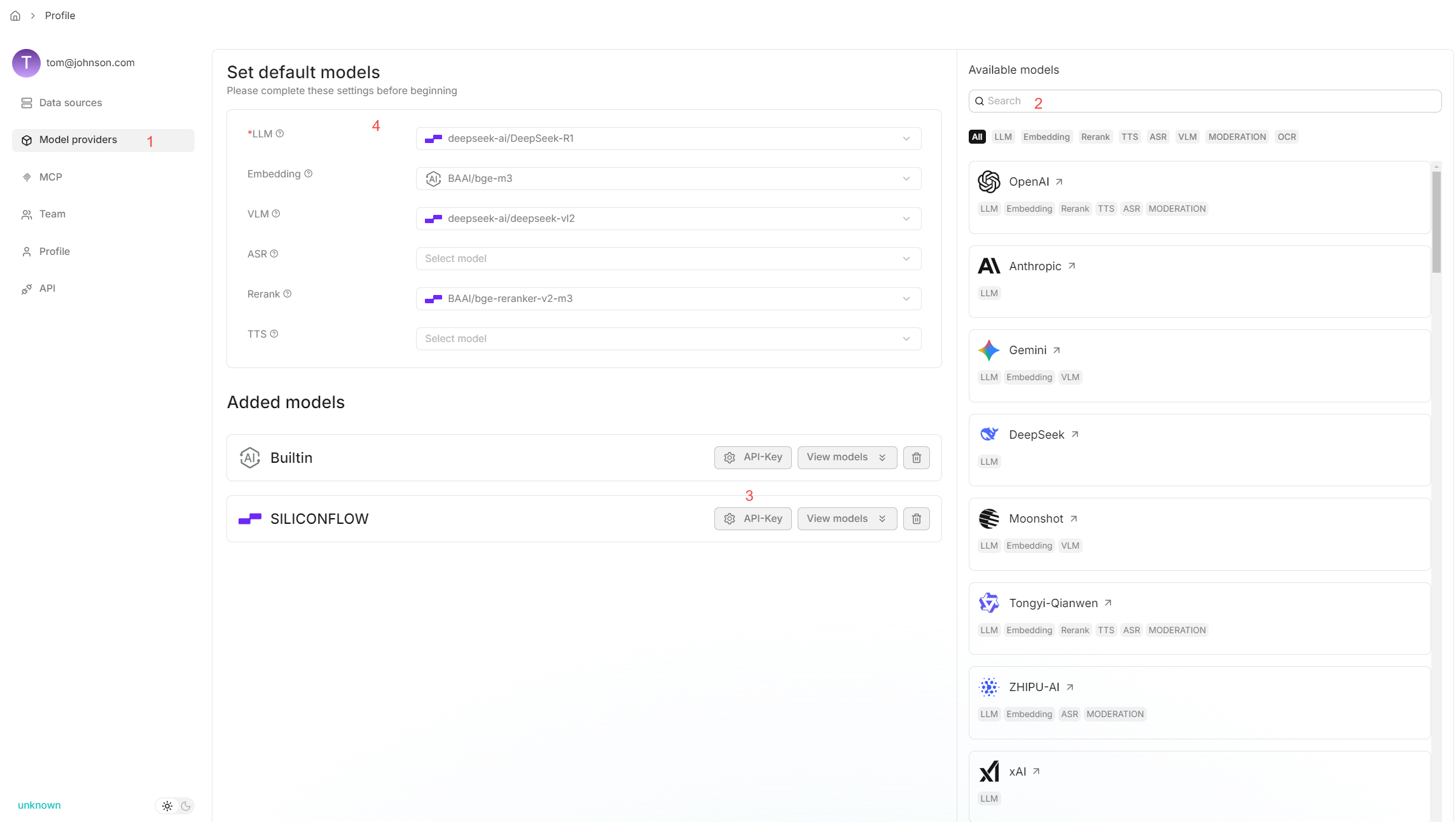
|
||||
|
||||
2. If your Agent involves dataset retrieval, ensure you [have properly configured your target knowledge base(s)](../../dataset/configure_knowledge_base.md).
|
||||
2. If your Agent involves dataset retrieval, ensure you [have properly configured your target dataset(s)](../../dataset/configure_knowledge_base.md).
|
||||
|
||||
## Quickstart
|
||||
|
||||
@ -113,7 +113,7 @@ Click the dropdown menu of **Model** to show the model configuration window.
|
||||
- **Model**: The chat model to use.
|
||||
- Ensure you set the chat model correctly on the **Model providers** page.
|
||||
- You can use different models for different components to increase flexibility or improve overall performance.
|
||||
- **Freedom**: A shortcut to **Temperature**, **Top P**, **Presence penalty**, and **Frequency penalty** settings, indicating the freedom level of the model. From **Improvise**, **Precise**, to **Balance**, each preset configuration corresponds to a unique combination of **Temperature**, **Top P**, **Presence penalty**, and **Frequency penalty**.
|
||||
- **Creavity**: A shortcut to **Temperature**, **Top P**, **Presence penalty**, and **Frequency penalty** settings, indicating the freedom level of the model. From **Improvise**, **Precise**, to **Balance**, each preset configuration corresponds to a unique combination of **Temperature**, **Top P**, **Presence penalty**, and **Frequency penalty**.
|
||||
This parameter has three options:
|
||||
- **Improvise**: Produces more creative responses.
|
||||
- **Precise**: (Default) Produces more conservative responses.
|
||||
@ -132,11 +132,12 @@ Click the dropdown menu of **Model** to show the model configuration window.
|
||||
- **Frequency penalty**: Discourages the model from repeating the same words or phrases too frequently in the generated text.
|
||||
- A higher **frequency penalty** value results in the model being more conservative in its use of repeated tokens.
|
||||
- Defaults to 0.7.
|
||||
- **Max tokens**:
|
||||
- **Max tokens**:
|
||||
This sets the maximum length of the model's output, measured in the number of tokens (words or pieces of words). It is disabled by default, allowing the model to determine the number of tokens in its responses.
|
||||
|
||||
:::tip NOTE
|
||||
- It is not necessary to stick with the same model for all components. If a specific model is not performing well for a particular task, consider using a different one.
|
||||
- If you are uncertain about the mechanism behind **Temperature**, **Top P**, **Presence penalty**, and **Frequency penalty**, simply choose one of the three options of **Preset configurations**.
|
||||
- If you are uncertain about the mechanism behind **Temperature**, **Top P**, **Presence penalty**, and **Frequency penalty**, simply choose one of the three options of **Creavity**.
|
||||
:::
|
||||
|
||||
### System prompt
|
||||
|
||||
@ -42,7 +42,7 @@ Click the dropdown menu of **Model** to show the model configuration window.
|
||||
- **Model**: The chat model to use.
|
||||
- Ensure you set the chat model correctly on the **Model providers** page.
|
||||
- You can use different models for different components to increase flexibility or improve overall performance.
|
||||
- **Freedom**: A shortcut to **Temperature**, **Top P**, **Presence penalty**, and **Frequency penalty** settings, indicating the freedom level of the model. From **Improvise**, **Precise**, to **Balance**, each preset configuration corresponds to a unique combination of **Temperature**, **Top P**, **Presence penalty**, and **Frequency penalty**.
|
||||
- **Creavity**: A shortcut to **Temperature**, **Top P**, **Presence penalty**, and **Frequency penalty** settings, indicating the freedom level of the model. From **Improvise**, **Precise**, to **Balance**, each preset configuration corresponds to a unique combination of **Temperature**, **Top P**, **Presence penalty**, and **Frequency penalty**.
|
||||
This parameter has three options:
|
||||
- **Improvise**: Produces more creative responses.
|
||||
- **Precise**: (Default) Produces more conservative responses.
|
||||
@ -61,10 +61,12 @@ Click the dropdown menu of **Model** to show the model configuration window.
|
||||
- **Frequency penalty**: Discourages the model from repeating the same words or phrases too frequently in the generated text.
|
||||
- A higher **frequency penalty** value results in the model being more conservative in its use of repeated tokens.
|
||||
- Defaults to 0.7.
|
||||
- **Max tokens**:
|
||||
This sets the maximum length of the model's output, measured in the number of tokens (words or pieces of words). It is disabled by default, allowing the model to determine the number of tokens in its responses.
|
||||
|
||||
:::tip NOTE
|
||||
- It is not necessary to stick with the same model for all components. If a specific model is not performing well for a particular task, consider using a different one.
|
||||
- If you are uncertain about the mechanism behind **Temperature**, **Top P**, **Presence penalty**, and **Frequency penalty**, simply choose one of the three options of **Preset configurations**.
|
||||
- If you are uncertain about the mechanism behind **Temperature**, **Top P**, **Presence penalty**, and **Frequency penalty**, simply choose one of the three options of **Creavity**.
|
||||
:::
|
||||
|
||||
### Message window size
|
||||
|
||||
40
docs/guides/agent/agent_component_reference/chunker_title.md
Normal file
40
docs/guides/agent/agent_component_reference/chunker_title.md
Normal file
@ -0,0 +1,40 @@
|
||||
---
|
||||
sidebar_position: 31
|
||||
slug: /chunker_title_component
|
||||
---
|
||||
|
||||
# Title chunker component
|
||||
|
||||
A component that splits texts into chunks by heading level.
|
||||
|
||||
---
|
||||
|
||||
A **Token chunker** component is a text splitter that uses specified heading level as delimiter to define chunk boundaries and create chunks.
|
||||
|
||||
## Scenario
|
||||
|
||||
A **Title chunker** component is optional, usually placed immediately after **Parser**.
|
||||
|
||||
:::caution WARNING
|
||||
Placing a **Title chunker** after a **Token chunker** is invalid and will cause an error. Please note that this restriction is not currently system-enforced and requires your attention.
|
||||
:::
|
||||
|
||||
## Configurations
|
||||
|
||||
### Hierarchy
|
||||
|
||||
Specifies the heading level to define chunk boundaries:
|
||||
|
||||
- H1
|
||||
- H2
|
||||
- H3 (Default)
|
||||
- H4
|
||||
|
||||
Click **+ Add** to add heading levels here or update the corresponding **Regular Expressions** fields for custom heading patterns.
|
||||
|
||||
### Output
|
||||
|
||||
The global variable name for the output of the **Title chunker** component, which can be referenced by subsequent components in the ingestion pipeline.
|
||||
|
||||
- Default: `chunks`
|
||||
- Type: `Array<Object>`
|
||||
43
docs/guides/agent/agent_component_reference/chunker_token.md
Normal file
43
docs/guides/agent/agent_component_reference/chunker_token.md
Normal file
@ -0,0 +1,43 @@
|
||||
---
|
||||
sidebar_position: 32
|
||||
slug: /chunker_token_component
|
||||
---
|
||||
|
||||
# Token chunker component
|
||||
|
||||
A component that splits texts into chunks, respecting a maximum token limit and using delimiters to find optimal breakpoints.
|
||||
|
||||
---
|
||||
|
||||
A **Token chunker** component is a text splitter that creates chunks by respecting a recommended maximum token length, using delimiters to ensure logical chunk breakpoints. It splits long texts into appropriately-sized, semantically related chunks.
|
||||
|
||||
|
||||
## Scenario
|
||||
|
||||
A **Token chunker** component is optional, usually placed immediately after **Parser** or **Title chunker**.
|
||||
|
||||
## Configurations
|
||||
|
||||
### Recommended chunk size
|
||||
|
||||
The recommended maximum token limit for each created chunk. The **Token chunker** component creates chunks at specified delimiters. If this token limit is reached before a delimiter, a chunk is created at that point.
|
||||
|
||||
### Overlapped percent (%)
|
||||
|
||||
This defines the overlap percentage between chunks. An appropriate degree of overlap ensures semantic coherence without creating excessive, redundant tokens for the LLM.
|
||||
|
||||
- Default: 0
|
||||
- Maximum: 30%
|
||||
|
||||
|
||||
### Delimiters
|
||||
|
||||
Defaults to `\n`. Click the right-hand **Recycle bin** button to remove it, or click **+ Add** to add a delimiter.
|
||||
|
||||
|
||||
### Output
|
||||
|
||||
The global variable name for the output of the **Token chunker** component, which can be referenced by subsequent components in the ingestion pipeline.
|
||||
|
||||
- Default: `chunks`
|
||||
- Type: `Array<Object>`
|
||||
29
docs/guides/agent/agent_component_reference/indexer.md
Normal file
29
docs/guides/agent/agent_component_reference/indexer.md
Normal file
@ -0,0 +1,29 @@
|
||||
---
|
||||
sidebar_position: 40
|
||||
slug: /indexer_component
|
||||
---
|
||||
|
||||
# Indexer component
|
||||
|
||||
A component that defines how chunks are indexed.
|
||||
|
||||
---
|
||||
|
||||
An **Indexer** component indexes chunks and configures their storage formats in the document engine.
|
||||
|
||||
## Scenario
|
||||
|
||||
An **Indexer** component is the mandatory ending component for all ingestion pipelines.
|
||||
|
||||
## Configurations
|
||||
|
||||
### Search method
|
||||
|
||||
This setting configures how chunks are stored in the document engine: as full-text, embeddings, or both.
|
||||
|
||||
### Filename embedding weight
|
||||
|
||||
This setting defines the filename's contribution to the final embedding, which is a weighted combination of both the chunk content and the filename. Essentially, a higher value gives the filename more influence in the final *composite* embedding.
|
||||
|
||||
- 0.1: Filename contributes 10% (chunk content 90%)
|
||||
- 0.5 (maximum): Filename contributes 50% (chunk content 90%)
|
||||
17
docs/guides/agent/agent_component_reference/parser.md
Normal file
17
docs/guides/agent/agent_component_reference/parser.md
Normal file
@ -0,0 +1,17 @@
|
||||
---
|
||||
sidebar_position: 30
|
||||
slug: /parser_component
|
||||
---
|
||||
|
||||
# Parser component
|
||||
|
||||
A component that sets the parsing rules for your dataset.
|
||||
|
||||
---
|
||||
|
||||
A **Parser** component defines how various file types should be parsed, including parsing methods for PDFs , fields to parse for Emails, and OCR methods for images.
|
||||
|
||||
|
||||
## Scenario
|
||||
|
||||
A **Parser** component is auto-populated on the ingestion pipeline canvas and required in all ingestion pipeline workflows.
|
||||
@ -87,9 +87,9 @@ RAGFlow employs a combination of weighted keyword similarity and weighted vector
|
||||
|
||||
Defaults to 0.2.
|
||||
|
||||
### Keyword similarity weight
|
||||
### Vector similarity weight
|
||||
|
||||
This parameter sets the weight of keyword similarity in the combined similarity score. The total of the two weights must equal 1.0. Its default value is 0.7, which means the weight of vector similarity in the combined search is 1 - 0.7 = 0.3.
|
||||
This parameter sets the weight of vector similarity in the composite similarity score. The total of the two weights must equal 1.0. Its default value is 0.3, which means the weight of keyword similarity in a combined search is 1 - 0.3 = 0.7.
|
||||
|
||||
### Top N
|
||||
|
||||
|
||||
80
docs/guides/agent/agent_component_reference/transformer.md
Normal file
80
docs/guides/agent/agent_component_reference/transformer.md
Normal file
@ -0,0 +1,80 @@
|
||||
---
|
||||
sidebar_position: 37
|
||||
slug: /transformer_component
|
||||
---
|
||||
|
||||
# Transformer component
|
||||
|
||||
A component that uses an LLM to extract insights from the chunks.
|
||||
|
||||
---
|
||||
|
||||
A **Transformer** component indexes chunks and configures their storage formats in the document engine. It *typically* precedes the **Indexer** in the ingestion pipeline, but you can also chain multiple **Transformer** components in sequence.
|
||||
|
||||
## Scenario
|
||||
|
||||
A **Transformer** component is essential when you need the LLM to extract new information, such as keywords, questions, metadata, and summaries, from the original chunks.
|
||||
|
||||
## Configurations
|
||||
|
||||
### Model
|
||||
|
||||
Click the dropdown menu of **Model** to show the model configuration window.
|
||||
|
||||
- **Model**: The chat model to use.
|
||||
- Ensure you set the chat model correctly on the **Model providers** page.
|
||||
- You can use different models for different components to increase flexibility or improve overall performance.
|
||||
- **Creavity**: A shortcut to **Temperature**, **Top P**, **Presence penalty**, and **Frequency penalty** settings, indicating the freedom level of the model. From **Improvise**, **Precise**, to **Balance**, each preset configuration corresponds to a unique combination of **Temperature**, **Top P**, **Presence penalty**, and **Frequency penalty**.
|
||||
This parameter has three options:
|
||||
- **Improvise**: Produces more creative responses.
|
||||
- **Precise**: (Default) Produces more conservative responses.
|
||||
- **Balance**: A middle ground between **Improvise** and **Precise**.
|
||||
- **Temperature**: The randomness level of the model's output.
|
||||
Defaults to 0.1.
|
||||
- Lower values lead to more deterministic and predictable outputs.
|
||||
- Higher values lead to more creative and varied outputs.
|
||||
- A temperature of zero results in the same output for the same prompt.
|
||||
- **Top P**: Nucleus sampling.
|
||||
- Reduces the likelihood of generating repetitive or unnatural text by setting a threshold *P* and restricting the sampling to tokens with a cumulative probability exceeding *P*.
|
||||
- Defaults to 0.3.
|
||||
- **Presence penalty**: Encourages the model to include a more diverse range of tokens in the response.
|
||||
- A higher **presence penalty** value results in the model being more likely to generate tokens not yet been included in the generated text.
|
||||
- Defaults to 0.4.
|
||||
- **Frequency penalty**: Discourages the model from repeating the same words or phrases too frequently in the generated text.
|
||||
- A higher **frequency penalty** value results in the model being more conservative in its use of repeated tokens.
|
||||
- Defaults to 0.7.
|
||||
- **Max tokens**:
|
||||
This sets the maximum length of the model's output, measured in the number of tokens (words or pieces of words). It is disabled by default, allowing the model to determine the number of tokens in its responses.
|
||||
|
||||
:::tip NOTE
|
||||
- It is not necessary to stick with the same model for all components. If a specific model is not performing well for a particular task, consider using a different one.
|
||||
- If you are uncertain about the mechanism behind **Temperature**, **Top P**, **Presence penalty**, and **Frequency penalty**, simply choose one of the three options of **Creativity**.
|
||||
:::
|
||||
|
||||
### Result destination
|
||||
|
||||
Select the type of output to be generated by the LLM:
|
||||
|
||||
- Summary
|
||||
- Keywords
|
||||
- Questions
|
||||
- Metadata
|
||||
|
||||
### System prompt
|
||||
|
||||
Typically, you use the system prompt to describe the task for the LLM, specify how it should respond, and outline other miscellaneous requirements. We do not plan to elaborate on this topic, as it can be as extensive as prompt engineering.
|
||||
|
||||
:::tip NOTE
|
||||
The system prompt here automatically updates to match your selected **Result destination**.
|
||||
:::
|
||||
|
||||
### User prompt
|
||||
|
||||
The user-defined prompt. For example, you can type `/` or click **(x)** to insert variables of preceding components in the ingestion pipeline as the LLM's input.
|
||||
|
||||
### Output
|
||||
|
||||
The global variable name for the output of the **Transformer** component, which can be referenced by subsequent **Transformer** components in the ingestion pipeline.
|
||||
|
||||
- Default: `chunks`
|
||||
- Type: `Array<Object>`
|
||||
@ -19,7 +19,7 @@ You start an AI conversation by creating an assistant.
|
||||
|
||||
> RAGFlow offers you the flexibility of choosing a different chat model for each dialogue, while allowing you to set the default models in **System Model Settings**.
|
||||
|
||||
2. Update **Assistant settings**:
|
||||
2. Update Assistant-specific settings:
|
||||
|
||||
- **Assistant name** is the name of your chat assistant. Each assistant corresponds to a dialogue with a unique combination of datasets, prompts, hybrid search configurations, and large model settings.
|
||||
- **Empty response**:
|
||||
@ -28,12 +28,12 @@ You start an AI conversation by creating an assistant.
|
||||
- **Show quote**: This is a key feature of RAGFlow and enabled by default. RAGFlow does not work like a black box. Instead, it clearly shows the sources of information that its responses are based on.
|
||||
- Select the corresponding datasets. You can select one or multiple datasets, but ensure that they use the same embedding model, otherwise an error would occur.
|
||||
|
||||
3. Update **Prompt engine**:
|
||||
3. Update Prompt-specific settings:
|
||||
|
||||
- In **System**, you fill in the prompts for your LLM, you can also leave the default prompt as-is for the beginning.
|
||||
- **Similarity threshold** sets the similarity "bar" for each chunk of text. The default is 0.2. Text chunks with lower similarity scores are filtered out of the final response.
|
||||
- **Keyword similarity weight** is set to 0.7 by default. RAGFlow uses a hybrid score system to evaluate the relevance of different text chunks. This value sets the weight assigned to the keyword similarity component in the hybrid score.
|
||||
- If **Rerank model** is left empty, the hybrid score system uses keyword similarity and vector similarity, and the default weight assigned to the vector similarity component is 1-0.7=0.3.
|
||||
- **Vector similarity weight** is set to 0.3 by default. RAGFlow uses a hybrid score system to evaluate the relevance of different text chunks. This value sets the weight assigned to the vector similarity component in the hybrid score.
|
||||
- If **Rerank model** is left empty, the hybrid score system uses keyword similarity and vector similarity, and the default weight assigned to the keyword similarity component is 1-0.3=0.7.
|
||||
- If **Rerank model** is selected, the hybrid score system uses keyword similarity and reranker score, and the default weight assigned to the reranker score is 1-0.7=0.3.
|
||||
- **Top N** determines the *maximum* number of chunks to feed to the LLM. In other words, even if more chunks are retrieved, only the top N chunks are provided as input.
|
||||
- **Multi-turn optimization** enhances user queries using existing context in a multi-round conversation. It is enabled by default. When enabled, it will consume additional LLM tokens and significantly increase the time to generate answers.
|
||||
@ -48,14 +48,14 @@ You start an AI conversation by creating an assistant.
|
||||
- If no target language is selected, the system will search only in the language of your query, which may cause relevant information in other languages to be missed.
|
||||
- **Variable** refers to the variables (keys) to be used in the system prompt. `{knowledge}` is a reserved variable. Click **Add** to add more variables for the system prompt.
|
||||
- If you are uncertain about the logic behind **Variable**, leave it *as-is*.
|
||||
- As of v0.20.5, if you add custom variables here, the only way you can pass in their values is to call:
|
||||
- As of v0.21.1, if you add custom variables here, the only way you can pass in their values is to call:
|
||||
- HTTP method [Converse with chat assistant](../../references/http_api_reference.md#converse-with-chat-assistant), or
|
||||
- Python method [Converse with chat assistant](../../references/python_api_reference.md#converse-with-chat-assistant).
|
||||
|
||||
4. Update **Model Setting**:
|
||||
4. Update Model-specific Settings:
|
||||
|
||||
- In **Model**: you select the chat model. Though you have selected the default chat model in **System Model Settings**, RAGFlow allows you to choose an alternative chat model for your dialogue.
|
||||
- **Freedom**: A shortcut to **Temperature**, **Top P**, **Presence penalty**, and **Frequency penalty** settings, indicating the freedom level of the model. From **Improvise**, **Precise**, to **Balance**, each preset configuration corresponds to a unique combination of **Temperature**, **Top P**, **Presence penalty**, and **Frequency penalty**.
|
||||
- **Creavity**: A shortcut to **Temperature**, **Top P**, **Presence penalty**, and **Frequency penalty** settings, indicating the freedom level of the model. From **Improvise**, **Precise**, to **Balance**, each preset configuration corresponds to a unique combination of **Temperature**, **Top P**, **Presence penalty**, and **Frequency penalty**.
|
||||
This parameter has three options:
|
||||
- **Improvise**: Produces more creative responses.
|
||||
- **Precise**: (Default) Produces more conservative responses.
|
||||
|
||||
@ -1,5 +1,5 @@
|
||||
---
|
||||
sidebar_position: -1
|
||||
sidebar_position: -10
|
||||
slug: /configure_knowledge_base
|
||||
---
|
||||
|
||||
@ -37,7 +37,7 @@ This section covers the following topics:
|
||||
|
||||
### Select chunking method
|
||||
|
||||
RAGFlow offers multiple chunking template to facilitate chunking files of different layouts and ensure semantic integrity. In **Chunking method**, you can choose the default template that suits the layouts and formats of your files. The following table shows the descriptions and the compatible file formats of each supported chunk template:
|
||||
RAGFlow offers multiple built-in chunking template to facilitate chunking files of different layouts and ensure semantic integrity. From the **Built-in** chunking method dropdown under **Parse type**, you can choose the default template that suits the layouts and formats of your files. The following table shows the descriptions and the compatible file formats of each supported chunk template:
|
||||
|
||||
| **Template** | Description | File format |
|
||||
|--------------|-----------------------------------------------------------------------|-----------------------------------------------------------------------------------------------|
|
||||
@ -54,9 +54,23 @@ RAGFlow offers multiple chunking template to facilitate chunking files of differ
|
||||
| One | Each document is chunked in its entirety (as one). | DOCX, XLSX, XLS (Excel 97-2003), PDF, TXT |
|
||||
| Tag | The dataset functions as a tag set for the others. | XLSX, CSV/TXT |
|
||||
|
||||
You can also change a file's chunking method on the **Datasets** page.
|
||||
You can also change a file's chunking method on the **Files** page.
|
||||
|
||||
|
||||
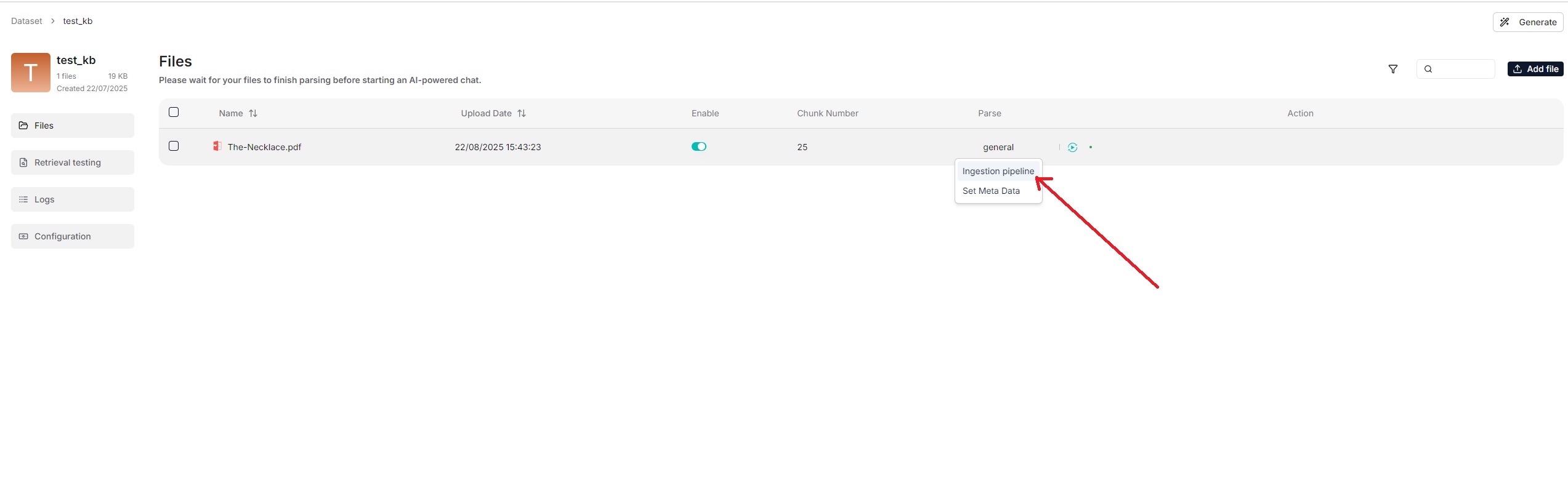
|
||||
|
||||
<details>
|
||||
<summary>From v0.21.1 onward, RAGFlow supports ingestion pipeline for customized data ingestion and cleansing workflows.</summary>
|
||||
|
||||
To use a customized data pipeline:
|
||||
|
||||
1. On the **Agent** page, click **+ Create agent** > **Create from blank**.
|
||||
2. Select **Ingestion pipeline** and name your data pipeline in the popup, then click **Save** to show the data pipeline canvas.
|
||||
3. After updating your data pipeline, click **Save** on the top right of the canvas.
|
||||
4. Navigate to the **Configuration** page of your dataset, select **Choose pipeline** in **Ingestion pipeline**.
|
||||
|
||||
*Your saved data pipeline will appear in the dropdown menu below.*
|
||||
|
||||
</details>
|
||||
|
||||
### Select embedding model
|
||||
|
||||
@ -124,7 +138,7 @@ See [Run retrieval test](./run_retrieval_test.md) for details.
|
||||
|
||||
## Search for dataset
|
||||
|
||||
As of RAGFlow v0.20.5, the search feature is still in a rudimentary form, supporting only dataset search by name.
|
||||
As of RAGFlow v0.21.1, the search feature is still in a rudimentary form, supporting only dataset search by name.
|
||||
|
||||

|
||||
|
||||
|
||||
@ -53,25 +53,31 @@ Whether to enable entity resolution. You can think of this as an entity deduplic
|
||||
- (Default) Disable entity resolution.
|
||||
- Enable entity resolution. This option consumes more tokens.
|
||||
|
||||
### Community report generation
|
||||
### Community reports
|
||||
|
||||
In a knowledge graph, a community is a cluster of entities linked by relationships. You can have the LLM generate an abstract for each community, known as a community report. See [here](https://www.microsoft.com/en-us/research/blog/graphrag-improving-global-search-via-dynamic-community-selection/) for more information. This indicates whether to generate community reports:
|
||||
|
||||
- Generate community reports. This option consumes more tokens.
|
||||
- (Default) Do not generate community reports.
|
||||
|
||||
## Procedure
|
||||
## Quickstart
|
||||
|
||||
1. On the **Configuration** page of your dataset, switch on **Extract knowledge graph** or adjust its settings as needed, and click **Save** to confirm your changes.
|
||||
1. Navigate to the **Configuration** page of your dataset and update:
|
||||
|
||||
- Entity types: *Required* - Specifies the entity types in the knowledge graph to generate. You don't have to stick with the default, but you need to customize them for your documents.
|
||||
- Method: *Optional*
|
||||
- Entity resolution: *Optional*
|
||||
- Community reports: *Optional*
|
||||
*The default knowledge graph configurations for your dataset are now set.*
|
||||
|
||||
- *The default knowledge graph configurations for your dataset are now set and files uploaded from this point onward will automatically use these settings during parsing.*
|
||||
- *Files parsed before this update will retain their original knowledge graph settings.*
|
||||
2. Navigate to the **Files** page of your dataset, click the **Generate** button on the top right corner of the page, then select **Knowledge graph** from the dropdown to initiate the knowledge graph generation process.
|
||||
|
||||
2. The knowledge graph of your dataset does *not* automatically update *until* a newly uploaded file is parsed.
|
||||
*You can click the pause button in the dropdown to halt the build process when necessary.*
|
||||
|
||||
_A **Knowledge graph** entry appears under **Configuration** once a knowledge graph is created._
|
||||
3. Go back to the **Configuration** page:
|
||||
|
||||
*Once a knowledge graph is generated, the **Knowledge graph** field changes from `Not generated` to `Generated at a specific timestamp`. You can delete it by clicking the recycle bin button to the right of the field.*
|
||||
|
||||
3. Click **Knowledge graph** to view the details of the generated graph.
|
||||
4. To use the created knowledge graph, do either of the following:
|
||||
|
||||
- In the **Chat setting** panel of your chat app, switch on the **Use knowledge graph** toggle.
|
||||
@ -79,17 +85,13 @@ In a knowledge graph, a community is a cluster of entities linked by relationshi
|
||||
|
||||
## Frequently asked questions
|
||||
|
||||
### Can I have different knowledge graph settings for different files in my dataset?
|
||||
|
||||
Yes, you can. Just one graph is generated per dataset. The smaller graphs of your files will be *combined* into one big, unified graph at the end of the graph extraction process.
|
||||
|
||||
### Does the knowledge graph automatically update when I remove a related file?
|
||||
|
||||
Nope. The knowledge graph does *not* automatically update *until* a newly uploaded document is parsed.
|
||||
Nope. The knowledge graph does *not* update *until* you regenerate a knowledge graph for your dataset.
|
||||
|
||||
### How to remove a generated knowledge graph?
|
||||
|
||||
To remove the generated knowledge graph, delete all related files in your dataset. Although the **Knowledge graph** entry will still be visible, the graph has actually been deleted.
|
||||
On the **Configuration** page of your dataset, find the **Knoweledge graph** field and click the recycle bin button to the right of the field.
|
||||
|
||||
### Where is the created knowledge graph stored?
|
||||
|
||||
|
||||
@ -72,3 +72,22 @@ The maximum number of clusters to create. Defaults to 64, with a maximum limit o
|
||||
### Random seed
|
||||
|
||||
A random seed. Click **+** to change the seed value.
|
||||
|
||||
## Quickstart
|
||||
|
||||
1. Navigate to the **Configuration** page of your dataset and update:
|
||||
|
||||
- Prompt: *Optional* - We recommend that you keep it as-is until you understand the mechanism behind.
|
||||
- Max token: *Optional*
|
||||
- Threshold: *Optional*
|
||||
- Max cluster: *Optional*
|
||||
|
||||
2. Navigate to the **Files** page of your dataset, click the **Generate** button on the top right corner of the page, then select **RAPTOR** from the dropdown to initiate the RAPTOR build process.
|
||||
|
||||
*You can click the pause button in the dropdown to halt the build process when necessary.*
|
||||
|
||||
3. Go back to the **Configuration** page:
|
||||
|
||||
*The **RAPTOR** field changes from `Not generated` to `Generated at a specific timestamp` when a RAPTOR hierarchical tree structure is generated. You can delete it by clicking the recycle bin button to the right of the field.*
|
||||
|
||||
4. Once a RAPTOR hierarchical tree structure is generated, your chat assistant and **Retrieval** agent component will use it for retrieval as a default.
|
||||
|
||||
39
docs/guides/dataset/extract_table_of_contents.md
Normal file
39
docs/guides/dataset/extract_table_of_contents.md
Normal file
@ -0,0 +1,39 @@
|
||||
---
|
||||
sidebar_position: 4
|
||||
slug: /enable_table_of_contents
|
||||
---
|
||||
|
||||
# Extract table of contents
|
||||
|
||||
Extract table of contents (TOC) from documents to provide long context RAG and improve retrieval.
|
||||
|
||||
---
|
||||
|
||||
During indexing, this technique uses LLM to extract and generate chapter information, which is added to each chunk to provide sufficient global context. At the retrieval stage, it first uses the chunks matched by search, then supplements missing chunks based on the table of contents structure. This addresses issues caused by chunk fragmentation and insufficient context, improving answer quality.
|
||||
|
||||
:::danger WARNING
|
||||
Enabling TOC extraction requires significant memory, computational resources, and tokens.
|
||||
:::
|
||||
|
||||
## Prerequisites
|
||||
|
||||
The system's default chat model is used to summarize clustered content. Before proceeding, ensure that you have a chat model properly configured:
|
||||
|
||||

|
||||
|
||||
## Quickstart
|
||||
|
||||
1. Navigate to the **Configuration** page.
|
||||
|
||||
2. Enable **TOC Enhance**.
|
||||
|
||||
3. To use this technique during retrieval, do either of the following:
|
||||
|
||||
- In the **Chat setting** panel of your chat app, switch on the **TOC Enhance** toggle.
|
||||
- If you are using an agent, click the **Retrieval** agent component to specify the dataset(s) and switch on the **TOC Enhance** toggle.
|
||||
|
||||
## Frequently asked questions
|
||||
|
||||
### Will previously parsed files be searched using the TOC enhancement feature once I enable `TOC Enhance`?
|
||||
|
||||
No. Only files parsed after you enable **TOC Enhance** will be searched using the TOC enhancement feature. To apply this feature to files parsed before enabling **TOC Enhance**, you must reparse them.
|
||||
@ -29,9 +29,9 @@ In contrast, chunks created from [knowledge graph construction](./construct_know
|
||||
|
||||
This sets the bar for retrieving chunks: chunks with similarities below the threshold will be filtered out. By default, the threshold is set to 0.2. This means that only chunks with hybrid similarity score of 20 or higher will be retrieved.
|
||||
|
||||
### Keyword similarity weight
|
||||
### Vector similarity weight
|
||||
|
||||
This sets the weight of keyword similarity in the combined similarity score, whether used with vector cosine similarity or a reranking score. By default, it is set to 0.7, making the weight of the other component 0.3 (1 - 0.7).
|
||||
This sets the weight of vector similarity in the composite similarity score, whether used with vector cosine similarity or a reranking score. By default, it is set to 0.3, making the weight of the other component 0.7 (1 - 0.3).
|
||||
|
||||
### Rerank model
|
||||
|
||||
|
||||
@ -1,5 +1,5 @@
|
||||
---
|
||||
sidebar_position: 1
|
||||
sidebar_position: -4
|
||||
slug: /select_pdf_parser
|
||||
---
|
||||
|
||||
@ -25,7 +25,7 @@ RAGFlow isn't one-size-fits-all. It is built for flexibility and supports deeper
|
||||
- **One**
|
||||
- To use a third-party visual model for parsing PDFs, ensure you have set a default img2txt model under **Set default models** on the **Model providers** page.
|
||||
|
||||
## Procedure
|
||||
## Quickstart
|
||||
|
||||
1. On your dataset's **Configuration** page, select a chunking method, say **General**.
|
||||
|
||||
@ -35,8 +35,31 @@ RAGFlow isn't one-size-fits-all. It is built for flexibility and supports deeper
|
||||
|
||||
- DeepDoc: (Default) The default visual model performing OCR, TSR, and DLR tasks on PDFs, which can be time-consuming.
|
||||
- Naive: Skip OCR, TSR, and DLR tasks if *all* your PDFs are plain text.
|
||||
- MinerU: An experimental feature.
|
||||
- A third-party visual model provided by a specific model provider.
|
||||
|
||||
:::danger IMPORTANG
|
||||
MinerU PDF document parsing is available starting from v0.21.1. To use this feature, follow these steps:
|
||||
|
||||
1. Before deploying ragflow-server, update your **docker/.env** file:
|
||||
- Enable `HF_ENDPOINT=https://hf-mirror.com`
|
||||
- Add a MinerU entry: `MINERU_EXECUTABLE=/ragflow/uv_tools/.venv/bin/mineru`
|
||||
|
||||
2. Start the ragflow-server and run the following commands inside the container:
|
||||
|
||||
```bash
|
||||
mkdir uv_tools
|
||||
cd uv_tools
|
||||
uv venv .venv
|
||||
source .venv/bin/activate
|
||||
uv pip install -U "mineru[core]" -i https://mirrors.aliyun.com/pypi/simple
|
||||
```
|
||||
|
||||
3. Restart the ragflow-server.
|
||||
4. In the web UI, navigate to the **Configuration** page of your dataset. Click **Built-in** in the **Ingestion pipeline** section, select a chunking method from the **Built-in** dropdown, which supports PDF parsing, and slect **MinerU** in **PDF parser**.
|
||||
5. If you use a custom ingestion pipeline instead, you must also complete the first three steps before selecting **MinerU** in the **Parsing method** section of the **Parser** component.
|
||||
:::
|
||||
|
||||
:::caution WARNING
|
||||
Third-party visual models are marked **Experimental**, because we have not fully tested these models for the aforementioned data extraction tasks.
|
||||
:::
|
||||
|
||||
@ -1,5 +1,5 @@
|
||||
---
|
||||
sidebar_position: 0
|
||||
sidebar_position: -7
|
||||
slug: /set_metada
|
||||
---
|
||||
|
||||
@ -21,6 +21,10 @@ Ensure that your metadata is in JSON format; otherwise, your updates will not be
|
||||
|
||||
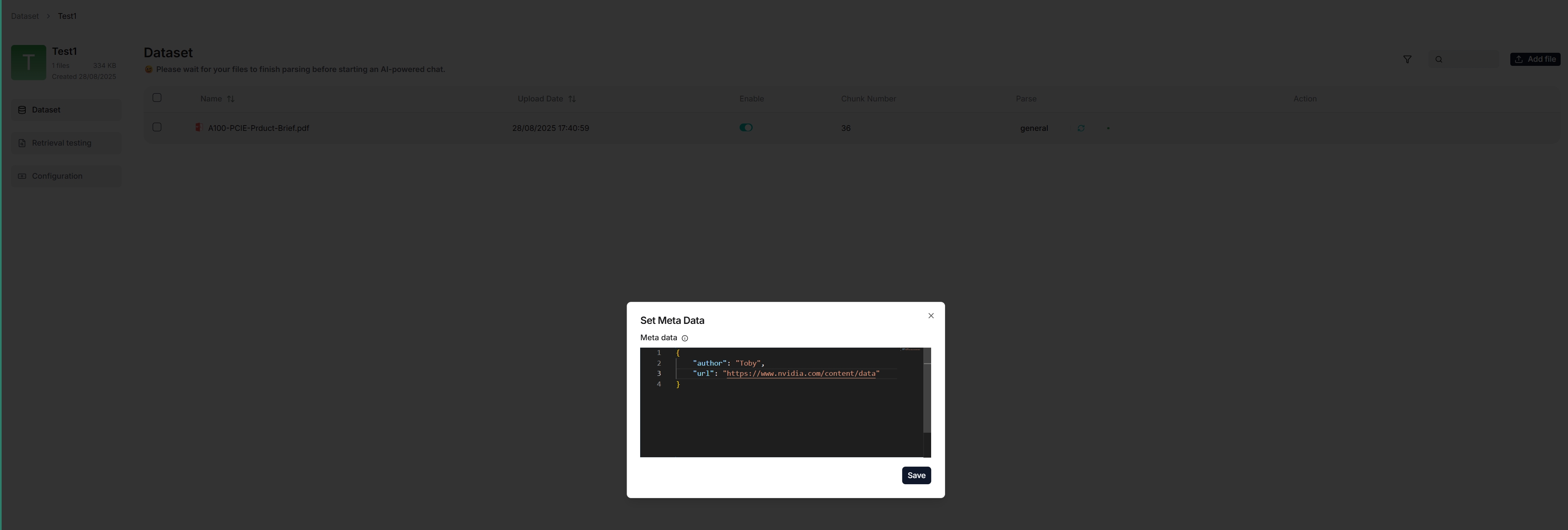
|
||||
|
||||
## Related APIs
|
||||
|
||||
[Retrieve chunks](../../references/http_api_reference.md#retrieve-chunks)
|
||||
|
||||
## Frequently asked questions
|
||||
|
||||
### Can I set metadata for multiple documents at once?
|
||||
|
||||
@ -1,5 +1,5 @@
|
||||
---
|
||||
sidebar_position: 2
|
||||
sidebar_position: -2
|
||||
slug: /set_page_rank
|
||||
---
|
||||
|
||||
|
||||
@ -42,8 +42,8 @@ A tag set is *not* involved in document indexing or retrieval. Do not specify a
|
||||
:::
|
||||
|
||||
1. Click **+ Create dataset** to create a dataset.
|
||||
2. Navigate to the **Configuration** page of the created dataset and choose **Tag** as the default chunking method.
|
||||
3. Navigate to the **Dataset** page and upload and parse your table file in XLSX, CSV, or TXT formats.
|
||||
2. Navigate to the **Configuration** page of the created dataset, select **Built-in** in **Ingestion pipeline**, then choose **Tag** as the default chunking method from the **Built-in** drop-down menu.
|
||||
3. Go back to the **Files** page and upload and parse your table file in XLSX, CSV, or TXT formats.
|
||||
_A tag cloud appears under the **Tag view** section, indicating the tag set is created:_
|
||||

|
||||
4. Click the **Table** tab to view the tag frequency table:
|
||||
|
||||
@ -87,4 +87,4 @@ RAGFlow's file management allows you to download an uploaded file:
|
||||
|
||||

|
||||
|
||||
> As of RAGFlow v0.20.5, bulk download is not supported, nor can you download an entire folder.
|
||||
> As of RAGFlow v0.21.1, bulk download is not supported, nor can you download an entire folder.
|
||||
|
||||
@ -1,3 +1,9 @@
|
||||
---
|
||||
sidebar_position: 6
|
||||
slug: /manage_users_and_services
|
||||
---
|
||||
|
||||
|
||||
# Admin CLI and Admin Service
|
||||
|
||||
|
||||
@ -8,31 +14,55 @@ The Admin CLI and Admin Service form a client-server architectural suite for RAG
|
||||
|
||||
## Starting the Admin Service
|
||||
|
||||
### Launching from source code
|
||||
|
||||
1. Before start Admin Service, please make sure RAGFlow system is already started.
|
||||
2. Switch to ragflow/ directory and run the service script:
|
||||
|
||||
```bash
|
||||
source .venv/bin/activate
|
||||
export PYTHONPATH=$(pwd)
|
||||
python admin/admin_server.py
|
||||
```
|
||||
2. Launch from source code:
|
||||
|
||||
The service will start and listen for incoming connections from the CLI on the configured port. Default port is 9381.
|
||||
```bash
|
||||
python admin/server/admin_server.py
|
||||
```
|
||||
|
||||
The service will start and listen for incoming connections from the CLI on the configured port.
|
||||
|
||||
### Using docker image
|
||||
|
||||
1. Before startup, please configure the `docker_compose.yml` file to enable admin server:
|
||||
|
||||
```bash
|
||||
command:
|
||||
- --enable-adminserver
|
||||
```
|
||||
|
||||
2. Start the containers, the service will start and listen for incoming connections from the CLI on the configured port.
|
||||
|
||||
|
||||
|
||||
## Using the Admin CLI
|
||||
|
||||
1. Ensure the Admin Service is running.
|
||||
2. Launch the CLI client:
|
||||
|
||||
```bash
|
||||
source .venv/bin/activate
|
||||
export PYTHONPATH=$(pwd)
|
||||
python admin/admin_client.py -h 0.0.0.0 -p 9381
|
||||
```
|
||||
2. Install ragflow-cli.
|
||||
|
||||
Enter superuser's password to login. Default password is `admin`.
|
||||
```bash
|
||||
pip install ragflow-cli==0.21.1
|
||||
```
|
||||
|
||||
3. Launch the CLI client:
|
||||
|
||||
```bash
|
||||
ragflow-cli -h 127.0.0.1 -p 9381
|
||||
```
|
||||
|
||||
You will be prompted to enter the superuser's password to log in.
|
||||
The default password is admin.
|
||||
|
||||
**Parameters:**
|
||||
|
||||
- -h: RAGFlow admin server host address
|
||||
|
||||
- -p: RAGFlow admin server port
|
||||
|
||||
|
||||
|
||||
@ -50,7 +80,7 @@ Commands are case-insensitive and must be terminated with a semicolon(;).
|
||||
|
||||
`SHOW SERVICE <id>;`
|
||||
|
||||
- Shows detailed status information for the service identified by <id>.
|
||||
- Shows detailed status information for the service identified by **id**.
|
||||
- [Example](#example-show-service)
|
||||
|
||||
### User Management Commands
|
||||
@ -115,16 +145,16 @@ Commands are case-insensitive and must be terminated with a semicolon(;).
|
||||
admin> list services;
|
||||
command: list services;
|
||||
Listing all services
|
||||
+-------------------------------------------------------------------------------------------+-----------+----+---------------+-------+----------------+
|
||||
| extra | host | id | name | port | service_type |
|
||||
+-------------------------------------------------------------------------------------------+-----------+----+---------------+-------+----------------+
|
||||
| {} | 0.0.0.0 | 0 | ragflow_0 | 9380 | ragflow_server |
|
||||
| {'meta_type': 'mysql', 'password': 'infini_rag_flow', 'username': 'root'} | localhost | 1 | mysql | 5455 | meta_data |
|
||||
| {'password': 'infini_rag_flow', 'store_type': 'minio', 'user': 'rag_flow'} | localhost | 2 | minio | 9000 | file_store |
|
||||
| {'password': 'infini_rag_flow', 'retrieval_type': 'elasticsearch', 'username': 'elastic'} | localhost | 3 | elasticsearch | 1200 | retrieval |
|
||||
| {'db_name': 'default_db', 'retrieval_type': 'infinity'} | localhost | 4 | infinity | 23817 | retrieval |
|
||||
| {'database': 1, 'mq_type': 'redis', 'password': 'infini_rag_flow'} | localhost | 5 | redis | 6379 | message_queue |
|
||||
+-------------------------------------------------------------------------------------------+-----------+----+---------------+-------+----------------+
|
||||
+-------------------------------------------------------------------------------------------+-----------+----+---------------+-------+----------------+---------+
|
||||
| extra | host | id | name | port | service_type | status |
|
||||
+-------------------------------------------------------------------------------------------+-----------+----+---------------+-------+----------------+---------+
|
||||
| {} | 0.0.0.0 | 0 | ragflow_0 | 9380 | ragflow_server | Timeout |
|
||||
| {'meta_type': 'mysql', 'password': 'infini_rag_flow', 'username': 'root'} | localhost | 1 | mysql | 5455 | meta_data | Alive |
|
||||
| {'password': 'infini_rag_flow', 'store_type': 'minio', 'user': 'rag_flow'} | localhost | 2 | minio | 9000 | file_store | Alive |
|
||||
| {'password': 'infini_rag_flow', 'retrieval_type': 'elasticsearch', 'username': 'elastic'} | localhost | 3 | elasticsearch | 1200 | retrieval | Alive |
|
||||
| {'db_name': 'default_db', 'retrieval_type': 'infinity'} | localhost | 4 | infinity | 23817 | retrieval | Timeout |
|
||||
| {'database': 1, 'mq_type': 'redis', 'password': 'infini_rag_flow'} | localhost | 5 | redis | 6379 | message_queue | Alive |
|
||||
+-------------------------------------------------------------------------------------------+-----------+----+---------------+-------+----------------+---------+
|
||||
|
||||
```
|
||||
|
||||
@ -318,7 +348,7 @@ Listing all agents of user: lynn_inf@hotmail.com
|
||||
+-----------------+-------------+------------+-----------------+
|
||||
| canvas_category | canvas_type | permission | title |
|
||||
+-----------------+-------------+------------+-----------------+
|
||||
| agent_canvas | None | team | research_helper |
|
||||
| agent | None | team | research_helper |
|
||||
+-----------------+-------------+------------+-----------------+
|
||||
```
|
||||
|
||||
|
||||
@ -18,7 +18,7 @@ RAGFlow ships with a built-in [Langfuse](https://langfuse.com) integration so th
|
||||
Langfuse stores traces, spans and prompt payloads in a purpose-built observability backend and offers filtering and visualisations on top.
|
||||
|
||||
:::info NOTE
|
||||
• RAGFlow **≥ 0.20.5** (contains the Langfuse connector)
|
||||
• RAGFlow **≥ 0.21.1** (contains the Langfuse connector)
|
||||
• A Langfuse workspace (cloud or self-hosted) with a _Project Public Key_ and _Secret Key_
|
||||
:::
|
||||
|
||||
|
||||
@ -66,10 +66,10 @@ To upgrade RAGFlow, you must upgrade **both** your code **and** your Docker imag
|
||||
git clone https://github.com/infiniflow/ragflow.git
|
||||
```
|
||||
|
||||
2. Switch to the latest, officially published release, e.g., `v0.20.5`:
|
||||
2. Switch to the latest, officially published release, e.g., `v0.21.1`:
|
||||
|
||||
```bash
|
||||
git checkout -f v0.20.5
|
||||
git checkout -f v0.21.1
|
||||
```
|
||||
|
||||
3. Update **ragflow/docker/.env**:
|
||||
@ -83,14 +83,14 @@ To upgrade RAGFlow, you must upgrade **both** your code **and** your Docker imag
|
||||
<TabItem value="slim">
|
||||
|
||||
```bash
|
||||
RAGFLOW_IMAGE=infiniflow/ragflow:v0.20.5-slim
|
||||
RAGFLOW_IMAGE=infiniflow/ragflow:v0.21.1-slim
|
||||
```
|
||||
|
||||
</TabItem>
|
||||
<TabItem value="full">
|
||||
|
||||
```bash
|
||||
RAGFLOW_IMAGE=infiniflow/ragflow:v0.20.5
|
||||
RAGFLOW_IMAGE=infiniflow/ragflow:v0.21.1
|
||||
```
|
||||
|
||||
</TabItem>
|
||||
@ -114,10 +114,10 @@ No, you do not need to. Upgrading RAGFlow in itself will *not* remove your uploa
|
||||
1. From an environment with Internet access, pull the required Docker image.
|
||||
2. Save the Docker image to a **.tar** file.
|
||||
```bash
|
||||
docker save -o ragflow.v0.20.5.tar infiniflow/ragflow:v0.20.5
|
||||
docker save -o ragflow.v0.21.1.tar infiniflow/ragflow:v0.21.1
|
||||
```
|
||||
3. Copy the **.tar** file to the target server.
|
||||
4. Load the **.tar** file into Docker:
|
||||
```bash
|
||||
docker load -i ragflow.v0.20.5.tar
|
||||
docker load -i ragflow.v0.21.1.tar
|
||||
```
|
||||
|
||||
@ -44,7 +44,7 @@ This section provides instructions on setting up the RAGFlow server on Linux. If
|
||||
|
||||
`vm.max_map_count`. This value sets the maximum number of memory map areas a process may have. Its default value is 65530. While most applications require fewer than a thousand maps, reducing this value can result in abnormal behaviors, and the system will throw out-of-memory errors when a process reaches the limitation.
|
||||
|
||||
RAGFlow v0.20.5 uses Elasticsearch or [Infinity](https://github.com/infiniflow/infinity) for multiple recall. Setting the value of `vm.max_map_count` correctly is crucial to the proper functioning of the Elasticsearch component.
|
||||
RAGFlow v0.21.1 uses Elasticsearch or [Infinity](https://github.com/infiniflow/infinity) for multiple recall. Setting the value of `vm.max_map_count` correctly is crucial to the proper functioning of the Elasticsearch component.
|
||||
|
||||
<Tabs
|
||||
defaultValue="linux"
|
||||
@ -184,13 +184,13 @@ This section provides instructions on setting up the RAGFlow server on Linux. If
|
||||
```bash
|
||||
$ git clone https://github.com/infiniflow/ragflow.git
|
||||
$ cd ragflow/docker
|
||||
$ git checkout -f v0.20.5
|
||||
$ git checkout -f v0.21.1
|
||||
```
|
||||
|
||||
3. Use the pre-built Docker images and start up the server:
|
||||
|
||||
:::tip NOTE
|
||||
The command below downloads the `v0.20.5-slim` edition of the RAGFlow Docker image. Refer to the following table for descriptions of different RAGFlow editions. To download a RAGFlow edition different from `v0.20.5-slim`, update the `RAGFLOW_IMAGE` variable accordingly in **docker/.env** before using `docker compose` to start the server. For example: set `RAGFLOW_IMAGE=infiniflow/ragflow:v0.20.5` for the full edition `v0.20.5`.
|
||||
The command below downloads the `v0.21.1-slim` edition of the RAGFlow Docker image. Refer to the following table for descriptions of different RAGFlow editions. To download a RAGFlow edition different from `v0.21.1-slim`, update the `RAGFLOW_IMAGE` variable accordingly in **docker/.env** before using `docker compose` to start the server. For example: set `RAGFLOW_IMAGE=infiniflow/ragflow:v0.21.1` for the full edition `v0.21.1`.
|
||||
:::
|
||||
|
||||
```bash
|
||||
@ -207,8 +207,8 @@ This section provides instructions on setting up the RAGFlow server on Linux. If
|
||||
|
||||
| RAGFlow image tag | Image size (GB) | Has embedding models and Python packages? | Stable? |
|
||||
| ------------------- | --------------- | ----------------------------------------- | ------------------------ |
|
||||
| `v0.20.5` | ≈9 | :heavy_check_mark: | Stable release |
|
||||
| `v0.20.5-slim` | ≈2 | ❌ | Stable release |
|
||||
| `v0.21.1` | ≈9 | :heavy_check_mark: | Stable release |
|
||||
| `v0.21.1-slim` | ≈2 | ❌ | Stable release |
|
||||
| `nightly` | ≈9 | :heavy_check_mark: | *Unstable* nightly build |
|
||||
| `nightly-slim` | ≈2 | ❌ | *Unstable* nightly build |
|
||||
|
||||
@ -217,7 +217,7 @@ This section provides instructions on setting up the RAGFlow server on Linux. If
|
||||
```
|
||||
|
||||
:::danger IMPORTANT
|
||||
The embedding models included in `v0.20.5` and `nightly` are:
|
||||
The embedding models included in `v0.21.1` and `nightly` are:
|
||||
|
||||
- BAAI/bge-large-zh-v1.5
|
||||
- maidalun1020/bce-embedding-base_v1
|
||||
@ -343,19 +343,20 @@ You can add keywords or questions to a file chunk to improve its ranking for que
|
||||
|
||||
Conversations in RAGFlow are based on a particular dataset or multiple datasets. Once you have created your dataset and finished file parsing, you can go ahead and start an AI conversation.
|
||||
|
||||
1. Click the **Chat** tab in the middle top of the mage **>** **Create an assistant** to show the **Chat Configuration** dialogue *of your next dialogue*.
|
||||
1. Click the **Chat** tab in the middle top of the page **>** **Create chat** to create a chat assistant.
|
||||
2. Click the created chat app to enter its configuration page.
|
||||
> RAGFlow offer the flexibility of choosing a different chat model for each dialogue, while allowing you to set the default models in **System Model Settings**.
|
||||
|
||||
2. Update **Assistant settings**:
|
||||
2. Update **Chat setting** on the right of the configuration page:
|
||||
|
||||
- Name your assistant and specify your datasets.
|
||||
- **Empty response**:
|
||||
- If you wish to *confine* RAGFlow's answers to your datasets, leave a response here. Then when it doesn't retrieve an answer, it *uniformly* responds with what you set here.
|
||||
- If you wish RAGFlow to *improvise* when it doesn't retrieve an answer from your datasets, leave it blank, which may give rise to hallucinations.
|
||||
|
||||
3. Update **Prompt engine** or leave it as is for the beginning.
|
||||
3. Update **System prompt** or leave it as is for the beginning.
|
||||
|
||||
4. Update **Model settings**.
|
||||
4. Select a chat model in the **Model** dropdown list.
|
||||
|
||||
5. Now, let's start the show:
|
||||
|
||||
|
||||
@ -19,7 +19,7 @@ import TOCInline from '@theme/TOCInline';
|
||||
|
||||
### Cross-language search
|
||||
|
||||
Cross-language search (also known as cross-lingual retrieval) is a feature introduced in version 0.20.5. It enables users to submit queries in one language (for example, English) and retrieve relevant documents written in other languages such as Chinese or Spanish. This feature is enabled by the system’s default chat model, which translates queries to ensure accurate matching of semantic meaning across languages.
|
||||
Cross-language search (also known as cross-lingual retrieval) is a feature introduced in version 0.21.1. It enables users to submit queries in one language (for example, English) and retrieve relevant documents written in other languages such as Chinese or Spanish. This feature is enabled by the system’s default chat model, which translates queries to ensure accurate matching of semantic meaning across languages.
|
||||
|
||||
By enabling cross-language search, users can effortlessly access a broader range of information regardless of language barriers, significantly enhancing the system’s usability and inclusiveness.
|
||||
|
||||
|
||||
@ -1198,23 +1198,24 @@ Failure:
|
||||
|
||||
### List documents
|
||||
|
||||
**GET** `/api/v1/datasets/{dataset_id}/documents?page={page}&page_size={page_size}&orderby={orderby}&desc={desc}&keywords={keywords}&id={document_id}&name={document_name}&create_time_from={timestamp}&create_time_to={timestamp}`
|
||||
**GET** `/api/v1/datasets/{dataset_id}/documents?page={page}&page_size={page_size}&orderby={orderby}&desc={desc}&keywords={keywords}&id={document_id}&name={document_name}&create_time_from={timestamp}&create_time_to={timestamp}&suffix={file_suffix}&run={run_status}`
|
||||
|
||||
Lists documents in a specified dataset.
|
||||
|
||||
#### Request
|
||||
|
||||
- Method: GET
|
||||
- URL: `/api/v1/datasets/{dataset_id}/documents?page={page}&page_size={page_size}&orderby={orderby}&desc={desc}&keywords={keywords}&id={document_id}&name={document_name}&create_time_from={timestamp}&create_time_to={timestamp}`
|
||||
- URL: `/api/v1/datasets/{dataset_id}/documents?page={page}&page_size={page_size}&orderby={orderby}&desc={desc}&keywords={keywords}&id={document_id}&name={document_name}&create_time_from={timestamp}&create_time_to={timestamp}&suffix={file_suffix}&run={run_status}`
|
||||
- Headers:
|
||||
- `'content-Type: application/json'`
|
||||
- `'Authorization: Bearer <YOUR_API_KEY>'`
|
||||
|
||||
##### Request example
|
||||
##### Request examples
|
||||
|
||||
**A basic request with pagination:**
|
||||
```bash
|
||||
curl --request GET \
|
||||
--url http://{address}/api/v1/datasets/{dataset_id}/documents?page={page}&page_size={page_size}&orderby={orderby}&desc={desc}&keywords={keywords}&id={document_id}&name={document_name}&create_time_from={timestamp}&create_time_to={timestamp} \
|
||||
--url http://{address}/api/v1/datasets/{dataset_id}/documents?page=1&page_size=10 \
|
||||
--header 'Authorization: Bearer <YOUR_API_KEY>'
|
||||
```
|
||||
|
||||
@ -1236,10 +1237,34 @@ curl --request GET \
|
||||
Indicates whether the retrieved documents should be sorted in descending order. Defaults to `true`.
|
||||
- `id`: (*Filter parameter*), `string`
|
||||
The ID of the document to retrieve.
|
||||
- `create_time_from`: (*Filter parameter*), `integer`
|
||||
- `create_time_from`: (*Filter parameter*), `integer`
|
||||
Unix timestamp for filtering documents created after this time. 0 means no filter. Defaults to `0`.
|
||||
- `create_time_to`: (*Filter parameter*), `integer`
|
||||
- `create_time_to`: (*Filter parameter*), `integer`
|
||||
Unix timestamp for filtering documents created before this time. 0 means no filter. Defaults to `0`.
|
||||
- `suffix`: (*Filter parameter*), `array[string]`
|
||||
Filter by file suffix. Supports multiple values, e.g., `pdf`, `txt`, and `docx`. Defaults to all suffixes.
|
||||
- `run`: (*Filter parameter*), `array[string]`
|
||||
Filter by document processing status. Supports numeric, text, and mixed formats:
|
||||
- Numeric format: `["0", "1", "2", "3", "4"]`
|
||||
- Text format: `[UNSTART, RUNNING, CANCEL, DONE, FAIL]`
|
||||
- Mixed format: `[UNSTART, 1, DONE]` (mixing numeric and text formats)
|
||||
- Status mapping:
|
||||
- `0` / `UNSTART`: Document not yet processed
|
||||
- `1` / `RUNNING`: Document is currently being processed
|
||||
- `2` / `CANCEL`: Document processing was cancelled
|
||||
- `3` / `DONE`: Document processing completed successfully
|
||||
- `4` / `FAIL`: Document processing failed
|
||||
Defaults to all statuses.
|
||||
|
||||
##### Usage examples
|
||||
|
||||
**A request with multiple filtering parameters**
|
||||
|
||||
```bash
|
||||
curl --request GET \
|
||||
--url 'http://{address}/api/v1/datasets/{dataset_id}/documents?suffix=pdf&run=DONE&page=1&page_size=10' \
|
||||
--header 'Authorization: Bearer <YOUR_API_KEY>'
|
||||
```
|
||||
|
||||
#### Response
|
||||
|
||||
@ -1270,7 +1295,7 @@ Success:
|
||||
"process_duration": 0.0,
|
||||
"progress": 0.0,
|
||||
"progress_msg": "",
|
||||
"run": "0",
|
||||
"run": "UNSTART",
|
||||
"size": 7,
|
||||
"source_type": "local",
|
||||
"status": "1",
|
||||
@ -1823,7 +1848,21 @@ curl --request POST \
|
||||
{
|
||||
"question": "What is advantage of ragflow?",
|
||||
"dataset_ids": ["b2a62730759d11ef987d0242ac120004"],
|
||||
"document_ids": ["77df9ef4759a11ef8bdd0242ac120004"]
|
||||
"document_ids": ["77df9ef4759a11ef8bdd0242ac120004"],
|
||||
"metadata_condition": {
|
||||
"conditions": [
|
||||
{
|
||||
"name": "author",
|
||||
"comparison_operator": "=",
|
||||
"value": "Toby"
|
||||
},
|
||||
{
|
||||
"name": "url",
|
||||
"comparison_operator": "not contains",
|
||||
"value": "amd"
|
||||
}
|
||||
]
|
||||
}
|
||||
}'
|
||||
```
|
||||
|
||||
@ -1858,7 +1897,25 @@ curl --request POST \
|
||||
- `"cross_languages"`: (*Body parameter*) `list[string]`
|
||||
The languages that should be translated into, in order to achieve keywords retrievals in different languages.
|
||||
- `"metadata_condition"`: (*Body parameter*), `object`
|
||||
The metadata condition for filtering chunks.
|
||||
The metadata condition used for filtering chunks:
|
||||
- `"conditions"`: (*Body parameter*), `array`
|
||||
A list of metadata filter conditions.
|
||||
- `"name"`: `string` - The metadata field name to filter by, e.g., `"author"`, `"company"`, `"url"`. Ensure this parameter before use. See [Set metadata](../guides/dataset/set_metadata.md) for details.
|
||||
- `comparison_operator`: `string` - The comparison operator. Can be one of:
|
||||
- `"contains"`
|
||||
- `"not contains"`
|
||||
- `"start with"`
|
||||
- `"empty"`
|
||||
- `"not empty"`
|
||||
- `"="`
|
||||
- `"≠"`
|
||||
- `">"`
|
||||
- `"<"`
|
||||
- `"≥"`
|
||||
- `"≤"`
|
||||
- `"value"`: `string` - The value to compare.
|
||||
|
||||
|
||||
#### Response
|
||||
|
||||
Success:
|
||||
|
||||
@ -698,6 +698,58 @@ print("Async bulk parsing initiated.")
|
||||
|
||||
---
|
||||
|
||||
### Parse documents (with document status)
|
||||
|
||||
```python
|
||||
DataSet.parse_documents(document_ids: list[str]) -> list[tuple[str, str, int, int]]
|
||||
```
|
||||
|
||||
*Asynchronously* parses documents in the current dataset.
|
||||
|
||||
This method encapsulates `async_parse_documents()`. It awaits the completion of all parsing tasks before returning detailed results, including the parsing status and statistics for each document. If a keyboard interruption occurs (e.g., `Ctrl+C`), all pending parsing tasks will be cancelled gracefully.
|
||||
|
||||
#### Parameters
|
||||
|
||||
##### document_ids: `list[str]`, *Required*
|
||||
|
||||
The IDs of the documents to parse.
|
||||
|
||||
#### Returns
|
||||
|
||||
A list of tuples with detailed parsing results:
|
||||
|
||||
```python
|
||||
[
|
||||
(document_id: str, status: str, chunk_count: int, token_count: int),
|
||||
...
|
||||
]
|
||||
```
|
||||
- `status`: The final parsing state (e.g., `success`, `failed`, `cancelled`).
|
||||
- `chunk_count`: The number of content chunks created from the document.
|
||||
- `token_count`: The total number of tokens processed.
|
||||
|
||||
---
|
||||
|
||||
#### Example
|
||||
|
||||
```python
|
||||
rag_object = RAGFlow(api_key="<YOUR_API_KEY>", base_url="http://<YOUR_BASE_URL>:9380")
|
||||
dataset = rag_object.create_dataset(name="dataset_name")
|
||||
documents = dataset.list_documents(keywords="test")
|
||||
ids = [doc.id for doc in documents]
|
||||
|
||||
try:
|
||||
finished = dataset.parse_documents(ids)
|
||||
for doc_id, status, chunk_count, token_count in finished:
|
||||
print(f"Document {doc_id} parsing finished with status: {status}, chunks: {chunk_count}, tokens: {token_count}")
|
||||
except KeyboardInterrupt:
|
||||
print("\nParsing interrupted by user. All pending tasks have been cancelled.")
|
||||
except Exception as e:
|
||||
print(f"Parsing failed: {e}")
|
||||
```
|
||||
|
||||
---
|
||||
|
||||
### Stop parsing documents
|
||||
|
||||
```python
|
||||
|
||||
@ -33,7 +33,7 @@ A complete list of models supported by RAGFlow, which will continue to expand.
|
||||
| Jina | | :heavy_check_mark: | :heavy_check_mark: | | | |
|
||||
| LeptonAI | :heavy_check_mark: | | | | | |
|
||||
| LocalAI | :heavy_check_mark: | :heavy_check_mark: | | :heavy_check_mark: | | |
|
||||
| LM-Studio | :heavy_check_mark: | :heavy_check_mark: | :heavy_check_mark: | :heavy_check_mark: | | |
|
||||
| LM-Studio | :heavy_check_mark: | :heavy_check_mark: | | :heavy_check_mark: | | |
|
||||
| MiniMax | :heavy_check_mark: | | | | | |
|
||||
| Mistral | :heavy_check_mark: | :heavy_check_mark: | | | | |
|
||||
| ModelScope | :heavy_check_mark: | | | | | |
|
||||
|
||||
@ -9,8 +9,8 @@ Key features, improvements and bug fixes in the latest releases.
|
||||
|
||||
:::info
|
||||
Each RAGFlow release is available in two editions:
|
||||
- **Slim edition**: excludes built-in embedding models and is identified by a **-slim** suffix added to the version name. Example: `infiniflow/ragflow:v0.20.5-slim`
|
||||
- **Full edition**: includes built-in embedding models and has no suffix added to the version name. Example: `infiniflow/ragflow:v0.20.5`
|
||||
- **Slim edition**: excludes built-in embedding models and is identified by a **-slim** suffix added to the version name. Example: `infiniflow/ragflow:v0.21.1-slim`
|
||||
- **Full edition**: includes built-in embedding models and has no suffix added to the version name. Example: `infiniflow/ragflow:v0.21.1`
|
||||
:::
|
||||
|
||||
:::danger IMPORTANT
|
||||
@ -22,6 +22,51 @@ The embedding models included in a full edition are:
|
||||
These two embedding models are optimized specifically for English and Chinese, so performance may be compromised if you use them to embed documents in other languages.
|
||||
:::
|
||||
|
||||
## v0.21.1
|
||||
|
||||
Released on October 23, 2025.
|
||||
|
||||
### New features
|
||||
|
||||
- Experimental: Adds support for PDF document parsing using MinerU. See [here](./faq.mdx#how-to-use-mineru-to-parse-pdf-documents).
|
||||
|
||||
### Improvements
|
||||
|
||||
- Enhances UI/UX for the dataset and personal center pages.
|
||||
- Upgrades RAGFlow's document engine, [Infinity](https://github.com/infiniflow/infinity), to v0.6.1.
|
||||
|
||||
### Fixed issues
|
||||
|
||||
- An issue with video parsing.
|
||||
|
||||
## v0.21.0
|
||||
|
||||
Released on October 15, 2025.
|
||||
|
||||
### New features
|
||||
|
||||
- Orchestratable ingestion pipeline: Supports customized data ingestion and cleansing workflows, enabling users to flexibly design their data flows or directly apply the official data flow templates on the canvas.
|
||||
- GraphRAG & RAPTOR write process optimized: Replaces the automatic incremental build process with manual batch building, significantly reducing construction overhead.
|
||||
- Long-context RAG: Automatically generates document-level table of contents (TOC) structures to mitigate context loss caused by inaccurate or excessive chunking, substantially improving retrieval quality. This feature is now available via a TOC extraction template. See [here](./guides/dataset/extract_table_of_contents.md).
|
||||
- Video file parsing: Expands the system's multimodal data processing capabilities by supporting video file parsing.
|
||||
- Admin CLI: Introduces a new command-line tool for system administration, allowing users to manage and monitor RAGFlow's service status via command line.
|
||||
|
||||
### Improvements
|
||||
|
||||
- Redesigns RAGFlow's Login and Registration pages.
|
||||
- Upgrades RAGFlow's document engine Infinity to v0.6.0.
|
||||
|
||||
### Added models
|
||||
|
||||
- Tongyi Qwen 3 series
|
||||
- Claude Sonnet 4.5
|
||||
- Meituan LongCat-Flash-Thinking
|
||||
|
||||
### New agent templates
|
||||
|
||||
- Company Research Report Deep Dive Agent: Designed for financial institutions to help analysts quickly organize information, generate research reports, and make investment decisions.
|
||||
- Orchestratable Ingestion Pipeline Template: Allows users to apply this template on the canvas to rapidly establish standardized data ingestion and cleansing processes.
|
||||
|
||||
## v0.20.5
|
||||
|
||||
Released on September 10, 2025.
|
||||
@ -580,7 +625,7 @@ Released on September 30, 2024.
|
||||
|
||||
### Compatibility changes
|
||||
|
||||
From this release onwards, RAGFlow offers slim editions of its Docker images to improve the experience for users with limited Internet access. A slim edition of RAGFlow's Docker image does not include built-in BGE/BCE embedding models and has a size of about 1GB; a full edition of RAGFlow is approximately 9GB and includes both built-in embedding models and embedding models that will be downloaded once you select them in the RAGFlow UI.
|
||||
From this release onwards, RAGFlow offers slim editions of its Docker images to improve the experience for users with limited Internet access. A slim edition of RAGFlow's Docker image does not include built-in BGE/BCE embedding models and has a size of about 1GB; a full edition of RAGFlow is approximately 9GB and includes two built-in embedding models.
|
||||
|
||||
The default Docker image edition is `nightly-slim`. The following list clarifies the differences between various editions:
|
||||
|
||||
|
||||
@ -105,16 +105,36 @@ class Extractor:
|
||||
|
||||
async def extract_all(doc_id, chunks, max_concurrency=MAX_CONCURRENT_PROCESS_AND_EXTRACT_CHUNK):
|
||||
out_results = []
|
||||
error_count = 0
|
||||
max_errors = 3
|
||||
|
||||
limiter = trio.Semaphore(max_concurrency)
|
||||
|
||||
async def worker(chunk_key_dp: tuple[str, str], idx: int, total: int):
|
||||
nonlocal error_count
|
||||
async with limiter:
|
||||
await self._process_single_content(chunk_key_dp, idx, total, out_results)
|
||||
try:
|
||||
await self._process_single_content(chunk_key_dp, idx, total, out_results)
|
||||
except Exception as e:
|
||||
error_count += 1
|
||||
error_msg = f"Error processing chunk {idx+1}/{total}: {str(e)}"
|
||||
logging.warning(error_msg)
|
||||
if self.callback:
|
||||
self.callback(msg=error_msg)
|
||||
|
||||
if error_count > max_errors:
|
||||
raise Exception(f"Maximum error count ({max_errors}) reached. Last errors: {str(e)}")
|
||||
|
||||
async with trio.open_nursery() as nursery:
|
||||
for i, ck in enumerate(chunks):
|
||||
nursery.start_soon(worker, (doc_id, ck), i, len(chunks))
|
||||
|
||||
if error_count > 0:
|
||||
warning_msg = f"Completed with {error_count} errors (out of {len(chunks)} chunks processed)"
|
||||
logging.warning(warning_msg)
|
||||
if self.callback:
|
||||
self.callback(msg=warning_msg)
|
||||
|
||||
return out_results
|
||||
|
||||
out_results = await extract_all(doc_id, chunks, max_concurrency=MAX_CONCURRENT_PROCESS_AND_EXTRACT_CHUNK)
|
||||
@ -129,8 +149,8 @@ class Extractor:
|
||||
maybe_edges[tuple(sorted(k))].extend(v)
|
||||
sum_token_count += token_count
|
||||
now = trio.current_time()
|
||||
if callback:
|
||||
callback(msg=f"Entities and relationships extraction done, {len(maybe_nodes)} nodes, {len(maybe_edges)} edges, {sum_token_count} tokens, {now - start_ts:.2f}s.")
|
||||
if self.callback:
|
||||
self.callback(msg=f"Entities and relationships extraction done, {len(maybe_nodes)} nodes, {len(maybe_edges)} edges, {sum_token_count} tokens, {now - start_ts:.2f}s.")
|
||||
start_ts = now
|
||||
logging.info("Entities merging...")
|
||||
all_entities_data = []
|
||||
@ -138,8 +158,8 @@ class Extractor:
|
||||
for en_nm, ents in maybe_nodes.items():
|
||||
nursery.start_soon(self._merge_nodes, en_nm, ents, all_entities_data)
|
||||
now = trio.current_time()
|
||||
if callback:
|
||||
callback(msg=f"Entities merging done, {now - start_ts:.2f}s.")
|
||||
if self.callback:
|
||||
self.callback(msg=f"Entities merging done, {now - start_ts:.2f}s.")
|
||||
|
||||
start_ts = now
|
||||
logging.info("Relationships merging...")
|
||||
@ -148,8 +168,8 @@ class Extractor:
|
||||
for (src, tgt), rels in maybe_edges.items():
|
||||
nursery.start_soon(self._merge_edges, src, tgt, rels, all_relationships_data)
|
||||
now = trio.current_time()
|
||||
if callback:
|
||||
callback(msg=f"Relationships merging done, {now - start_ts:.2f}s.")
|
||||
if self.callback:
|
||||
self.callback(msg=f"Relationships merging done, {now - start_ts:.2f}s.")
|
||||
|
||||
if not len(all_entities_data) and not len(all_relationships_data):
|
||||
logging.warning("Didn't extract any entities and relationships, maybe your LLM is not working")
|
||||
@ -227,7 +247,7 @@ class Extractor:
|
||||
async def _handle_entity_relation_summary(self, entity_or_relation_name: str, description: str) -> str:
|
||||
summary_max_tokens = 512
|
||||
use_description = truncate(description, summary_max_tokens)
|
||||
description_list = (use_description.split(GRAPH_FIELD_SEP),)
|
||||
description_list = use_description.split(GRAPH_FIELD_SEP)
|
||||
if len(description_list) <= 12:
|
||||
return use_description
|
||||
prompt_template = SUMMARIZE_DESCRIPTIONS_PROMPT
|
||||
|
||||
@ -56,7 +56,7 @@ env:
|
||||
ragflow:
|
||||
image:
|
||||
repository: infiniflow/ragflow
|
||||
tag: v0.20.5-slim
|
||||
tag: v0.21.1-slim
|
||||
pullPolicy: IfNotPresent
|
||||
pullSecrets: []
|
||||
# Optional service configuration overrides
|
||||
@ -96,7 +96,7 @@ ragflow:
|
||||
infinity:
|
||||
image:
|
||||
repository: infiniflow/infinity
|
||||
tag: v0.6.0-dev7
|
||||
tag: v0.6.1
|
||||
pullPolicy: IfNotPresent
|
||||
pullSecrets: []
|
||||
storage:
|
||||
|
||||
@ -1,6 +1,6 @@
|
||||
[project]
|
||||
name = "ragflow"
|
||||
version = "0.20.5"
|
||||
version = "0.21.1"
|
||||
description = "[RAGFlow](https://ragflow.io/) is an open-source RAG (Retrieval-Augmented Generation) engine based on deep document understanding. It offers a streamlined RAG workflow for businesses of any scale, combining LLM (Large Language Models) to provide truthful question-answering capabilities, backed by well-founded citations from various complex formatted data."
|
||||
authors = [{ name = "Zhichang Yu", email = "yuzhichang@gmail.com" }]
|
||||
license-files = ["LICENSE"]
|
||||
@ -44,9 +44,9 @@ dependencies = [
|
||||
"groq==0.9.0",
|
||||
"hanziconv==0.3.2",
|
||||
"html-text==0.6.2",
|
||||
"httpx[socks]==0.27.2",
|
||||
"httpx[socks]>=0.28.1,<0.29.0",
|
||||
"huggingface-hub>=0.25.0,<0.26.0",
|
||||
"infinity-sdk==0.6.0.dev7",
|
||||
"infinity-sdk==0.6.1",
|
||||
"infinity-emb>=0.0.66,<0.0.67",
|
||||
"itsdangerous==2.1.2",
|
||||
"json-repair==0.35.0",
|
||||
@ -56,7 +56,7 @@ dependencies = [
|
||||
"mistralai==0.4.2",
|
||||
"nltk==3.9.1",
|
||||
"numpy>=1.26.0,<2.0.0",
|
||||
"ollama==0.2.1",
|
||||
"ollama>=0.5.0",
|
||||
"onnxruntime==1.19.2; sys_platform == 'darwin' or platform_machine != 'x86_64'",
|
||||
"onnxruntime-gpu==1.19.2; sys_platform != 'darwin' and platform_machine == 'x86_64'",
|
||||
"openai>=1.45.0",
|
||||
@ -102,7 +102,8 @@ dependencies = [
|
||||
"tika==2.6.0",
|
||||
"tiktoken==0.7.0",
|
||||
"umap_learn==0.5.6",
|
||||
"vertexai==1.64.0",
|
||||
"vertexai==1.70.0",
|
||||
"google-genai>=1.41.0,<2.0.0",
|
||||
"volcengine==1.0.194",
|
||||
"voyageai==0.2.3",
|
||||
"webdriver-manager==4.0.1",
|
||||
@ -113,7 +114,7 @@ dependencies = [
|
||||
"xpinyin==0.7.6",
|
||||
"yfinance==0.2.65",
|
||||
"zhipuai==2.0.1",
|
||||
"google-generativeai>=0.8.1,<0.9.0",
|
||||
"google-generativeai>=0.8.1,<0.9.0", # Needed for cv_model and embedding_model
|
||||
"python-docx>=1.1.2,<2.0.0",
|
||||
"pypdf2>=3.0.1,<4.0.0",
|
||||
"graspologic>=3.4.1,<4.0.0",
|
||||
@ -135,6 +136,7 @@ dependencies = [
|
||||
"lark>=1.2.2",
|
||||
"mammoth>=1.11.0",
|
||||
"markdownify>=1.2.0",
|
||||
"captcha>=0.7.1",
|
||||
]
|
||||
|
||||
[project.optional-dependencies]
|
||||
|
||||
@ -20,11 +20,14 @@ import re
|
||||
from io import BytesIO
|
||||
|
||||
from deepdoc.parser.utils import get_text
|
||||
from rag.app import naive
|
||||
from rag.nlp import bullets_category, is_english,remove_contents_table, \
|
||||
hierarchical_merge, make_colon_as_title, naive_merge, random_choices, tokenize_table, \
|
||||
tokenize_chunks
|
||||
from rag.nlp import rag_tokenizer
|
||||
from deepdoc.parser import PdfParser, DocxParser, PlainParser, HtmlParser
|
||||
from deepdoc.parser import PdfParser, PlainParser, HtmlParser
|
||||
from deepdoc.parser.figure_parser import vision_figure_parser_pdf_wrapper,vision_figure_parser_docx_wrapper
|
||||
from PIL import Image
|
||||
|
||||
|
||||
class Pdf(PdfParser):
|
||||
@ -81,13 +84,15 @@ def chunk(filename, binary=None, from_page=0, to_page=100000,
|
||||
sections, tbls = [], []
|
||||
if re.search(r"\.docx$", filename, re.IGNORECASE):
|
||||
callback(0.1, "Start to parse.")
|
||||
doc_parser = DocxParser()
|
||||
doc_parser = naive.Docx()
|
||||
# TODO: table of contents need to be removed
|
||||
sections, tbls = doc_parser(
|
||||
binary if binary else filename, from_page=from_page, to_page=to_page)
|
||||
filename, binary=binary, from_page=from_page, to_page=to_page)
|
||||
remove_contents_table(sections, eng=is_english(
|
||||
random_choices([t for t, _ in sections], k=200)))
|
||||
tbls = [((None, lns), None) for lns in tbls]
|
||||
tbls=vision_figure_parser_docx_wrapper(sections=sections,tbls=tbls,callback=callback,**kwargs)
|
||||
# tbls = [((None, lns), None) for lns in tbls]
|
||||
sections=[(item[0],item[1] if item[1] is not None else "") for item in sections if not isinstance(item[1], Image.Image)]
|
||||
callback(0.8, "Finish parsing.")
|
||||
|
||||
elif re.search(r"\.pdf$", filename, re.IGNORECASE):
|
||||
@ -96,6 +101,7 @@ def chunk(filename, binary=None, from_page=0, to_page=100000,
|
||||
pdf_parser = PlainParser()
|
||||
sections, tbls = pdf_parser(filename if not binary else binary,
|
||||
from_page=from_page, to_page=to_page, callback=callback)
|
||||
tbls=vision_figure_parser_pdf_wrapper(tbls=tbls,callback=callback,**kwargs)
|
||||
|
||||
elif re.search(r"\.txt$", filename, re.IGNORECASE):
|
||||
callback(0.1, "Start to parse.")
|
||||
|
||||
@ -23,6 +23,7 @@ from io import BytesIO
|
||||
from rag.nlp import rag_tokenizer, tokenize, tokenize_table, bullets_category, title_frequency, tokenize_chunks, docx_question_level
|
||||
from rag.utils import num_tokens_from_string
|
||||
from deepdoc.parser import PdfParser, PlainParser, DocxParser
|
||||
from deepdoc.parser.figure_parser import vision_figure_parser_pdf_wrapper,vision_figure_parser_docx_wrapper
|
||||
from docx import Document
|
||||
from PIL import Image
|
||||
|
||||
@ -252,7 +253,7 @@ def chunk(filename, binary=None, from_page=0, to_page=100000,
|
||||
tk_cnt = num_tokens_from_string(txt)
|
||||
if sec_id > -1:
|
||||
last_sid = sec_id
|
||||
|
||||
tbls=vision_figure_parser_pdf_wrapper(tbls=tbls,callback=callback,**kwargs)
|
||||
res = tokenize_table(tbls, doc, eng)
|
||||
res.extend(tokenize_chunks(chunks, doc, eng, pdf_parser))
|
||||
return res
|
||||
@ -261,6 +262,7 @@ def chunk(filename, binary=None, from_page=0, to_page=100000,
|
||||
docx_parser = Docx()
|
||||
ti_list, tbls = docx_parser(filename, binary,
|
||||
from_page=0, to_page=10000, callback=callback)
|
||||
tbls=vision_figure_parser_docx_wrapper(sections=ti_list,tbls=tbls,callback=callback,**kwargs)
|
||||
res = tokenize_table(tbls, doc, eng)
|
||||
for text, image in ti_list:
|
||||
d = copy.deepcopy(doc)
|
||||
|
||||
@ -16,10 +16,10 @@
|
||||
|
||||
import logging
|
||||
import re
|
||||
import os
|
||||
from functools import reduce
|
||||
from io import BytesIO
|
||||
from timeit import default_timer as timer
|
||||
|
||||
from docx import Document
|
||||
from docx.image.exceptions import InvalidImageStreamError, UnexpectedEndOfFileError, UnrecognizedImageError
|
||||
from docx.opc.pkgreader import _SerializedRelationships, _SerializedRelationship
|
||||
@ -30,9 +30,11 @@ from tika import parser
|
||||
|
||||
from api.db import LLMType
|
||||
from api.db.services.llm_service import LLMBundle
|
||||
from api.utils.file_utils import extract_embed_file
|
||||
from deepdoc.parser import DocxParser, ExcelParser, HtmlParser, JsonParser, MarkdownElementExtractor, MarkdownParser, PdfParser, TxtParser
|
||||
from deepdoc.parser.figure_parser import VisionFigureParser, vision_figure_parser_figure_data_wrapper
|
||||
from deepdoc.parser.figure_parser import VisionFigureParser,vision_figure_parser_docx_wrapper,vision_figure_parser_pdf_wrapper
|
||||
from deepdoc.parser.pdf_parser import PlainParser, VisionParser
|
||||
from deepdoc.parser.mineru_parser import MinerUParser
|
||||
from rag.nlp import concat_img, find_codec, naive_merge, naive_merge_with_images, naive_merge_docx, rag_tokenizer, tokenize_chunks, tokenize_chunks_with_images, tokenize_table
|
||||
|
||||
|
||||
@ -435,6 +437,7 @@ def chunk(filename, binary=None, from_page=0, to_page=100000,
|
||||
Successive text will be sliced into pieces using 'delimiter'.
|
||||
Next, these successive pieces are merge into chunks whose token number is no more than 'Max token number'.
|
||||
"""
|
||||
|
||||
|
||||
is_english = lang.lower() == "english" # is_english(cks)
|
||||
parser_config = kwargs.get(
|
||||
@ -448,27 +451,37 @@ def chunk(filename, binary=None, from_page=0, to_page=100000,
|
||||
res = []
|
||||
pdf_parser = None
|
||||
section_images = None
|
||||
|
||||
is_root = kwargs.get("is_root", True)
|
||||
embed_res = []
|
||||
if is_root:
|
||||
# Only extract embedded files at the root call
|
||||
embeds = []
|
||||
if binary is not None:
|
||||
embeds = extract_embed_file(binary)
|
||||
else:
|
||||
raise Exception("Embedding extraction from file path is not supported.")
|
||||
|
||||
# Recursively chunk each embedded file and collect results
|
||||
for embed_filename, embed_bytes in embeds:
|
||||
try:
|
||||
sub_res = chunk(embed_filename, binary=embed_bytes, lang=lang, callback=callback, is_root=False, **kwargs) or []
|
||||
embed_res.extend(sub_res)
|
||||
except Exception as e:
|
||||
if callback:
|
||||
callback(0.05, f"Failed to chunk embed {embed_filename}: {e}")
|
||||
continue
|
||||
|
||||
if re.search(r"\.docx$", filename, re.IGNORECASE):
|
||||
callback(0.1, "Start to parse.")
|
||||
|
||||
try:
|
||||
vision_model = LLMBundle(kwargs["tenant_id"], LLMType.IMAGE2TEXT)
|
||||
callback(0.15, "Visual model detected. Attempting to enhance figure extraction...")
|
||||
except Exception:
|
||||
vision_model = None
|
||||
|
||||
|
||||
# fix "There is no item named 'word/NULL' in the archive", referring to https://github.com/python-openxml/python-docx/issues/1105#issuecomment-1298075246
|
||||
_SerializedRelationships.load_from_xml = load_from_xml_v2
|
||||
sections, tables = Docx()(filename, binary)
|
||||
|
||||
if vision_model:
|
||||
figures_data = vision_figure_parser_figure_data_wrapper(sections)
|
||||
try:
|
||||
docx_vision_parser = VisionFigureParser(vision_model=vision_model, figures_data=figures_data, **kwargs)
|
||||
boosted_figures = docx_vision_parser(callback=callback)
|
||||
tables.extend(boosted_figures)
|
||||
except Exception as e:
|
||||
callback(0.6, f"Visual model error: {e}. Skipping figure parsing enhancement.")
|
||||
tables=vision_figure_parser_docx_wrapper(sections=sections,tbls=tables,callback=callback,**kwargs)
|
||||
|
||||
res = tokenize_table(tables, doc, is_english)
|
||||
callback(0.8, "Finish parsing.")
|
||||
@ -481,10 +494,12 @@ def chunk(filename, binary=None, from_page=0, to_page=100000,
|
||||
"delimiter", "\n!?。;!?"))
|
||||
|
||||
if kwargs.get("section_only", False):
|
||||
chunks.extend(embed_res)
|
||||
return chunks
|
||||
|
||||
res.extend(tokenize_chunks_with_images(chunks, doc, is_english, images))
|
||||
logging.info("naive_merge({}): {}".format(filename, timer() - st))
|
||||
res.extend(embed_res)
|
||||
return res
|
||||
|
||||
elif re.search(r"\.pdf$", filename, re.IGNORECASE):
|
||||
@ -495,29 +510,28 @@ def chunk(filename, binary=None, from_page=0, to_page=100000,
|
||||
|
||||
if layout_recognizer == "DeepDOC":
|
||||
pdf_parser = Pdf()
|
||||
|
||||
try:
|
||||
vision_model = LLMBundle(kwargs["tenant_id"], LLMType.IMAGE2TEXT)
|
||||
callback(0.15, "Visual model detected. Attempting to enhance figure extraction...")
|
||||
except Exception:
|
||||
vision_model = None
|
||||
|
||||
if vision_model:
|
||||
sections, tables, figures = pdf_parser(filename if not binary else binary, from_page=from_page, to_page=to_page, callback=callback, separate_tables_figures=True)
|
||||
callback(0.5, "Basic parsing complete. Proceeding with figure enhancement...")
|
||||
try:
|
||||
pdf_vision_parser = VisionFigureParser(vision_model=vision_model, figures_data=figures, **kwargs)
|
||||
boosted_figures = pdf_vision_parser(callback=callback)
|
||||
tables.extend(boosted_figures)
|
||||
except Exception as e:
|
||||
callback(0.6, f"Visual model error: {e}. Skipping figure parsing enhancement.")
|
||||
tables.extend(figures)
|
||||
else:
|
||||
sections, tables = pdf_parser(filename if not binary else binary, from_page=from_page, to_page=to_page, callback=callback)
|
||||
sections, tables = pdf_parser(filename if not binary else binary, from_page=from_page, to_page=to_page, callback=callback)
|
||||
tables=vision_figure_parser_pdf_wrapper(tbls=tables,callback=callback,**kwargs)
|
||||
|
||||
res = tokenize_table(tables, doc, is_english)
|
||||
callback(0.8, "Finish parsing.")
|
||||
|
||||
elif layout_recognizer == "MinerU":
|
||||
mineru_executable = os.environ.get("MINERU_EXECUTABLE", "mineru")
|
||||
pdf_parser = MinerUParser(mineru_path=mineru_executable)
|
||||
if not pdf_parser.check_installation():
|
||||
callback(-1, "MinerU not found.")
|
||||
return res
|
||||
|
||||
sections, tables = pdf_parser.parse_pdf(
|
||||
filepath=filename,
|
||||
binary=binary,
|
||||
callback=callback,
|
||||
output_dir=os.environ.get("MINERU_OUTPUT_DIR", ""),
|
||||
delete_output=bool(int(os.environ.get("MINERU_DELETE_OUTPUT", 1))),
|
||||
)
|
||||
parser_config["chunk_token_num"] = 0
|
||||
callback(0.8, "Finish parsing.")
|
||||
else:
|
||||
if layout_recognizer == "Plain Text":
|
||||
pdf_parser = PlainParser()
|
||||
@ -604,7 +618,6 @@ def chunk(filename, binary=None, from_page=0, to_page=100000,
|
||||
callback(0.8, f"tika.parser got empty content from {filename}.")
|
||||
logging.warning(f"tika.parser got empty content from {filename}.")
|
||||
return []
|
||||
|
||||
else:
|
||||
raise NotImplementedError(
|
||||
"file type not supported yet(pdf, xlsx, doc, docx, txt supported)")
|
||||
@ -621,6 +634,7 @@ def chunk(filename, binary=None, from_page=0, to_page=100000,
|
||||
"chunk_token_num", 128)), parser_config.get(
|
||||
"delimiter", "\n!?。;!?"))
|
||||
if kwargs.get("section_only", False):
|
||||
chunks.extend(embed_res)
|
||||
return chunks
|
||||
|
||||
res.extend(tokenize_chunks_with_images(chunks, doc, is_english, images))
|
||||
@ -630,11 +644,14 @@ def chunk(filename, binary=None, from_page=0, to_page=100000,
|
||||
"chunk_token_num", 128)), parser_config.get(
|
||||
"delimiter", "\n!?。;!?"))
|
||||
if kwargs.get("section_only", False):
|
||||
chunks.extend(embed_res)
|
||||
return chunks
|
||||
|
||||
res.extend(tokenize_chunks(chunks, doc, is_english, pdf_parser))
|
||||
|
||||
logging.info("naive_merge({}): {}".format(filename, timer() - st))
|
||||
if embed_res:
|
||||
res.extend(embed_res)
|
||||
return res
|
||||
|
||||
|
||||
|
||||
Some files were not shown because too many files have changed in this diff Show More
Reference in New Issue
Block a user